
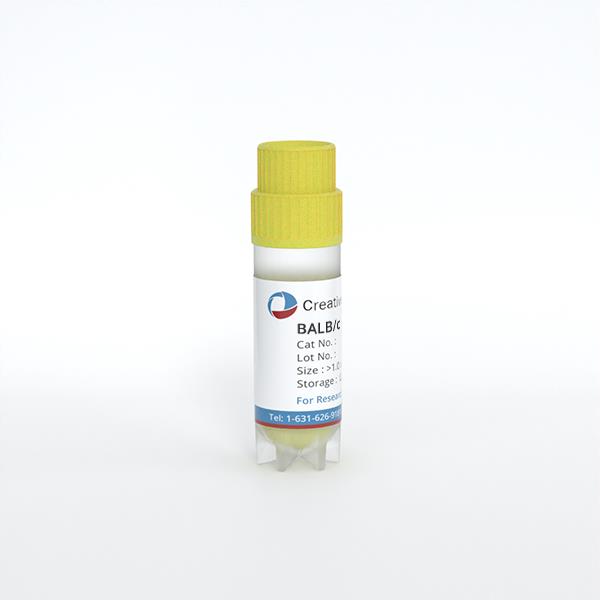
BALB/c mouse primary spleen cells
Cat.No.: CSC-C4312X
Species: Mouse
Source: Spleen
- Specification
- Background
- Scientific Data
- Q & A
- Customer Review
Mouse Cells are negative for bacteria, yeast, fungi, and mycoplasma. Repeated freezing and thawing of cells is not recommended.Standard biochemical procedures performed with cell cultures include RT-PCR, Western blotting, immunoprecipitation, immunofluorescent staining, flow cytometry or generating cell derivatives for desired research applications.
Never can primary cells be kept at -20 °C.
Freshly isolated immune cells from the spleens of BALB/c mice (an inbred mouse strain with strong humoral and Th2 biassed immune responses). These primary splenocyte preparations are heterogeneous immune cell populations consisting of T lymphocytes, B lymphocytes, macrophages, dendritic cells, and natural killer (NK) cells, making them an invaluable ex vivo model for immunological and inflammatory research.
BALB/c mouse primary spleen cells are widely used tool for assessing immune activation, cytokine production, lymphocyte proliferation, and antigen-specific responses. They are often used in vaccine development, screening of immunomodulatory compounds, allergy research, infection models and assessment of immunotoxicity because of their physiological relevance and intact immune signaling pathways. They also serve as an important platform to study T-cell and B-cell interactions, the Th1/Th2 immune balance and innate immune responses under various stimulatory conditions.
BALB/c splenocytes are also commonly used for evaluation of immuno-enhancing or immunosuppressive effects of natural products, biologics and therapeutic antibodies in studies. They are a reliable source for basic immunology research and translational studies of inflammation, infectious diseases and immune regulation due to their reproducible immune features and wide experimental use.
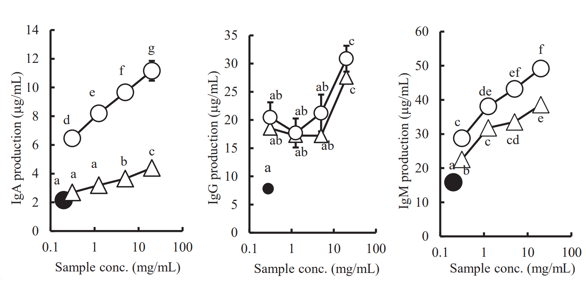
Mouse Splenocyte Treated by Water Extract of Egg Yolk
Kampung chicken, a local breed, is traditionally believed to be healthier than commercial chicken, but this has not been scientifically examined. Therefore, the aim of the present study was to systematically evaluate and compare the immunostimulatory effects of Kampung-chicken eggs and commercial eggs using in vitro models. In particular, the aim of the study was to assess the effect of egg yolk extracts on the production of immunoglobulins (IgA, IgG, IgM) by immune cells and to identify the active components responsible for these effects.
KEYWE and CEYWE were assessed for their effects on immunoglobulin (Ig) production in mouse primary splenocytes after 48 h of treatment. Both compounds enhanced the production of IgA, IgG and IgM in a dose-dependent manner (Fig. 1). KEYWE induced 5.2-fold of IgA at the highest concentration tested, which was significantly higher than that by CEYWE (2.04-fold; p < 0.05). However, CEYWE did not significantly increase IgA at the lowest dose, unlike KEYWE. Both treatments significantly increased IgG only at the highest concentrations but there was no statistical difference between KEYWE and CEYWE. Finally, at the highest concentration, KEYWE was more potent than CEYWE in the stimulation of IgM production (3.10-fold vs. 2.43-fold).
Ask a Question
Write your own review
Description: C57BL/6-GFP Mouse Skeletal Muscle Microvascular Endothelial Cells from Creative Bioarray are isolated from C57BL/6-Tg (CAG-EGFP) 1Osb/J mouse skeletal muscle tissue of pathogen-free laboratory mice. ...
Description: eNOS KO Mouse Stomach Epithelial Cells from Creative Bioarray are isolated from stomach tissue of pathogen-free laboratory mice. eNOS KO Mouse Stomach Epithelial Cells are grown in a T25 tissue ...
Description: eNOS KO Mouse Liver Fibroblasts from Creative Bioarray are isolated from liver tissue of pathogen-free laboratory mice. eNOS KO Mouse Liver Fibroblasts are grown in T75 tissue culture flasks ...
Description: C57BL/6-GFP Mouse Corneal Epithelial Cells from Creative Bioarray are isolated from C57BL/6-GFP-Tg(CAG-EGFP)1Osb/J mouse corneal tissue of pathogen-free laboratory mice. C57BL/6-GFP Mouse Corneal ...
Description: BALB/c Mouse Retinal Microvascular Endothelial Cells from Creative Bioarray are isolated from retinal tissue of pathogen-free laboratory mice. BALB/c Mouse Retinal Microvascular Endothelial Cells are ...