
CA-46
Cat.No.: CSC-C0234
Species: Homo sapiens (Human)
Source: Ascites
Morphology: single cells in suspension
Culture Properties: suspension
- Specification
- Scientific Data
- Q & A
- Customer Review
Immunology: CD3 -, CD10 +, CD13 -, CD19 +, CD20 +, CD34 -, CD37 +, CD38 +, cyCD79a +, HLA-DR +, sm/cyIgG -, sm/cyIgM +, sm/cykappa +, sm/cylambda -
Viruses: ELISA: revers
PDCD2L overexpression represents an unfavorable prognostic marker and its inhibition shows promising therapeutic potential for gastric cancer
Background
This study investigates PDCD2L as a prognostic biomarker and therapeutic target in gastric cancer. Immunohistochemistry and immunoblotting showed PDCD2L is overexpressed in gastric cancer tissues and cell lines. High PDCD2L correlated with worse disease-free and overall survival and was an independent prognostic factor. In vitro, PDCD2L knockdown inhibited proliferation, migration, invasion and induced G0/G1 arrest, while overexpression promoted malignant phenotypes. Xenograft assays confirmed knockdown suppressed tumor growth. NGS implicated RFX1 downregulation. These findings suggest PDCD2L promotes gastric cancer progression and merits further therapeutic evaluation.
Key Findings
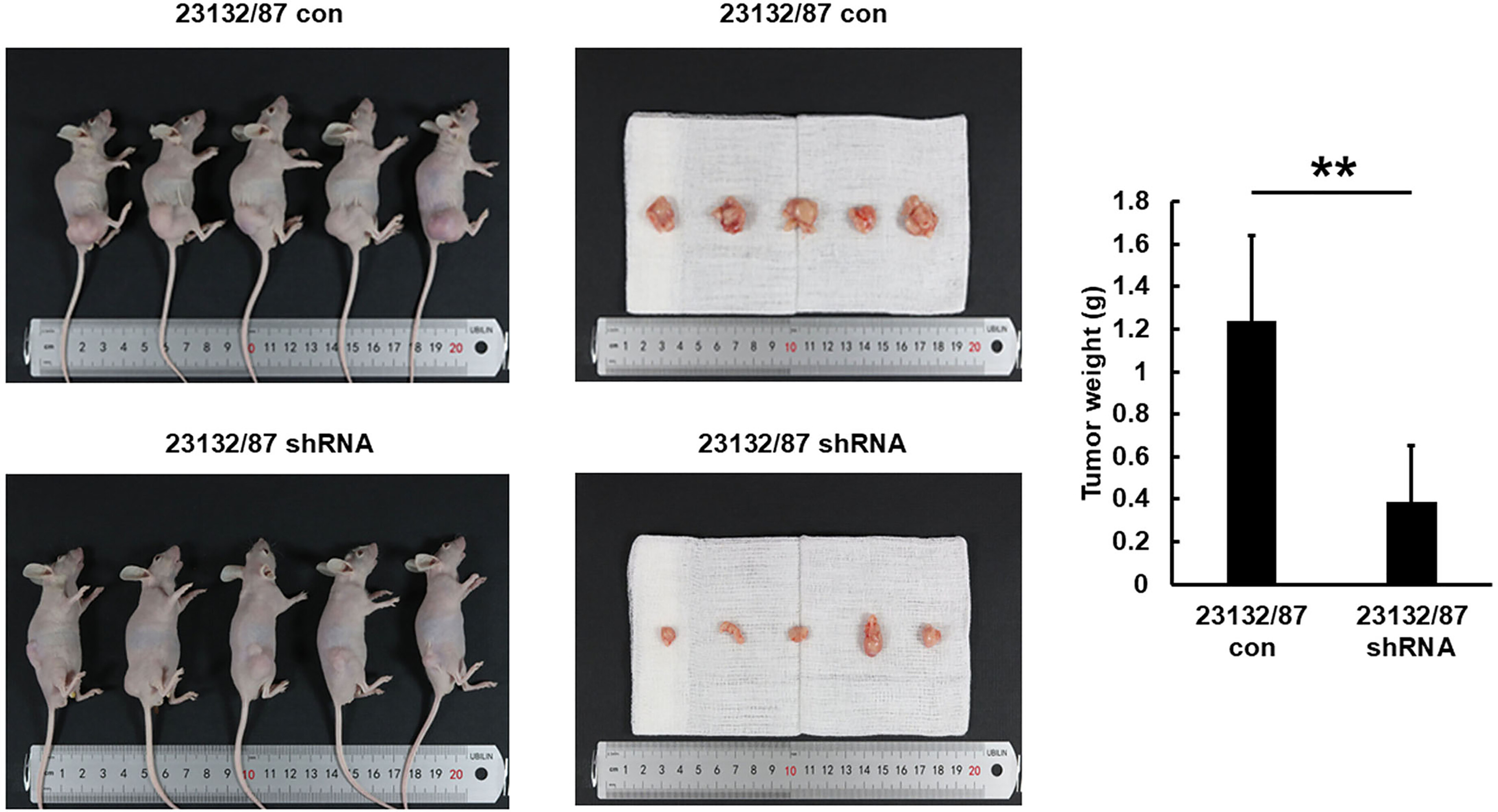
PDCD2L was significantly overexpressed in gastric cancer tissues and cell lines compared with non-tumor tissues and normal gastric epithelial cells. Among 127 patients, high PDCD2L immunoreactivity correlated with older age and was associated with worse disease-free survival (5-year rate 40.1% vs 65.9%) and overall survival (23.5% vs 50.0%). Multivariate Cox analysis identified PDCD2L overexpression as an independent poor prognostic factor. In 23132/87 cells, PDCD2L knockdown reduced colony formation, migration and invasion, caused G0/G1 arrest, decreased cyclin E, β-catenin and vimentin, and increased claudin-1; overexpression in AGS cells had opposite effects. In nude mice, PDCD2L knockdown suppressed xenograft tumor growth (tumor weight 3.2-fold lower). NGS showed RFX1 downregulation in knockdown cells, suggesting PDCD2L may promote proliferation and spreading partly via RFX1.
Contribution
Creative Bioarray provided the 23132/87 gastric cancer cell line (cat. no. CSC-C0324), a PDCD2L-high model used for shRNA knockdown, proliferation, cell cycle, migration, invasion and xenograft experiments. This cell line was essential for demonstrating PDCD2L’s oncogenic functions and therapeutic potential in gastric cancer.
Ask a Question
Write your own review
- You May Also Need
Description: Established in 2007 from the bone marrow mononuclear cells of an 82-year-old Japanese man with diffuse large B-cell lymphoma in the leukemic phase
Description: The MEG-01 cell line was derived in 1983 at the Nagoya University School of Medicine, Nagoya, Japan from bone marrow cells taken from a patient in megakaryoblastic crisis of CML
Description: Established from the bone marrow of a 28-year-old man who developed the terminal leukemic phase of lymphosarcoma in 1976
Description: This cell line was derived from the bone marrow aspirate of a 59 year old male with erythroleukemia that became acute myelogenous leukaemia.The cells form colonies in soft-agar in the presence of ...
Description: Established from the pleural effusion of a 24-year-old woman with recurrent anaplastic large cell lymphoma (ALCL); cells were described to clonally derive from T-lineage lymphoid cells and to be ...
Description: Established from a 37-year-old man at second (refractory/terminal) relapse of Hodgkin lymphoma (nodular sclerosing -> lymphocyte depleted/stage IIISA -> stage IV) after both combined chemo- and ...
- Adipose Tissue-Derived Stem Cells
- Human Neurons
- Mouse Probe
- Whole Chromosome Painting Probes
- Hepatic Cells
- Renal Cells
- In Vitro ADME Kits
- Tissue Microarray
- Tissue Blocks
- Tissue Sections
- FFPE Cell Pellet
- Probe
- Centromere Probes
- Telomere Probes
- Satellite Enumeration Probes
- Subtelomere Specific Probes
- Bacterial Probes
- ISH/FISH Probes
- Exosome Isolation Kit
- Human Adult Stem Cells
- Mouse Stem Cells
- iPSCs
- Mouse Embryonic Stem Cells
- iPSC Differentiation Kits
- Mesenchymal Stem Cells
- Immortalized Human Cells
- Immortalized Murine Cells
- Cell Immortalization Kit
- Adipose Cells
- Cardiac Cells
- Dermal Cells
- Epidermal Cells
- Peripheral Blood Mononuclear Cells
- Umbilical Cord Cells
- Monkey Primary Cells
- Mouse Primary Cells
- Breast Tumor Cells
- Colorectal Tumor Cells
- Esophageal Tumor Cells
- Lung Tumor Cells
- Leukemia/Lymphoma/Myeloma Cells
- Ovarian Tumor Cells
- Pancreatic Tumor Cells
- Mouse Tumor Cells