
High Fat Diet-Induced Obesity (DIO) Model
Obesity is a global health crisis driving metabolic syndrome and chronic disease. Creative Bioarray offers a well-established and widely validated High-Fat Diet-Induced Obesity (DIO) model, mimicking human dietary-induced metabolic dysfunction to provide a vital preclinical platform for translational research and innovative therapeutic drug development.
| DIO Models | Features | Applications |
|---|---|---|
| C57BL/6J DIO SD Rat DIO |
Reproducible weight gain and adiposity Insulin resistance and dyslipidemia Hepatic steatosis and inflammation 8–16 weeks induction |
Drug efficacy evaluation Obesity and T2D research Insulin resistance studies Metabolic syndrome modeling Liver steatosis research |
- Background
- Models
- Study Examples
- Features
- FAQ
Obesity: The Global Metabolic Epidemic
Obesity has become a major driver of global healthcare costs and chronic disease. More than 650 million adults worldwide are clinically obese, and by 2030 about 1 in 5 women and 1 in 7 men are expected to be affected. The global obesity therapeutics market is projected to exceed USD 100 billion by 2030, largely driven by incretin-based therapies such as GLP-1 receptor agonists. Growing demand for treatments targeting related comorbidities—including type 2 diabetes (T2D), MASH, and cardiovascular disease (CVD)—highlights the strong translational value of diet-induced obesity (DIO) models in preclinical research.
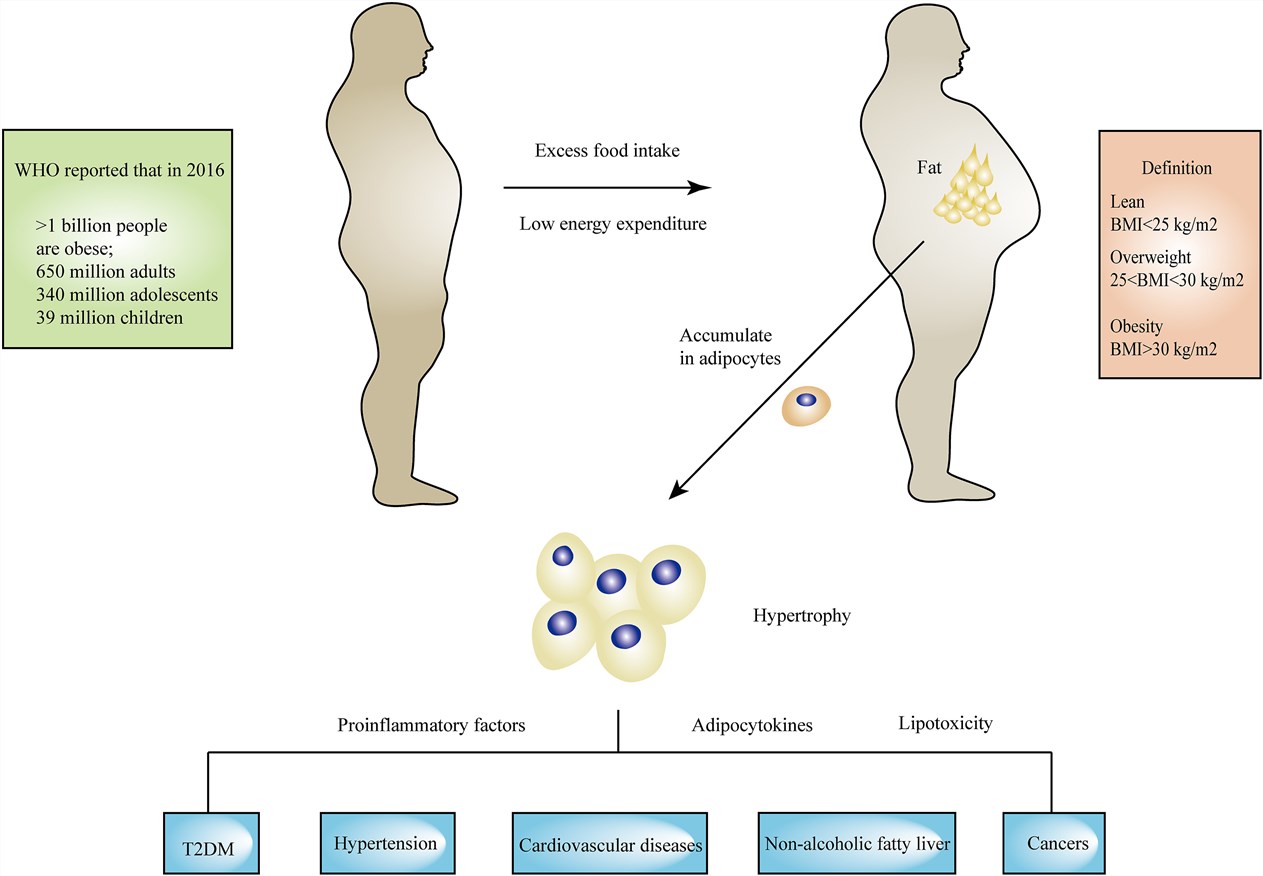 Fig. 1. Overview of the obesity epidemic, obesity definition and obesity-associated diseases (Jin X, Qiu T, et al., 2024).
Pathophysiology: From Mechanism to Research Gaps
If we are to successfully intervene in the obesity epidemic, it is critical to first understand the biological mechanisms that underlie excess weight accrual. Hallmarks of human obesity include:
- Adipose Tissue Expansion and Inflammation
Excess lipid storage leads to hypertrophy and hyperplasia of adipocytes. Once overwhelmed, adipose expansion triggers macrophage infiltration and chronic inflammation.
- Hypothalamic Dysregulation of Appetite
Altered leptin and insulin signaling impair central appetite control.
- Insulin Resistance and Metabolic Stress
Insulin resistance develops via multiple mechanisms (i.e., impairment of insulin signaling pathways such as IRS-1/AKT) leading to reduced glucose uptake and metabolism.
When combined chronically, these factors lead to high-fat diet-induced obesity. Mouse models fed a high-fat diet (HFD) experience continuous adipose expansion, inflammation, and insulin resistance.
Currently there are gaps in studying intermediate phenotypes and disease progression (i.e. steatosis to fibrosis). Creative Bioarray is dedicated to narrowing these gaps by providing robust, standardized models with low phenotypic drift to serve as a solid foundation for therapeutic target validation.
Creative Bioarray's High Fat Diet-Induced Obesity Model
The DIO model is established through long-term feeding of a high-fat diet (typically 45–60% kcal from fat), leading to progressive weight gain, adiposity, insulin resistance, dyslipidemia, and hepatic steatosis. This model closely mimics lifestyle-associated obesity in humans.
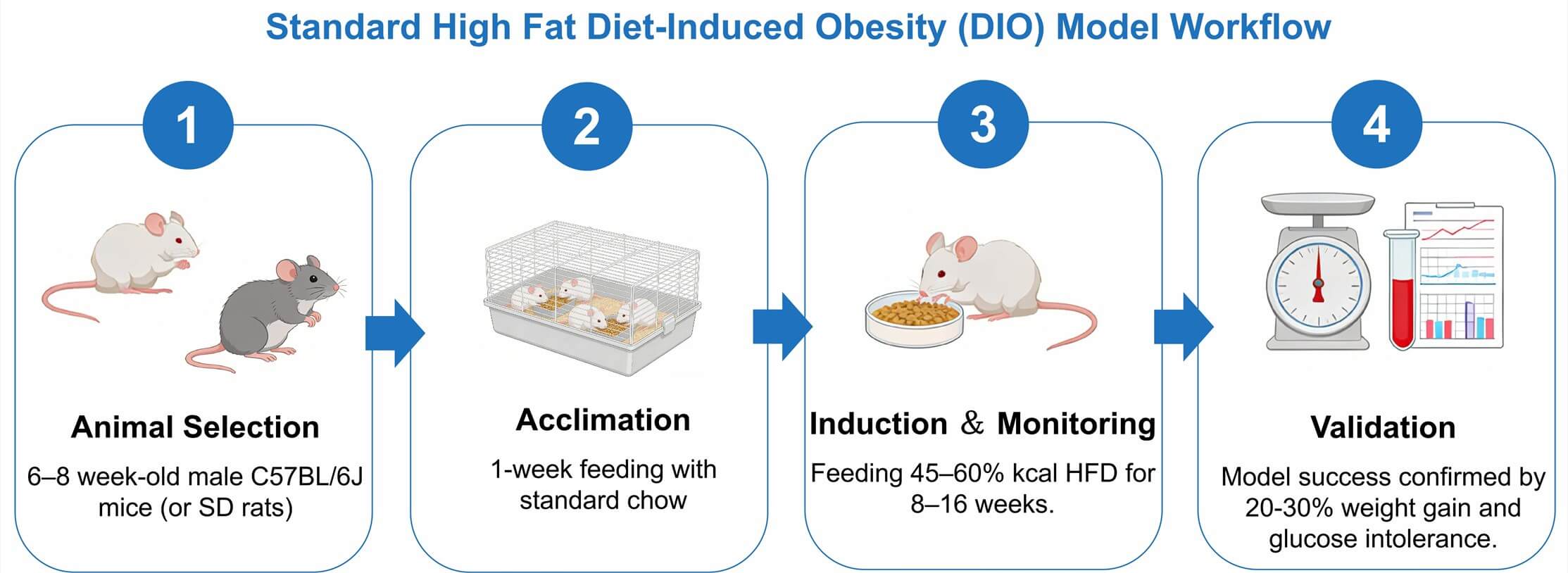
Model Details

1. Strains selection
Mouse Models
- C57BL/6J (most widely used strain)
Rat Models
- Sprague-Dawley (SD) rats
Other strains are available upon request.

2. Model Induction Design
Diets are isocaloric and finely tuned using following paradigm:
- ND(Control) – Normal Diet: Feeds standard chow and serves as metabolic baseline.
- HFD(Group) – High Fat Diet: 45–60% kcal from fat to induce obesity, IR, and steatosis.
Animals are randomized at the start of diet and monitored throughout the study.

3. Standard Endpoints
- Body Weight: Monitored regularly vs control group
- Food Consumption: Monitored daily food consumption
- Fasting Blood Glucose (FBG): Quantitative measurement
- Insulin Resistance (HOMA-IR): Calculated from fasting glucose and fasting insulin (FINS)
- Lipid Profile: Assessment of triglycerides (TG), total cholesterol (TC), HDL-C, LDL-C
- Body Composition (fat and lean mass): Assessed via DXA, MRI, or Micro-CT.

4. Additional Endpoints
- Liver Histology: H&E staining, optional Oil Red O for lipid deposition
- Liver Function Analysis: ALT, AST, and other hepatic enzyme levels
- Inflammatory Markers Analysis: Assessment of pro- and anti-inflammatory cytokines and chemokines (e.g., TNF-α, IL-6, IL-1β, MCP-1) using ELISA or multiplex assays.
- Oxidative Stress Markers Analysis: ROS, MDA, SOD levels in serum or tissue
- Molecular Analysis: Gene/protein expression related to lipid and glucose metabolism
- Optional Advanced Analysis: Gut microbiota profiling, lipidomics, or other customized endpoints
Study Examples
Representative data demonstrate consistent weight gain, increased adiposity, and hepatic steatosis across independent cohorts, confirming model stability and reproducibility.
Body Weight Gain
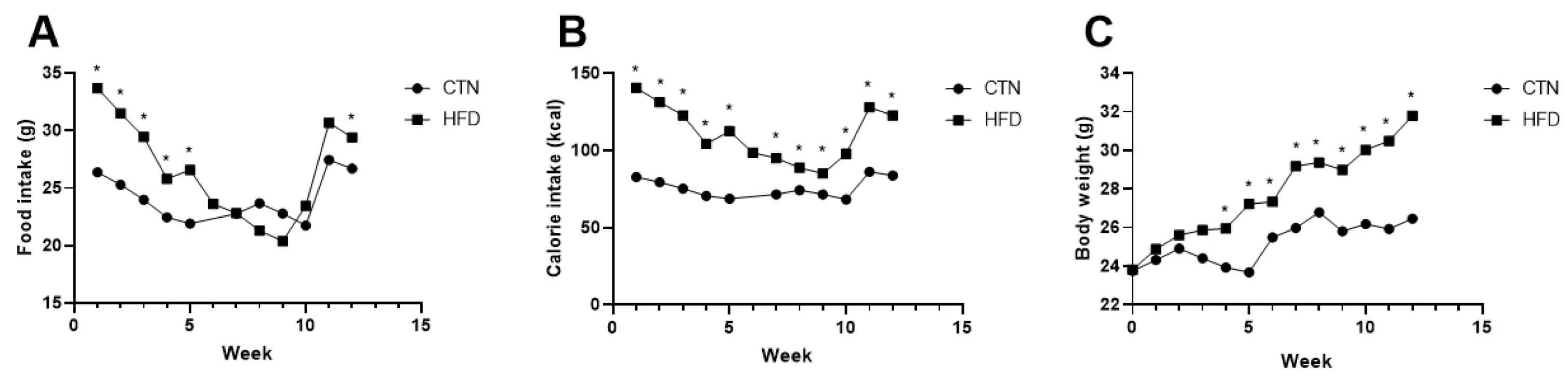 Fig. 2. Food; calorie intake and body weight evolution of mice fed with commercial diet (CTN) and mice fed with high-fat, low-cost diet (HFD) for 12 weeks. CTN: control group; HFD: high-fat diet group (Campos IX, Mishima MDV, et al., 2025).
Liver and Fat Index
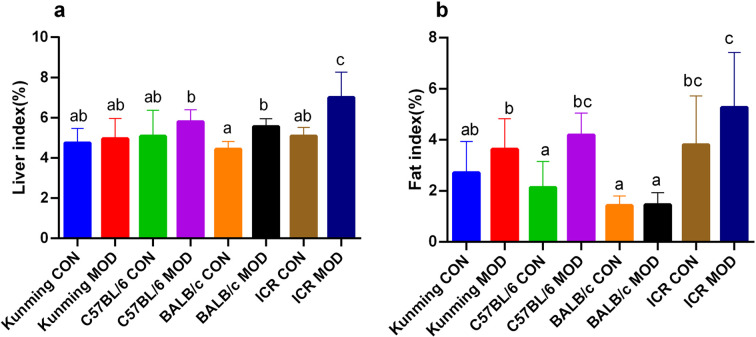 Fig. 3. Liver and fat index of mice fed with normal chow (CON) and HFD (MOD) of four mouse strains (Li J, Wu H, et al., 2020).
Why Choose Creative Bioarray's DIO Model

Standardized, Reproducible and Reliable
We employ validated rodent strains, rigorously controlled high-fat diet formulations, and standardized induction protocols to ensure stable obesity phenotypes and low inter-study variability. Multiple anti-obesity agents have been tested using our model including Semaglutide with robust pharmacodynamic (PD) datasets, attesting to its reproducibility and reliability for drug development.

Clinically Relevant Metabolic Profiling
Characterized by obesity, insulin resistance, dyslipidemia and hepatic steatosis. Our DIO models mimic multiple aspects of human obesity allowing for translational metabolic phenotyping to aid in the predictive preclinical assessment of therapeutic agents.

Flexible Design with Dedicated Scientific Support
Induction length, diets, strains, and endpoint assays can all be tailored to your study needs. Our scientists are available to consult with you and provide full data reports, ensuring high-quality data you can use to publish.
FAQ
How long does it take to establish a DIO model?
Obesity is generally achieved after 8–12 weeks of HFD feeding. Longer induction times (12–20 weeks) can be used to allow for additional metabolic derangements to develop such as steatosis.
What fat percentage is recommended for DIO induction?
A common fat percentage we utilize is either 45% or 60% kcal from fat. This can be adjusted to your study's time frame and desired degree of obesity. Higher fat percentage will increase the rate of weight gain.
Which rodent strain is most suitable for DIO studies?
C57BL/6J mice are the most widely used and well-characterized strain for DIO models due to their strong susceptibility to diet-induced obesity.
Sprague-Dawley and Wistar rats are also available based on project needs.
How do you ensure model reproducibility?
We maintain strict control over diet formulation, batch consistency, animal sourcing, baseline matching, and housing conditions. Standardized induction protocols and longitudinal monitoring help ensure stable and reproducible phenotypes.
Get Started
Ready to accelerate your metabolic research?
Contact our technical team for detailed protocols, custom pricing, and project timelines.
References
- Jin X, Qiu T, et al. Pathophysiology of obesity and its associated diseases. Acta Pharm Sin B. 2023 Jun;13(6):2403-2424.
- Gater DR Jr, Farkas GJ, et al. Pathophysiology of Neurogenic Obesity After Spinal Cord Injury. Top Spinal Cord Inj Rehabil. 2021;27(1):1-10.
- Campos IX, Mishima MDV, et al. A Low-Cost, High-Fat Diet Effectively Induces Obesity and Metabolic Alterations and Diet Normalization Modulates Microbiota in C57BL/6 Mice. Nutrients. 2025 Dec 4;17(23):3806.
- Li J, Wu H, et al. High fat diet induced obesity model using four strainsof mice: Kunming, C57BL/6, BALB/c and ICR. Exp Anim. 2020 Aug 5;69(3):326-335.