Chromosome Analysis of ES Cells and iPS Cells
Induced pluripotent stem cells (iPS Cells) are the cells that possesses pluripotency and self-renewal capability and are able to sustain the cells. It was produced for the first time in the world by the group of Professor Shinya Yamanaka, Kyoto University in 2006. Human embryonic stem (hES) and iPS cells are thought to hold great potential for improving our understanding and thus for developing treatment for many diseases. In addition, prospects are high regarding the use of these cells for successful cell transplantation. However, one concern has been that adaptation to culture conditions and maintenance in culture of any cell type will change the population, which might induce chromosomal changes. It is thus important to monitor a culture for the any chromosomal abnormalities, particulaly in stem cells intend for therapeutic use.
A number of techniques can be used to characterize stem cells: karyotyping, fluorescence in situ hybridization (FISH), array comparative genomic hybridization (aCGH), SNP analysis, and epigenetic profiling. Creative Bioarray can offer the karyotyping analysis and Multicolor FISH analysis for you.
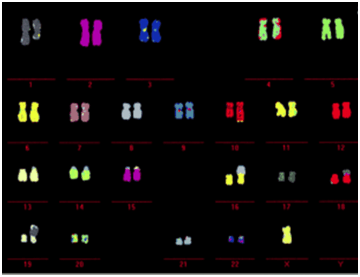 Figure 1. Karyotyping of human chromosomes by multicor FISH probes; Maierhofer, Christine, et al. "Multicolor FISH in two and three dimensions for clastogenic analyses." Mutagenesis 17.6 (2002): 523-527.
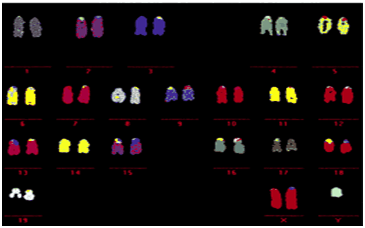 Figure 2. Karyotyping of mouse chromosomes by multicor FISH probes; Maierhofer, Christine, et al. "Multicolor FISH in two and three dimensions for clastogenic analyses." Mutagenesis 17.6 (2002): 523-527.
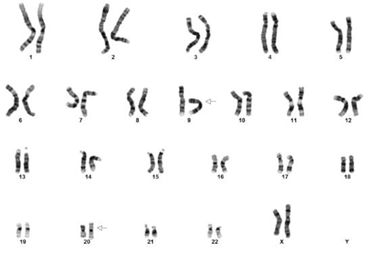 Figure 3. G-banding analysis of Human iPS Cells
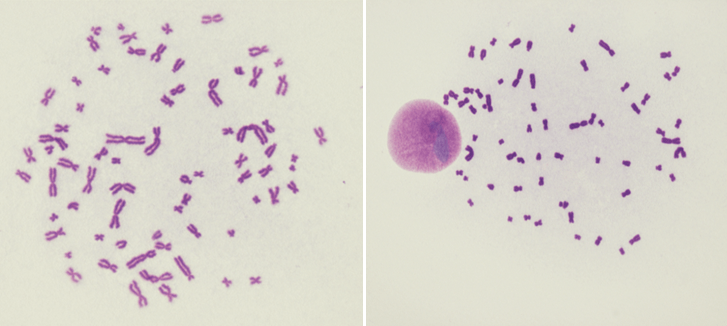 Figure 4. Chromosome analysis by conventional Giemsa Staining
Application:
Analysis of multiple chromosomal rearrangements, identification of chromosomes
Features:
- High accuracy and sensitively
- Fast turnaround time
- Competitive pricing
Creative Bioarray offers Chromosome Analysis of ES Cells and iPS Cells for your scientific research as follows:
- Multicolor FISH anlaysis for human and mouse ES and iPS Cells
Analysis of abnormalitis in chromosome number and chromosome structure - Karyotyping analysis of ES and iPS Cells from human, mouse, rat, monkey,etc. with G-banding or Q-banding
References
- Carpenter, M. K., E. Rosler, and M. S. Rao. "Characterization and differentiation of human embryonic stem cells." Cloning & Stem Cells 5.1 (2003): 79-88.
- Bibikova, Marina, et al. "Human embryonic stem cells have a unique epigenetic signature." Genome research 16.9 (2006): 1075-1083.
- Liehr, T., et al. "Multicolor FISH probe sets and their applications." Histology and histopathology 19.1 (2004): 229-237.
- Inzunza, J., et al. "Comparative genomic hybridization and karyotyping of human embryonic stem cells reveals the occurrence of an isodicentric X chromosome after long‐term cultivation." Molecular human reproduction 10.6 (2004): 461-466.
Quotation and ordering
Our customer service representatives are available 24hr a day! We thank you choose Creative Bioarray at your preferred Chromosome Analysis of ES Cells and iPS Cells service.
Explore Other Options