
Depression Models
Creative Bioarray is a preclinical CRO dedicated to advancing drug discovery through robust in vivo pharmacology platforms. Our neuroscience division offers a comprehensive portfolio of validated animal models for depression, enabling proof-of-concept, efficacy evaluation, and therapeutic screening of novel antidepressant candidates. These models are designed to closely mimic key pathological features of human depression, providing translationally relevant data to accelerate your CNS drug development pipeline.
What is Depression?
Depression is a common and serious mental health disorder characterized by persistent feelings of sadness, loss of interest or pleasure, and changes in thinking, sleep, appetite, and behavior. It can affect anyone and presents in various forms, such as major depressive disorder (MDD), seasonal affective disorder, or postpartum depression. While it can significantly impact daily functioning and quality of life, depression is treatable-most often through a combination of psychotherapy, medication, or other targeted interventions. Early diagnosis and medical support are crucial for effective management.
Biologically, depression is a complex condition involving multiple interacting systems. Its underlying mechanisms include genetic susceptibility, imbalances in key neurotransmitters (such as serotonin, dopamine, glutamate, and GABA), and dysregulation of the hypothalamic–pituitary–adrenal (HPA) axis. Other contributing factors include reduced neurogenesis and neurotrophic factors (like BDNF), chronic inflammation, metabolic disturbances, and disruptions in the gut–brain axis. These factors collectively influence the emotional, cognitive, and physiological symptoms observed in individuals with depression.
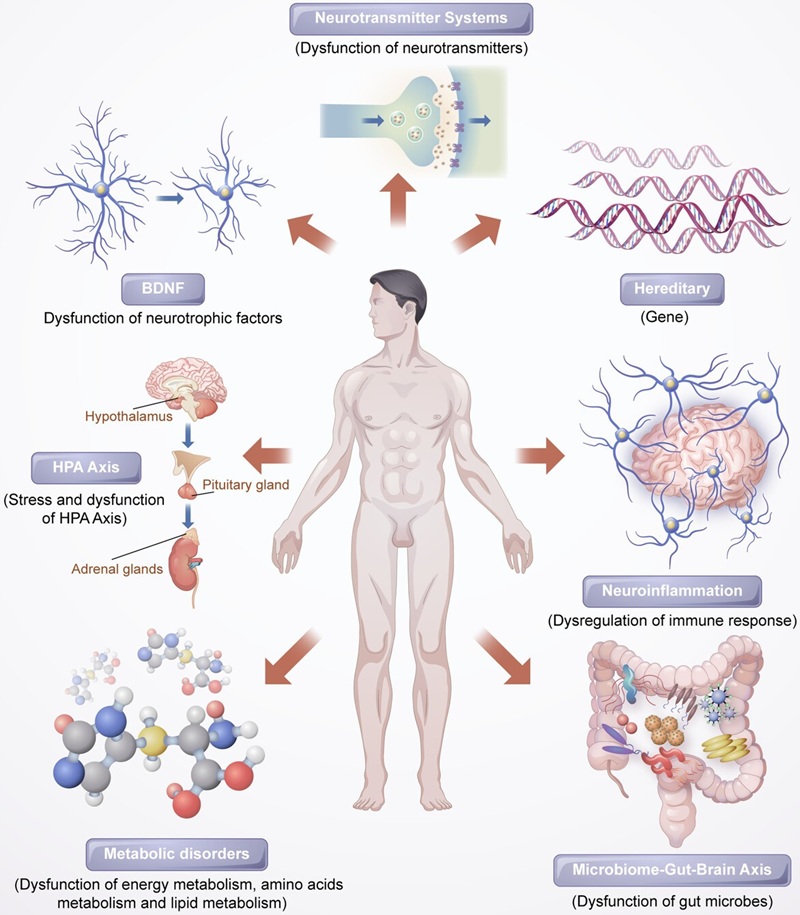
Creative Bioarray's Depression Models
Creative Bioarray has established a variety of well-validated depression models to support our clients in evaluating the efficacy of test compounds and advancing their drug development programs.
Chronic Social Defeat Stress (CSDS) Model
Chronic Restraint Stress (CRS) Model
Corticosterone-Induced Depression Model
Learned Helplessness (LH) Model
Quotation and Ordering
Creative Bioarray is a leading provider of in vivo pharmacology services, offering high-quality, cost-effective solutions with customized study designs. If you are interested in learning more about our depression models and assays, please do not hesitate to contact us at any time or submit an inquiry to us directly.
Reference
- Tian, H., et al. The molecular pathophysiology of depression and the new therapeutic. MedComm, 2022, 3(3): e156.
For research use only. Not for any other purpose.
Disease Models
- Oncology Models
-
Inflammation & Autoimmune Disease Models
- Rheumatoid Arthritis Models
- Glomerulonephritis Models
- Multiple Sclerosis (MS) Models
- Ocular Inflammation Models
- Sjögren's Syndrome Model
- LPS-induced Acute Lung Injury Model
- Peritonitis Models
- Passive Cutaneous Anaphylaxis Model
- Delayed-Type Hypersensitivity (DTH) Models
- Inflammatory Bowel Disease Models
- Systemic Lupus Erythematosus Animal Models
- Oral Mucositis Model
- Asthma Model
- Sepsis Model
- Psoriasis Model
- Atopic Dermatitis (AD) Model
- Scleroderma Model
- Gouty Arthritis Model
- Carrageenan-Induced Air Pouch Synovitis Model
- Carrageenan-Induced Paw Edema Model
- Experimental Autoimmune Myasthenia Gravis (EAMG) Model
- Graft-versus-host Disease (GvHD) Models
-
Cardiovascular Disease Models
- Surgical Models
- Animal Models of Hypertension
- Venous Thrombosis Model
- Atherosclerosis model
- Cardiac Arrhythmia Model
- Hyperlipoidemia Model
- Doxorubicin-induced Heart Failure Model
- Isoproterenol-induced Heart Failure Model
- Arterial Thrombosis Model
- Pulmonary Arterial Hypertension (PAH) Models
- Heart Failure with Preserved Ejection Fraction (HFpEF) Model
- Cardio-Renal-Metabolic (CKM) Syndrome Model
-
Neurological Disease Models
- Alzheimer's Disease Modeling and Assays
- Seizure Models
- Parkinson's Disease Models
- Ischemic Stroke Models
- Acute Spinal Cord Injury (ASCI) Model
- Traumatic Brain Injury (TBI) Model
- Hypoxic-Ischemic Encephalopathy (HIE) Model
- Tourette Syndrome (TS) Model
- Amyotrophic Lateral Sclerosis (ALS) Model
- Huntington's Disease (HD) Model
- Intracerebral hemorrhage (ICH) Models
- Schizophrenia Model
- Depression Models
- Pain Models
-
Metabolic Disease Models
- Type 1 Diabetes Mellitus Model
- Type 2 Diabetes Mellitus Model
- Animal Model of Hyperuricemia
-
Nonalcoholic Fatty Liver Disease Model
- High-Fat Diet-Induced Nonalcoholic Fatty Liver Disease (NAFLD) Model
- Methionine and Choline Deficient (MCD) Diet-Induced Nonalcoholic Fatty Liver Disease (NAFLD) Model
- Gubra-Amylin NASH (GAN) Diet-Induced Nonalcoholic Fatty Liver Disease (NAFLD) Model
- Streptozotocin (STZ) Induced Nonalcoholic Fatty Liver Disease (NAFLD) Model
- High Fat Diet-Induced Obesity Model
- Diabetic Foot Ulcer (DFU) Model
- Cardio-Renal-Metabolic (CKM) Syndrome Model
- Liver Disease Models
- Rare Disease Models
- Respiratory Disease Models
- Digestive Disease Models
-
Urology Disease Models
- Cisplatin-induced Nephrotoxicity Model
- Unilateral Ureteral Obstruction Model
- 5/6 Nephrectomy Model
- Renal Ischemia-Reperfusion Injury (RIRI) Model
- Diabetic Nephropathy (DN) Models
- Passive Heymann Nephritis (PHN) Model
- Adenine-Induced Chronic Kidney Disease (CKD) Model
- Kidney Stone Model
- Doxorubicin-Induced Nephropathy Model
- Orthotopic Kidney Transplantation Model
- Benign Prostatic Hyperplasia (BPH) Model
- Peritoneal Fibrosis Model
- Cardio-Renal-Metabolic (CKM) Syndrome Model
- Orthopedic Disease Models
- Ocular Disease Models
- Skin Disease Models
- Infectious Disease Models
- Otology Disease Models