Sulforhodamine B (SRB) Assay
- Features
- Workflow
- Applications
- Case Studies
- Explore Other Options
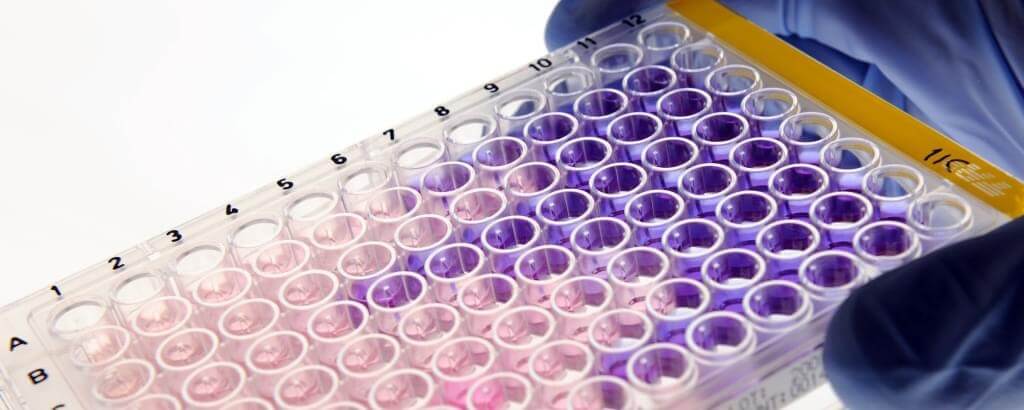
The sulforhodamine B (SRB) assay was developed by Skehan and colleagues to measure drug-induced cytotoxicity and cell proliferation for large-scale drug-screening applications. Sulforhodamine B, an anionic aminoxanthene dye, can form an electrostatic complex with the basic amino acid residues of proteins under moderately acid conditions, which provides a sensitive linear response with cell number and cellular protein measured at cellular densities ranging from 1 to 200% of confluence. The SRB assay possesses a nondestructive and indefinitely stable colorimetric end point and the color development is rapid and stable and is readily measured at absorbance between 560 and 580nm. With many practical advances including a favorable signal-to-noise ratio and a resolution of 1000-2000 cells/well, the SRB assay serves as an appropriate and sensitive assay to measure drug-induced cytotoxicity even at large-scale application.
Creative Bioarray Advantages
- High sensitivity
- Accurate and reproducible
- Low signal-to-noise ratio
- High resolution (1000-2000 cells/well)
- Linear results ranging from 1 to 200% of confluence
- colorimetric, nondestructive, and indefinitely stable end point
- Rapid and low-cost
- Suitable for high-throughput screening
Workflow
- Seeding of Microtiter Plates for Growth Kinetics
- Choice of Drug Dose Range and Seeding of Culture Plates for Cytotoxicity Assays
- SRB Procedure
- Data Processing and Interpretation of Results
Applications
- Cell growth/proliferation
- Cytotoxicity measurement/screening
- Chemosensitivity
Results Sample
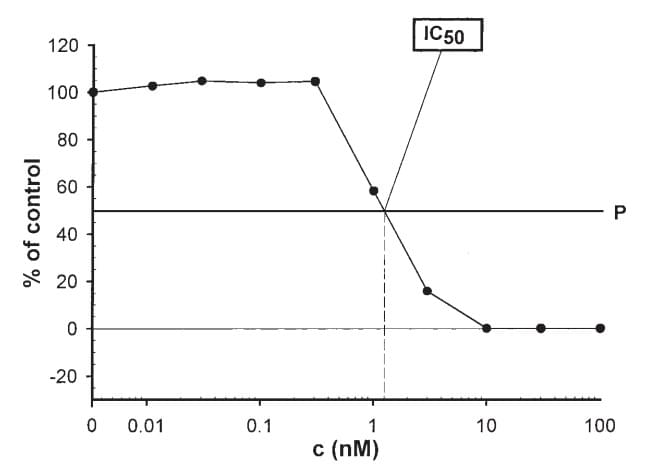
Figure 1. Graphic determination of IC50
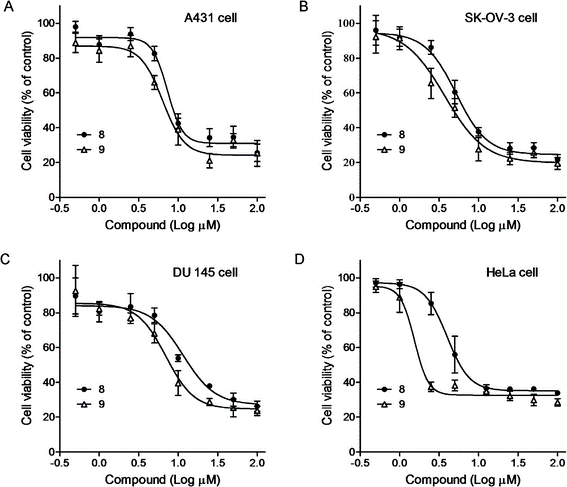
Figure 2. Effects of compounds on cell proliferation
Quote and Ordering
Please fill out the chart below or contact us to discuss your project with our experts and get a quote.
Payment methods supported: Invoice / Purchase Order, Wire Transfer, and Credit Card.
References
- Skehan, P., Storeng, R., Scudiero, D., Monks, A., McMahon, J., Vistica, D., Warren, J. T., Bokesch, H., Kenney, S., and Boyd, M. R. (1990) New colorimetric cytotoxicity assay for anticancer-drug screening. J. Natl. Cancer Inst. 82, 1107-1112.
- Perez, R. P., Godwin, A. K., Handel, L. M., and Hamilton, T. C. (1993) A comparison of clonogenic, microtetrazolium and sulforhodamine B assays for determination of cisplatin cytotoxicity in human ovarian carcinoma cell lines. Eur. J. Cancer 29A, 395-399.
- Griffon, G., Merlin, J. L., and Marchal, C. (1995) Comparison of sulforhodamine B, tetrazolium and clonogenic assays for in vitro radiosensitivity testing in human ovarian cell lines. Anticancer Drugs 6, 115-123.
- Papazisis, K. T., Geromichalos, G. D., Dimitriadis, K. A., and Kortsaris, A. H. (1997) Optimization of the sulforhodamine B colorimetric assay. J. Immunol. Methods 208, 151-158.
Explore Other Options