
Products
-
Tumor Cells
-
Human Tumor Cells
- Astrocytoma/Glioblastoma Cells
- Bladder (urinary) Tumor Cells
- Brain/Nerve Tumor Cells
- Breast Tumor Cells
- Colorectal Tumor Cells
- Esophageal Tumor Cells
- Gallbladder Tumor Cells
- Gastric Tumor Cells
- Human Hybridoma Cells
- Hepatoma Cells
- Kidney Tumor Cells
- Lung Tumor Cells
- Leukemia/Lymphoma/Myeloma Cells
- Melanoma Cells
- Mesothelioma Cells
- Nasopharyngeal Tumor Cells
- Oral Tumor Cells
- Ovarian Tumor Cells
- Prostate Tumor Cells
- Pancreatic Tumor Cells
- Retinoblastoma Cells
- Sarcoma Cells
- Skin Tumor Cells
- Testicular Tumor Cells
- Thyroid Tumor Cells
- Uterine/Cervix Tumor Cells
- Other Human Tumor Cells
- Animal Tumor Cells
- Drug Resistant Cells
- Tumor Cell Media
- Tumor Cell Panels
-
Human Tumor Cells
-
Primary Cell Research
-
Human Primary Cells
- Adipose Cells
- Bone Marrow Cells
- Bone Cells
- Bone and Cartilage Cells
- Blood Vessel Cells
- Bronchial/Tracheal Cells
- Brain Cells
- Bladder Cells
- Cardiac Cells
- Colon Cells
- Dermal Cells
- Epidermal Cells
- Esophagus Cells
- Female Reproductive Cells
- Gastrointestinal Cells
- Gallbladder Cells
- Hepatic Cells
- Hair Cells
- Keratinocytes
- Lymphatic Cells
- Male Reproductive Cells
- Mammary Cells
- Nervous Cells
- Ocular Cells
- Oral Cells
- Pancreatic Cells
- Peripheral Blood Mononuclear Cells
- Placenta Cells
- Prostate Cells
- Pulmonary Cells
- Reproductive System Cells
- Renal Cells
- Skeletal Cells
- Skin Cells
- Spleen Cells
- Thyroid Cells
- Tonsil Cells
- Umbilical Cord Cells
- Urethral Cells
- Other Human Primary Cells
- Animal Primary Cells
- HLA-Typed Cells
- Primary Cell Media
- Dissociated Tumor Cells (DTCs)
- Cell Isolation Kit
- Cytokines & Growth Factors
- ActoFactor™ GMP Cytokines
-
Human Primary Cells
- Immortalized Cell Research
- Stem Cell Research
- Exosome Research
-
ISH/FISH Probes
- CABR™ Chromosome Probes
- CABR™ Detection Probes
-
CABR™ Disease Biomarker FISH Probes
- Acute Lymphoblastic Leukemia FISH Probes
- Acute Myeloid Leukemia (AML) FISH Probes
- Acute Myelomonocytic Leukemia FISH Probes
- Acute Promyelocytic Leukemia FISH Probes
- Breast Cancer FISH Probes
- Burkitt Lymphoma FISH Probes
- Chronic Lymphocytic Leukemia FISH Probes
- Colorectal Cancer FISH Probes
- Pancreatic Cancer FISH Probes
- Follicular Lymphoma FISH Probes
- Lung Cancer FISH Probes
- Lymphoma FISH Probes
- Mantle Cell Lymphoma FISH Probes
- Melanoma FISH Probes
- Multiple Myeloma FISH Probes
- Myelodysplastic Syndrome FISH Probes
- Myeloid Neoplasms W Eosinophilia FISH Probes
- Myeloproliferative Neoplasms FISH Probes
- Ovarian Cancer FISH Probes
- CABR™ 2019 Novel Coronavirus Detection FISH Probe
- CABR™ CAR-T Cell Detection ISH Probes
- CABR™ Animal Probes
- Bacterial Probes
- CABR™ microRNA Probe
- ISH Probes
- Custom Probes
- IHC ISH Reagents
- Biosamples
- Cell Analysis Kit
- ADME Kits
- Stains & Dyes
- Nucleic Acid Extraction
In Vitro Metabolism Assay Kits & Reagents
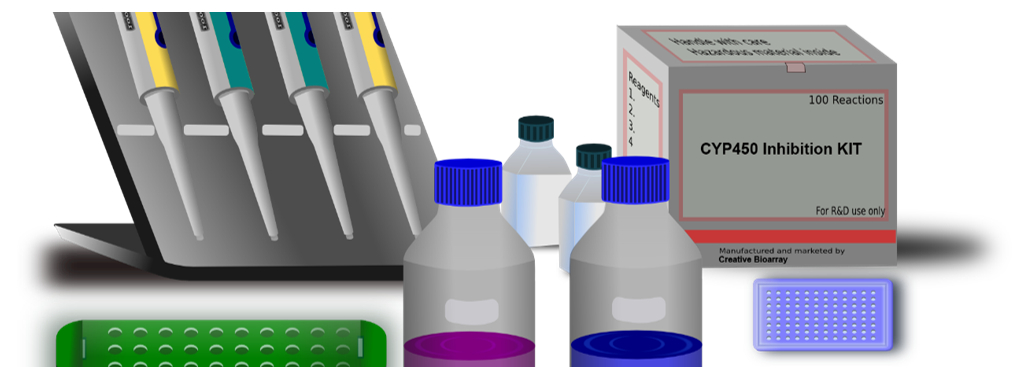
The liver is the most important site of drug metabolism. Here the processes of drug inactivation and acquisition of pharmacological activity by the prodrug take place.
Many drugs are metabolized in two phases.
- Non-synthetic reactions such as the production of new or modified functional groups or cleavage are included in Phase I reactions (oxidation, reduction, hydrolysis).
- Phase II reactions involve synthetic reactions, such as binding to endogenous substances (e.g., glucuronides).
Metabolites formed in synthetic reactions are more polar and therefore more readily excreted by the kidney (urine) and liver (bile) than those formed in non-synthetic reactions. Some drugs undergo only phase I or phase II reactions.
CYP450
In phase I metabolism, the most important enzyme system is cytochrome P-450 (CYP450), a microsomal superfamily of isoenzymes that catalyze the oxidation of many drugs. Electrons are provided by NADPH-CYP450 reductase, a flavoprotein that transfers electrons from NADPH to CYP450.
CYP450 enzymes can be induced or inhibited by many drugs and substances, leading to drug interactions in which one drug enhances the toxicity or reduces the therapeutic effect of another drug.
Glucuronidation
Glucuronidation is the most prevalent phase II reaction and is the only one occurring in the hepatic microsomal enzyme system. Glucuronidation is secreted in the bile and excreted in the urine. Thus, conjugation renders most drugs more soluble and easily excreted by the kidneys. The conjugate produced by binding amino acids to glutamine or glycine is readily excreted in the urine but is not secreted in significant amounts into the bile.
Creative Bioarray provides professional in vitro metabolism assay services and efficient kits, which allows our clients to perform in vitro metabolism testing on their own terms.
In Vitro Metabolism Assay Kits
In Vitro Metabolism Assay Matrix
In Vitro Metabolism Assay Reagents
Related Services
For research use only. Not for any other purpose.