
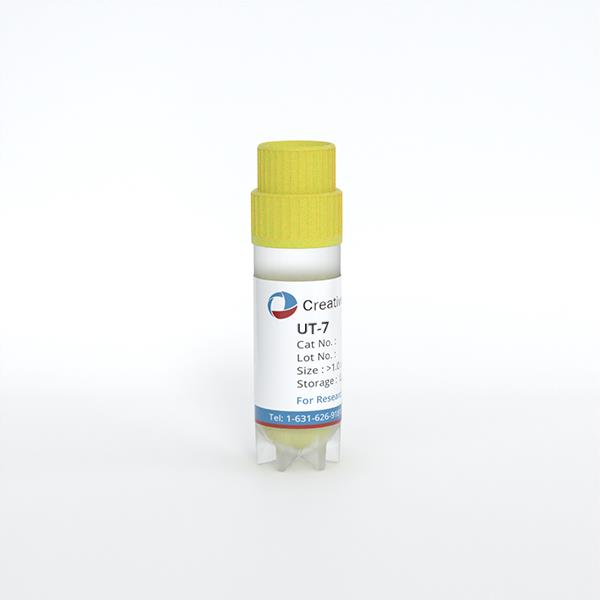
UT-7
Cat.No.: CSC-C0294
Species: Homo sapiens (Human)
Source: Bone Marrow
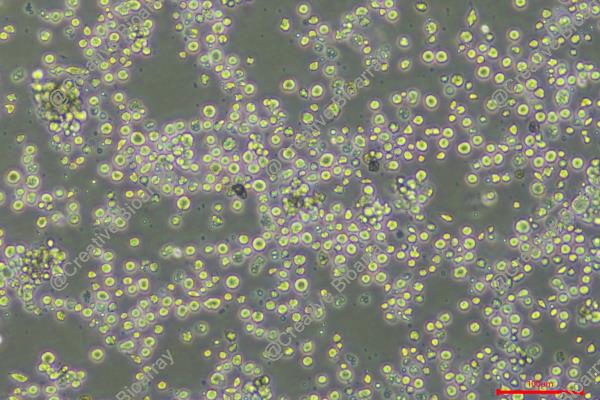
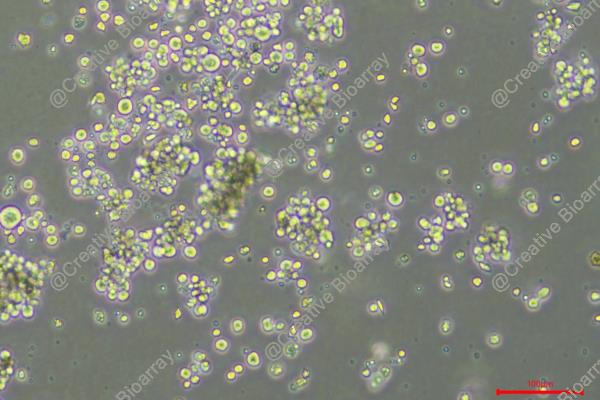
Morphology: round (relatively large) cells growing singly in suspension
Culture Properties: Suspension
- Specification
- Background
- Scientific Data
- Q & A
- Customer Review
Immunology: CD3 -, CD4 -, CD13 +, CD14 -, CD15 -, CD19 -, CD33 +, CD34 -, CD41 (+), CD42 (+), CD68 +, CD235a (+), HLA-DR (+)
Viruses: ELISA: reverse transcriptase negative
UT-7 is a well-characterized human acute myeloid leukemia cell line established in 1988 from the bone marrow of a 64-year-old male patient with acute megakaryoblastic leukemia. The cells exhibit round morphology, grow predominantly in suspension with approximately 1–2% slight adherence, and possess a hypotetraploid karyotype with extensive subclonal variation.
The defining and most valuable feature of UT-7 is its absolute cytokine dependence for growth and survival. The cells are strictly dependent on interleukin-3 (IL-3), granulocyte-macrophage colony-stimulating factor (GM-CSF), or erythropoietin (EPO). This stringent factor dependency renders UT-7 an exceptionally sensitive and quantitative bioassay system for these hematopoietic growth factors.
UT-7 exhibits bipotential differentiation capacity. It can be induced to differentiate along either the erythroid pathway (by EPO) or the megakaryocytic pathway (by phorbol myristate acetate). This plasticity has enabled the derivation of specialized sublines—UT-7/Epo (EPO-dependent), UT-7/GM (GM-CSF-dependent), and UT-7/TPO (thrombopoietin-dependent)—each serving as tailored models for studying specific hematopoietic lineages and signaling pathways.
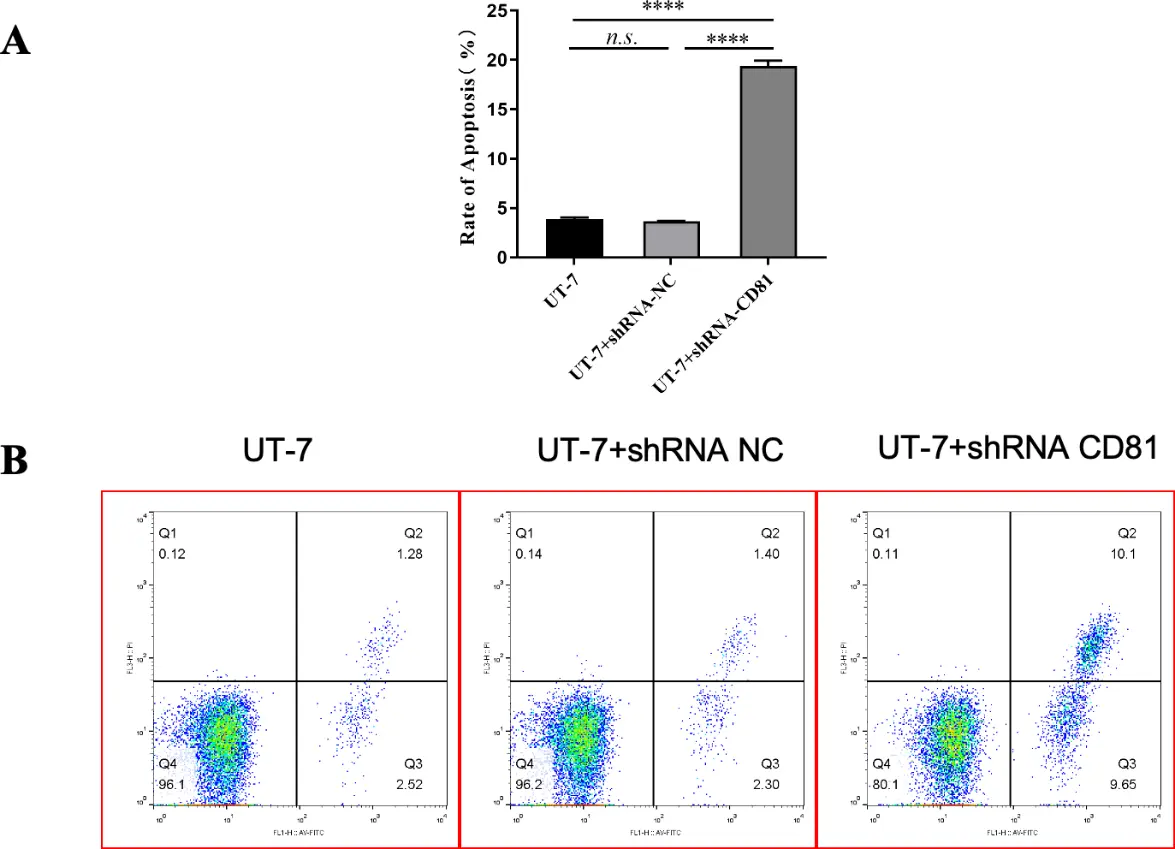
CD81 Knockdown Inhibits Proliferation and Inducts Apoptosis of AMKL cell line UT-7
CD81 is a cell surface protein that plays an important part in tumor progression. Several studies have shown that CD81 is crucial for cancer cell proliferation, invasion, and metastasis, particularly in leukemia. Su, Narun and Xiaohao Hu hypothesized that CD81 might play a vital role in acute megakaryoblastic leukemia (AMKL). They constructed CD81 knockdown cell line using shRNA and found that CD81 knockout can inhibit the proliferation of AMKL and increase the apoptosis of AMKL in vitro. Therefore, CD81 may be a target of AMKL.
Ask a Question
Write your own review

Description: Established in 2007 from the bone marrow mononuclear cells of an 82-year-old Japanese man with diffuse large B-cell lymphoma in the leukemic phase
Description: The MEG-01 cell line was derived in 1983 at the Nagoya University School of Medicine, Nagoya, Japan from bone marrow cells taken from a patient in megakaryoblastic crisis of CML

Description: Established from the bone marrow of a 28-year-old man who developed the terminal leukemic phase of lymphosarcoma in 1976
Description: This cell line was derived from the bone marrow aspirate of a 59 year old male with erythroleukemia that became acute myelogenous leukaemia.The cells form colonies in soft-agar in the presence of ...
Description: Established from the pleural effusion of a 24-year-old woman with recurrent anaplastic large cell lymphoma (ALCL); cells were described to clonally derive from T-lineage lymphoid cells and to be ...
Description: Established from a 37-year-old man at second (refractory/terminal) relapse of Hodgkin lymphoma (nodular sclerosing -> lymphocyte depleted/stage IIISA -> stage IV) after both combined chemo- and ...
- Adipose Tissue-Derived Stem Cells
- Human Neurons
- Mouse Probe
- Whole Chromosome Painting Probes
- Hepatic Cells
- Renal Cells
- In Vitro ADME Kits
- Tissue Microarray
- Tissue Blocks
- Tissue Sections
- FFPE Cell Pellet
- Probe
- Centromere Probes
- Telomere Probes
- Satellite Enumeration Probes
- Subtelomere Specific Probes
- Bacterial Probes
- ISH/FISH Probes
- Exosome Isolation Kit
- Human Adult Stem Cells
- Mouse Stem Cells
- iPSCs
- Mouse Embryonic Stem Cells
- iPSC Differentiation Kits
- Mesenchymal Stem Cells
- Immortalized Human Cells
- Immortalized Murine Cells
- Cell Immortalization Kit
- Adipose Cells
- Cardiac Cells
- Dermal Cells
- Epidermal Cells
- Peripheral Blood Mononuclear Cells
- Umbilical Cord Cells
- Monkey Primary Cells
- Mouse Primary Cells
- Breast Tumor Cells
- Colorectal Tumor Cells
- Esophageal Tumor Cells
- Lung Tumor Cells
- Leukemia/Lymphoma/Myeloma Cells
- Ovarian Tumor Cells
- Pancreatic Tumor Cells
- Mouse Tumor Cells