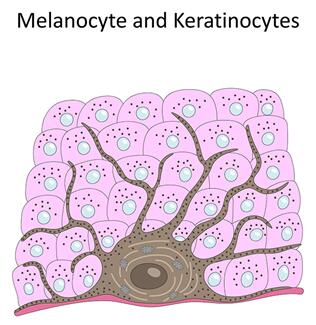

Keratinocytes

Keratinocytes are the major cell type of the epidermis and involved in skin barrier creation, wound healing, immunological signaling and epithelial homeostasis. These cells undergo strictly controlled proliferation and differentiation processes aid in epidermal renewal and defend against environmental stress.

We offer a collection of keratinocyte cells that are used to create dependable in vitro epidermal models for use in dermatology research, investigations of skin biology, cosmetic testing, inflammation research and tissue engineering applications. The portfolio also contains primary keratinocytes from different anatomical locations and specialised epithelial sources for physiologically relevant experimental systems.

Product List

Our Keratinocyte Portfolio Highlights

Primary Human Epidermal Models

Human keratinocytes provide biologically relevant models for investigating epidermal physiology and skin homeostasis.

  • Skin Barrier Research
    • Studies of epidermal structure and integrity
    • Barrier formation and maintenance mechanisms
    • Cell junction and permeability investigations
  • Epidermal Differentiation Studies
    • Keratinization and stratification processes
    • Epidermal maturation pathways
    • Differentiation marker analysis
  • Research-Ready Cell Resources
    • Cryopreserved primary keratinocytes
    • Suitable for routine and advanced skin research applications

Dermatology Research Applications

Our keratinocyte models support a broad range of dermatological and skin-related investigations.

  • Wound Healing Studies

    Suitable for evaluating cell migration, re-epithelialization, tissue repair, and regenerative responses.

  • Inflammation and Skin Disease Research

    Support for studies involving inflammatory signaling, cytokine responses, and mechanisms underlying skin disorders.

  • Dermal Safety Assessment

    Applicable for irritation testing, toxicity screening, and evaluation of topical formulations.

  • Cosmetic and Personal Care Testing

    Useful for assessing ingredient safety, skin compatibility, and biological effects on epidermal cells.

4
Major Research
Applications

100 %
Mycoplasma-Free
Tested

24-72 h
Rapid
Delivery

Frequently
Asked
Questions

Find your question here or ask us

Ask Question

Why are keratinocytes widely used in skin research?

Keratinocytes constitute the majority of cells in the epidermis and are responsible for barrier formation, tissue renewal, and responses to environmental stimuli, making them fundamental models for studying skin biology.

Can keratinocytes be used to evaluate skin barrier function?

Yes. Keratinocytes are commonly used to investigate epidermal integrity, barrier maturation, tight junction regulation, and responses to compounds that affect skin permeability and protection.

Are keratinocytes suitable for wound healing studies?

Yes. Researchers frequently use keratinocytes to assess cell migration, proliferation, re-epithelialization, and molecular pathways involved in cutaneous wound repair.

Can these cells be used for cosmetic and personal care testing?

Keratinocytes are widely employed in the evaluation of cosmetic ingredients, topical formulations, skin compatibility, irritation potential, and biological responses relevant to consumer products.

What endpoints are commonly measured in keratinocyte-based assays?

Common endpoints include cell viability, proliferation, differentiation marker expression, cytokine production, barrier-related protein expression, migration, and wound closure measurements.

Filters Clear all filters

Species

  • Human (797)
  • Mouse (3)
  • Rat (1)

Source

  • Adipose (9)
  • Adrenal Gland (4)
  • Airway (7)
  • Aorta (16)
  • Artery (47)
  • Bile Duct (1)
  • Bladder (8)
  • Blood (157)
  • Bone (3)
  • Bone Marrow (81)
  • Brain (36)
  • Breast (10)
  • Bronchus (20)
  • Cartilage (6)
  • Chorion (2)
  • Choroid (3)
  • Ciliary Body (1)
  • Colon (10)
  • Conjunctiva (2)
  • Cord Blood (24)
  • Cornea (2)
  • Dental Pulp (4)
  • Dermis (43)
  • Embryo (2)
  • Endometrium (2)
  • Epidermis (19)
  • Esophagus (4)
  • Eye (20)
  • Foreskin (2)
  • Gallbladder (1)
  • Gingiva (2)
  • Hair Follicle (5)
  • Heart (14)
  • Intestine (20)
  • Iris (1)
  • Kidney (31)
  • Lens (1)
  • Liver (34)
  • Lung (56)
  • Lymph Node (2)
  • Mesentery (3)
  • Nose (1)
  • Oral Cavity (3)
  • Ovary (10)
  • Pancreas (8)
  • Pancreatic Islet (1)
  • Perineurium (1)
  • Periodontal Ligament (2)
  • Periodontium (4)
  • Peripheral Blood (130)
  • Peritoneal Cavity (2)
  • Placenta (11)
  • Prostate (8)
  • Rectum (1)
  • Retina (9)
  • Seminal Vesicle (1)
  • Skeletal Muscle (9)
  • Skin (78)
  • Small Intestine (5)
  • Spinal Cord (1)
  • Spleen (6)
  • Stomach (3)
  • Synovial Fluid (2)
  • Synovium (8)
  • Tendon (1)
  • Testis (3)
  • Thymus (3)
  • Thyroid (4)
  • Tongue (1)
  • Tonsil (3)
  • Tooth (4)
  • Trabecular Meshwork (1)
  • Trachea (6)
  • Umbilical Cord (23)
  • Uterus (7)
  • Vas Deferens (1)
  • Vein (30)

Cell Type

  • Astrocyte (9)
  • B Cell (22)
  • Basophil (1)
  • Cardiomyocyte (2)
  • CD133+ Cell (6)
  • CD34+ Cell (16)
  • Cholangiocyte (1)
  • Chondrocyte (4)
  • Dendritic Cell (4)
  • Endothelial Cell (133)
  • Eosinophil (1)
  • Epithelial Cell (84)
  • Fibroblast (139)
  • Glial Cell (14)
  • Granule Cell (1)
  • Granulocyte (3)
  • Hepatic Stellate Cell (3)
  • Hepatocyte (8)
  • Interstitial Cell (1)
  • Keratinocyte (14)
  • Keratocyte (1)
  • Kupffer Cell (1)
  • Lymphocyte (55)
  • Macrophage (4)
  • Melanocyte (10)
  • Meningeal Cell (1)
  • Mesangial Cell (2)
  • Mesothelial Cell (2)
  • Microglia (1)
  • Microvascular Cell (61)
  • Monocyte (7)
  • Mononuclear Cell (98)
  • Myeloid Cell (2)
  • Myoblast (5)
  • Myosatellite Cell (1)
  • Neuron (7)
  • Neutrophil (2)
  • NK Cell (5)
  • Oligodendrocyte Progenitor Cell (3)
  • Osteoblast (3)
  • Pancreatic Stellate Cell (1)
  • Pericyte (10)
  • Podocyte (1)
  • Preadipocyte (10)
  • Progenitor Cell (4)
  • Red Blood Cell (1)
  • Satellite Cell (1)
  • Schwann Cell (1)
  • Sebocyte (1)
  • Sertoli Cell (1)
  • Skeletal Muscle Cell (2)
  • Smooth Muscle Cell (48)
  • Stromal Cell (16)
  • Synoviocyte (6)
  • T Cell (28)
  • Tenocyte (1)
  • Trabecular Meshwork Cell (1)
  • Trophoblast (1)

Disease

  • Acute Lymphocytic Leukemia (ALL) (15)
  • Acute Myeloid Leukemia (AML) (13)
  • Amyotrophic Lateral Sclerosis (ALS) (4)
  • Aplastic Anemia (AA) (1)
  • Arteriovenous Malformation (AVM) (1)
  • Asthma (5)
  • Astrocytoma (2)
  • Autoimmune Hemolytic Anemia (AIHA) (1)
  • Autoimmune Lymphoproliferative Syndrome (ALPS) (1)
  • Breast Cancer (3)
  • Cancer (121)
  • Chronic Lymphocytic Leukemia (CLL) (19)
  • Chronic Myeloid Leukemia (CML) (14)
  • Chronic Obstructive Pulmonary Disease (COPD) (6)
  • Colon Cancer (4)
  • Crohn's Disease (3)
  • Cystic Fibrosis (CF) (7)
  • Diabetes (35)
  • Diabetes Type 1 (16)
  • Diabetes Type 2 (18)
  • Diffuse Large B-Cell Lymphoma (4)
  • Dilated Cardiomyopathy (DCM) (1)
  • Duchenne Muscular Dystrophy (DMD) (5)
  • Essential Thrombocythemia (ET) (1)
  • Glioblastoma (3)
  • Guillain-Barre Syndrome (GBS) (1)
  • Hypertension (27)
  • Idiopathic Thrombocytopenic Purpura (ITP) (1)
  • Inflammatory Bowel Disease (IBD) (5)
  • Iron-Deficiency Anemia (1)
  • Kidney Cancer (3)
  • Legg–Calvé–Perthes Disease (LCPD) (2)
  • Leukopenia (1)
  • Liver Cancer (3)
  • Lung Cancer (6)
  • Mantle Cell Lymphoma (MCL) (8)
  • Melanoma (2)
  • Mucopolysaccharidosis (2)
  • Multiple Myeloma (MM) (12)
  • Multiple Sclerosis (MS) (3)
  • Muscular Dystrophy (MD) (1)
  • Myelodysplastic Syndrome (MDS) (3)
  • Neurofibromatosis (NF) (3)
  • Non-Hodgkin Lymphoma (NHL) (10)
  • Normal (524)
  • Osteoarthritis (OA) (5)
  • Ovarian Cancer (6)
  • Pancreatic Cancer (1)
  • Pancytopenia (1)
  • Parkinson's Disease (PD) (2)
  • Plasmacytoma (1)
  • Polycythemia (1)
  • Prostate Cancer (3)
  • Psoriasis (4)
  • Rheumatoid Arthritis (RA) (7)
  • Robertsonian Translocation (ROB) (1)
  • Sickle Cell Anemia (2)
  • Systemic Lupus Erythematosus (SLE) (4)
  • Thrombocytopenia (1)
  • Transverse Myelitis (TM) (1)
  • Ulcerative Colitis (UC) (2)
  • Waldenström Macroglobulinemia (WM) (2)

Description: Bioarray epidermal keratinocytes are available from adult and neonatal donor tissue and are ...

Cat#: CSC-7677W INQUIRY

Description: Diseased Human Epidermal Keratinocytes (D-HEK) are isolated from human donors that have been ...

Cat#: CSC-C8086L INQUIRY

For research use only. Not for any other purpose.