
Animal Hybridoma Cells

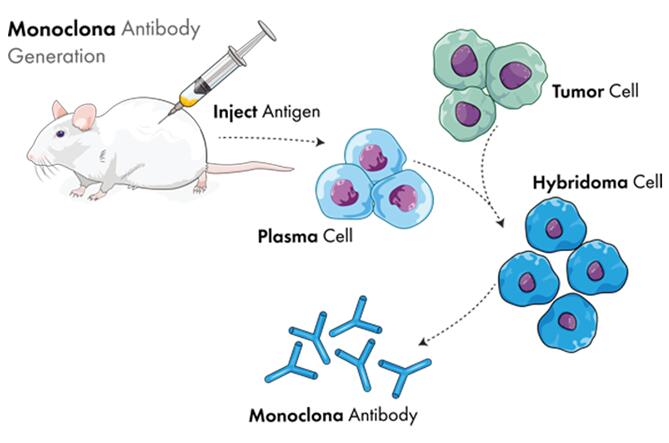
Animal hybridoma cells are essentially "antibody factories" made by fusing immune and myeloma cells. This combo gives you the best of both worlds: the ability to make specific antibodies (from the immune cell) and the endless growth potential of cancer cells (from the myeloma). That makes them an essential component for the production of monoclonal antibodies that are used in all kinds of applications, from basic research to diagnostic kits..

Our collection of animal hybridoma cell lines provides a ready source for making these specific antibodies. Instead of going through the labour-intensive process of immunising animals and screening for antibodies, you can jump right in with these pre-existing cell lines that have already been shown to produce high quality mAbs against specific targets.

High-Specificity Ready-to-Culture Diverse Targets Stable Secretion
Animal Hybridoma Cells in Culture
Product List

Key Features & Expertise

These hybridoma cell lines are selected for their reliability and specific applications

Toxin Icon

Targeted Against Key Toxins

  • Proven efficacy against bacterial threats like Clostridium perfringens Alpha-toxin
  • Specific clones available for Pertussis Toxin subunits (S-1, S-2, S-3, S-4)
  • Ideal for developing sensitive detection assays for food and water safety

Glycan Icon

Specialized for Glycan Research

  • Produces antibodies against complex carbohydrates and gangliosides
  • Clones like OMR5 and BMR26 recognize specific neutral oligosaccharides
  • Essential tools for scientists studying cell surface markers and glycoliology

Virus Icon

Versatile Protein Recognition

  • Reliable binding to viral proteins, such as the SV40 Large T-antigen
  • Includes antibodies against bacterial proteins like recA and FHA
  • Supports a wide range of immunoassays including ELISA and Western Blot

FAQ

What exactly do these hybridoma cells do?

Think of them as tiny, living factories. Once you culture them, they continuously secrete a single type of antibody (monoclonal antibody) that is pre-programmed to find and bind to a very specific target, like a toxin or a protein. You just need to grow the cells and collect the antibody from the liquid they are growing in.

I see many different clones for Pertussis Toxin. Which one should I pick?

It really depends on what part of the toxin you want to detect. We offer specific clones like Anti-PT-S1-1A12, Anti-PT-S2-5A11, Anti-PT-S3-1B4, and Anti-PT-S4-7F2. If you need to study the structure-function relationship, picking individual subunit-specific antibodies is crucial. If you just need a general detector for the whole toxin, any of them would likely work.

Can I use these for detecting toxins in food samples?

Yes, absolutely. Several of our hybridomas are perfect for this. For example, the Anti-α(7)C9A10 clone is specific for Clostridium perfringens Alpha-toxin, making it a reliable tool for developing rapid tests for food safety monitoring.

How do I get the antibodies from these cells?

It's straightforward. You culture the hybridoma cells in their recommended medium. As they grow, they release the antibodies into the surrounding fluid (the supernatant). You can then collect this fluid and purify the antibody out using standard protein purification techniques like Protein A/G chromatography.

Are these cell lines difficult to maintain?

Not at all. They are quite robust. They grow in standard cell culture media with serum, similar to other immortalized cell lines. We provide the specific culture conditions for each line to ensure they keep producing high levels of antibody for you.

Do you provide the purified antibodies or just the cells?

This listing is for the hybridoma cell lines themselves. This gives you the flexibility to produce and purify the antibodies in your own lab according to your specific experimental needs. However, since these lines are so well-characterized, the purification process is usually very efficient.

Filters Clear all filters

Species

  • African clawed frog (1)
  • American mink (1)
  • Asian tiger mosquito (1)
  • Atlantic salmon (1)
  • Bluegill (2)
  • Bluestriped grunt (1)
  • Bovine (7)
  • Brazilian free-tailed bat (1)
  • Brown bullhead (2)
  • Cabbage looper (1)
  • Cabbage moth (6)
  • Cat (3)
  • Central mudminnow (1)
  • Chicken (3)
  • Chinese hamster (5)
  • Chinook salmon (2)
  • Chum salmon (1)
  • Coho salmon (1)
  • Common carp (2)
  • Cotton-top tamarin (1)
  • Dog (2)
  • Fall armyworm (3)
  • Fathead minnow (2)
  • Fruit fly (1)
  • Gilthead sea bream (2)
  • Golden hamster (7)
  • Goldfish (6)
  • Gray dwarf hamster (1)
  • Green monkey (2)
  • Gypsy moth (1)
  • Horse (1)
  • Japanese eel (1)
  • Japanese rice fish (7)
  • Koi carp (1)
  • Mouse (310)
  • Mouse x Gray dwarf hamster (1)
  • Mouse x Rat (20)
  • Northern pike (1)
  • Pig (3)
  • Rabbit (2)
  • Rainbow trout (3)
  • Rat (114)
  • Rhesus macaque (1)
  • Salt marsh moth (1)
  • Sheep (2)
  • Snakehead murrel (2)
  • Sockeye salmon (1)
  • Vervet monkey (2)
  • Zebrafish (2)

Source

  • Abdomen (1)
  • Adipose (2)
  • Adrenal Gland (1)
  • Aorta (4)
  • Artery (1)
  • Ascites (5)
  • Ascites Metastasis (5)
  • Bladder (11)
  • Bladder Metastasis (1)
  • Blastocyst (1)
  • Blastula (1)
  • Blood (7)
  • Bone (6)
  • Bone Marrow (14)
  • Brain (24)
  • Brain Metastasis (1)
  • Breast (22)
  • Caudal Peduncle (1)
  • Caudal Trunk (2)
  • Colon (6)
  • Connective Tissue (7)
  • Dermis (1)
  • Embryo (29)
  • Fetus (2)
  • Fin (9)
  • Glomerulus (2)
  • Head Kidney (2)
  • Heart (4)
  • Hemolymph (1)
  • Ileum (1)
  • Intestine (9)
  • Jejunum (1)
  • Kidney (18)
  • Liver (22)
  • Lung (16)
  • Lymph Node (2)
  • Lymph Node Metastasis (1)
  • Muscle (3)
  • Ovary (8)
  • Pancreas (9)
  • Peripheral Blood (7)
  • Peripheral Nervous System (21)
  • Pituitary Gland (7)
  • Prostate (3)
  • Rectum (2)
  • Skeletal Muscle (4)
  • Skin (10)
  • Small Intestine (3)
  • Smooth Muscle (2)
  • Soft Tissue (1)
  • Spinal Cord (2)
  • Testis (6)
  • Thymus (5)
  • Thyroid Gland (1)
  • Trachea (1)
  • Uterus (1)

Disease

  • Bovine Leukemia (2)
  • Canine Histiocytic Sarcoma (1)
  • Chicken Bursal Lymphoma (2)
  • Goldfish Erythrophoroma (4)
  • Hamster Kidney Tumor (1)
  • Hamster Pancreatic Ductal Adenocarcinoma (1)
  • Hamster Uterine Leiomyosarcoma (1)
  • Medaka Hepatoma (2)
  • Mouse Bladder Transitional Cell Carcinoma (1)
  • Mouse Chondrosarcoma (1)
  • Mouse Colon Adenocarcinoma (3)
  • Mouse Ependymoma (2)
  • Mouse Erythroid Leukemia (13)
  • Mouse Fibrosarcoma (5)
  • Mouse Glioblastoma (1)
  • Mouse Hemangioendothelioma (1)
  • Mouse Hepatocellular Carcinoma (1)
  • Mouse Insulinoma (3)
  • Mouse Islet Cell Adenoma (1)
  • Mouse Kidney Carcinoma (1)
  • Mouse Leukemia (10)
  • Mouse Leydig Cell Tumor (1)
  • Mouse Lymphoma (8)
  • Mouse Mammary Gland Malignant Neoplasm (21)
  • Mouse Melanoma (9)
  • Mouse Multiple Myeloma (5)
  • Mouse Myeloid Leukemia (3)
  • Mouse Neoplasm (1)
  • Mouse Neuroblastoma (21)
  • Mouse Oral Cavity Squamous Cell Carcinoma (1)
  • Mouse Osteosarcoma (3)
  • Mouse Pituitary Gland Neoplasm (1)
  • Mouse Precursor T Cell Lymphoblastic Lymphoma/Leukemia (2)
  • Mouse Pulmonary Adenoma (1)
  • Mouse Pulmonary Malignant Tumor (3)
  • Mouse Pulmonary Squamous Cell Carcinoma (1)
  • Mouse Rectum Carcinoma (2)
  • Mouse Reticulum Cell Sarcoma (2)
  • Mouse Sarcoma (1)
  • Mouse Teratocarcinoma (8)
  • Mouse Thymic Lymphoma (3)
  • Rat C-Cell Carcinoma (1)
  • Rat Cholangiocarcinoma (1)
  • Rat Colon Adenocarcinoma (5)
  • Rat Digestive System Neoplasm (1)
  • Rat Fibrosarcoma (1)
  • Rat Hepatocellular Carcinoma (20)
  • Rat Histiocytic Sarcoma (1)
  • Rat Insulinoma (2)
  • Rat Leukemia (1)
  • Rat Leydig Cell Adenoma (1)
  • Rat Lung Carcinoma (1)
  • Rat Malignant Glioma (4)
  • Rat Malignant Meningioma (1)
  • Rat Malignant Oligodendroglioma (2)
  • Rat Malignant Thymoma (3)
  • Rat Mammary Gland Adenocarcinoma (10)
  • Rat Neuroblastoma (3)
  • Rat Osteosarcoma (2)
  • Rat Pituitary Gland Neoplasm (6)
  • Rat Prostate Adenocarcinoma (3)
  • Rat Rhabdomyosarcoma (1)
  • Rat Sarcoma (2)
  • Rat Squamous Cell Carcinoma (1)
  • Rat Urinary Bladder Transitional Cell Carcinoma (2)
  • Rat Urinary System Neoplasm (6)

Description: Anti-recA protein mAb (IgG2b)

Cat#: CSC-C6534J INQUIRY

Description: Anti-SV40 large T antigen mAb (IgG)

Cat#: CSC-C6535J INQUIRY
6E2
6E2

Description: Hybridoma cell line expressing anti-human SSEA-4 monoclonal antibody.

Cat#: CSC-C6536J INQUIRY

Description: Hybridoma producing a monoclonal antibody against F1-linked neutral oligosaccharides of ...

Cat#: CSC-C6537J INQUIRY

Description: Hybridoma producing a monoclonal antibody against Globoside.

Cat#: CSC-C6538J INQUIRY

Description: Hybridoma producing a monoclonal antibody against M1-linked neutral oligosaccharides of ...

Cat#: CSC-C6539J INQUIRY

Description: Hybridoma producing a monoclonal antibody against Sulfatide.

Cat#: CSC-C6540J INQUIRY

Description: Hybridoma producing a monoclonal antibody against N-linked neutral oligosaccharides of ...

Cat#: CSC-C6541J INQUIRY

Description: Hybridoma producing a monoclonal antibody against GalCer.

Cat#: CSC-C6542J INQUIRY

Description: Hybridoma producing a monoclonal antibody against SGPG.

Cat#: CSC-C6543J INQUIRY

Description: Hybridoma producing a monoclonal antibody against 2-3NeuAca-nLc4Cer gangliosides.

Cat#: CSC-C6544J INQUIRY

Description: Hybridoma producing a monoclonal antibody against gonyautoxin.

Cat#: CSC-C6545J INQUIRY

Description: Hybridoma producing a monoclonal antibody against tetrodotoxin.

Cat#: CSC-C6546J INQUIRY

Description: Hybridoma producing a monoclonal antibody against Medaka Vitellogenin.

Cat#: CSC-C6547J INQUIRY

Description: Hybridoma producing a monoclonal antibody against domoic acid.

Cat#: CSC-C6548J INQUIRY

Description: Hybridoma producing a monoclonal antibody against Medaka Vitellogenin.

Cat#: CSC-C6549J INQUIRY

Description: Hybridoma that produce anti-human G1MF (allotype of IgG1) antibody.

Cat#: CSC-C6550J INQUIRY

Description: Mouse T cell hybridoma (DO-11.10) expressing double HA-tagged HS1BP3 (HS1 SH3 domain binding ...

Cat#: CSC-C6551J INQUIRY

For research use only. Not for any other purpose.