
Exosome Isolation and Purification
Exosomes are small extracellular vesicles and present in almost all types of body fluids. They can be loaded with various materials such as proteins, RNAs and DNA, therefore they are crucial for cell-cell communication by transmitting signals to regulate diverse cellular functions in recipient cells present at particular sites. They can also exert a significant impact on the development of disease processes. Recently, exosomes are becoming a hot topic for research, especially in the fields of disease diagnosis, prognosis, therapy, and biomarker discovery. The isolation and purification of exosomes from biological fluids is a prerequisite step in exosome research. High purity of exosomes is still technically challenging to achieve which can affect the outcome.
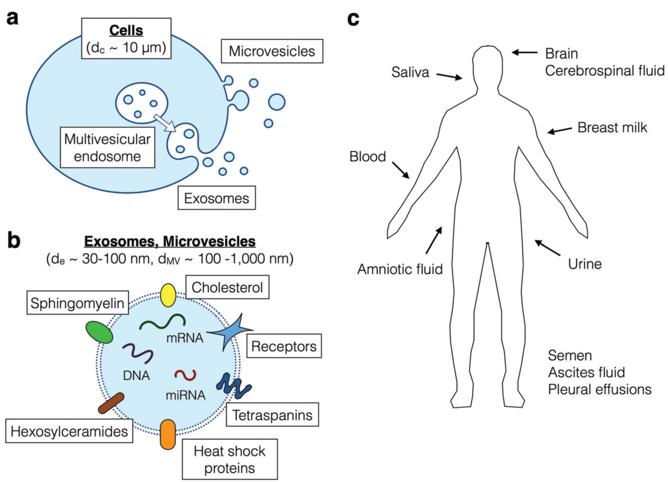 Figure 1 a. The biogenesis of exosomes and microvesicles from cells. b. A schematic showing the contents of exosomes and microvesicles. c. A cartoon showing the distribution of circulating exosomes and microvesicles in non-invasively obtainable clinical samples.
Different biophysical and biochemical properties can be adapted to isolate exosomes, including size, mass density, shape, charge, and antigen exposure. The principles of the most common isolation methods are presented below.
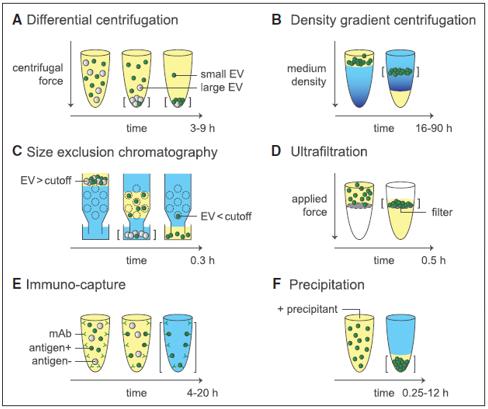 Figure 2 Working principle of common methods to isolate extracellular vesicles (EVs).
Creative Bioarray provides reliable techniques for exosome isolation from different sample matrices. We also provide exosome isolation using specified techniques if required by customers. We will perform QC assays to ensure the integrity and purity of the isolated materials.
Creative Bioarray provides exosome isolation and purification services, including but not limited to:
- Intact exosome isolation (from plasma, serum, cell culture medium, urine, saliva or other biofluids)
Our various isolation techniques enable easy, fast and efficient enrichment of intact exosomes from multiple types of body fluids following your special requirement.
- Exosome RNA isolation
The total RNA (including small RNA fraction) from exosomes is purified to meet your experimental needs.
- Exosome proteins isolation
- Exosome miRNA isolation
- Exosome DNA isolation
- Other exosome species
Creative Bioarray's Exosome Isolation and Identification services deliver our clients high-quality, intact and functional exosomes from various biofluids with our extensive knowledge and working experience in this field. If you have any special needs or questions regarding our services, please feel free to contact us. We look forward to working with you in the future.
References
- Ko, J.; et al. Detection and isolation of circulating exosomes and microvesicles for cancer monitoring and diagnostics using micro-/nano-based devices. Analyst. 2016, 141(2): 450-60.
- Sunkara, V.; et al. Emerging techniques in the isolation and characterization of extracellular vesicles and their roles in cancer diagnostics and prognostics. Analyst. 2016, 141(2): 371-381.
- Coumans F.A.W.; et al. Methodological guidelines to study extracellular vesicles. Circ Res. 2017, 120(10): 1632-1648.
Explore Other Options