
The 8 Types of Drug Toxicity Every Researcher Must Know
A Comprehensive Guide to Preclinical Safety and Toxicity Assessment
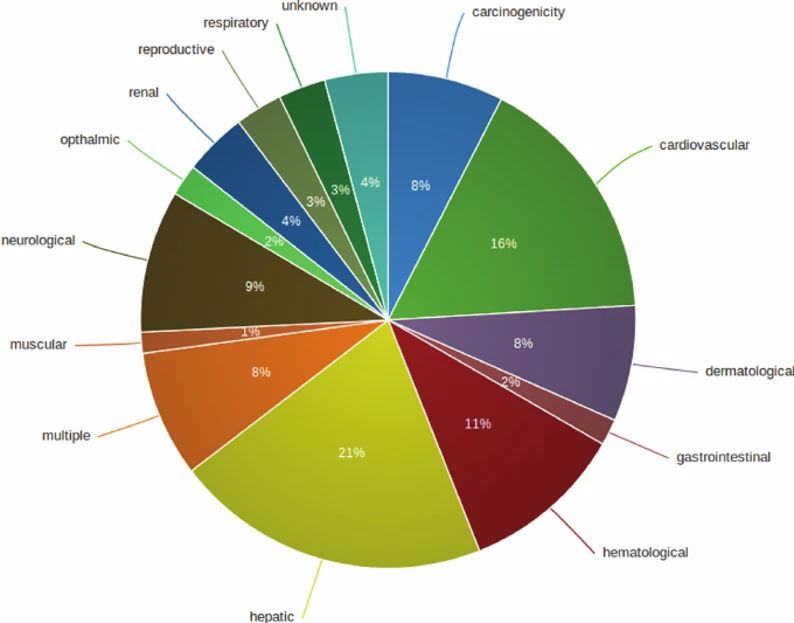
Drug toxicity is perhaps one of the most significant problems faced by drug developers today. Although medicinal chemists and biologists work tirelessly to identify and screen for unwanted toxic effects, safety failures cause more drug attrition and late-stage setbacks than any other single reason. Additionally, there are certain examples of previously marketed drugs being removed from the market entirely due to toxic effects that were identified after they had already been approved. Identifying toxicity early and evaluating it thoroughly not only keeps future patient-safety, it saves time and money during the drug development process. For this reason, assessment of potential toxicity is an integral part of the drug discovery and development process.
The purpose of this article is to provide an in-depth but understandable look at various types of drug induced toxicity. We will discuss what each type of toxicity is, why we care about it, and how it can be evaluated before clinical trials begin.
What is Drug Toxicity?
In the simplest terms, drug toxicity refers to the harmful effects that a pharmaceutical compound
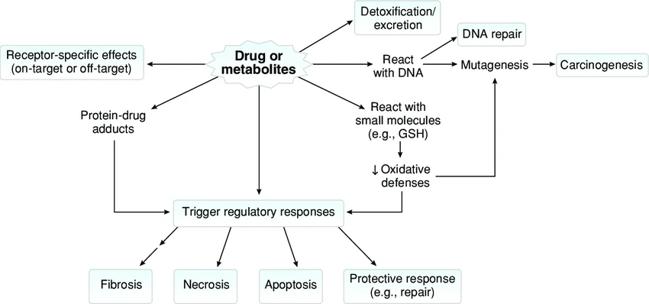
Drug toxicity refers to the potential of a pharmaceutical compound to cause adverse effects on biological systems beyond its intended therapeutic action. These unwanted effects can range from mild biochemical alterations to severe organ damage, and they represent a primary concern throughout drug development. The importance of thorough toxicity assessment cannot be overstated, as it serves as the critical bridge between promising laboratory results and safe human administration.
Why is toxicity evaluation important?
Broadly speaking, there are three reasons we care about toxicity:
- We care about toxicity to ensure the safety of future patients
- We care about toxicity because identifying potential safety issues early can save millions of dollars and years of time
- We care about toxicity because regulatory agencies such as the FDA, EMA, and NMPA have strict requirements that submissions satisfy before approval. Part of satisfying these requirements is providing adequate safety data.
The current standard toxicity evaluation pipeline starts with in silico prediction, then high throughput in vitro screening. These usually involve 2D cell culture models. Toxicity data is then further evaluated using more complex 3D models and eventually in vivo studies. Let's take a closer look at each of the 8 most common types of toxicity.
The Eight Major Types of Drug Toxicity: Mechanisms and Assessment
1. Hepatotoxicity (liver toxicity)
The liver is the major metabolic organ in the body. As you might imagine, this puts it at risk for injury from drug metabolites. Injury can occur through mechanisms such as cell death, immune-mediated injury, mitochondrial dysfunction, and bile acid transport disruption. Drug induced liver injury (DILI) is the most common cause of acute liver failure in the western world, and the cause of withdrawal for many pharmaceutical compounds.
Assessment approaches:
| Traditional Methods | Innovative Models | Biomarkers |
|---|---|---|
| Serum biomarkers (ALT, AST, ALP, bilirubin), histopathological evaluation, and in vivo models | Human liver organoids, liver-on-a-chip microphysiological systems, and 3D hepatocyte cultures that better preserve metabolic function | Emerging biomarkers like miR-122, HMGB1, and keratin-18 fragments offer improved sensitivity and specificity for early detection |
2. Nephrotoxicity (kidney toxicity)
The kidney also receives a large amount of blood flow and is responsible for blood concentration. For these reasons, it is susceptible to toxic injury. As with many other toxicity types, there are many parts of the kidney that can be affected by toxic compounds. Proximal tubule cells are particularly at risk because they take part in active secretion.
Assessment approaches:
| Standard Evaluation | Innovative Models | Species Considerations |
|---|---|---|
| Serum creatinine, blood urea nitrogen (BUN), urinalysis, and kidney histopathology | Kidney organoids derived from human pluripotent stem cells, microfluidic kidney chips that replicate filtration and reabsorption functions | Important interspecies differences in kidney physiology necessitate careful model selection and data interpretation |
3. Cardiotoxicity (heart toxicity)
Cardiotoxicity refers to harmful effects on the cardiovascular system - including arrhythmias, reduced contractility, and even heart failure. Traditional animal models and in vitro cardiomyocyte assays are used, but recent organ‑on‑a‑chip and human iPSC‑derived cardiomyocyte systems offer improved relevancy for human reactions.
Cardiotoxic events are a prominent reason for drug withdrawals or clinical failure, especially for compounds interacting with cardiac ion channels or mitochondrial function.
Assessment approaches:
| Standard Evaluation | Innovative Models | Regulatory Framework |
|---|---|---|
| hERG channel assays, multi-electrode array systems for arrhythmia detection, echocardiography, and cardiac biomarkers (troponins, BNP) | Heart-on-a-chip systems that simulate mechanical and electrical functions, human stem cell-derived cardiomyocytes in 3D culture | ICH S7B and E14 guidelines establish standardized requirements for thorough QT studies and comprehensive cardiovascular assessment |
4. Neurotoxicity (nervous system toxicity)
Neurotoxic compounds can enter the brain by passing through the blood brain barrier, or they can affect the peripheral nervous system. Neurotoxicity can occur by numerous mechanisms including neuronal cell apoptosis, neurotransmitter dysfunction, activation of glial cells, and myelin damage or disruption.
Assessment approaches:
| Behavioral Assessments | Innovative Models | Biomarkers |
|---|---|---|
| Functional observational batteries, motor activity measurements, and cognitive function tests in animal models | Human iPSC-derived neurons and glial cells, 3D brain organoids, microelectrode arrays for network activity monitoring | Neurofilament light chain, tau, and GFAP as potential indicators of neuronal and glial injury |
5. Hematotoxicity & immunotoxicity
Toxic compounds can cause damage to cells in the hematopoietic and immune systems. These rapidly replicating cells become vulnerable to toxic insults that interfere with cellular replication. Hematotoxicity can present as bone marrow damage or damage to circulating blood cells. Immunotoxic effects can range from drugs being immunosuppressive to drugs causing unregulated immune activation (cytokine release syndrome).
Assessment approaches:
| Standard Hematology | Immune System Assessment | Specialized Models |
|---|---|---|
| Complete blood counts, differential analysis, bone marrow evaluation | Cytokine profiling, lymphocyte proliferation assays, immune cell phenotyping, and complement activation tests | Humanized mouse models, primary human immune cell co-cultures, and sophisticated in vitro systems that capture immune cell interactions |
6. Reproductive & developmental toxicity
These assessments evaluate effects on fertility, embryonic/fetal development, and postnatal growth-critical considerations for drugs that might be used by individuals of childbearing potential. The complex hormonal regulation of reproduction and precisely timed events in development create multiple potential targets for toxic disruption.
Assessment approaches:
| Regulatory Framework | Alternative Methods | Endocrine Disruption |
|---|---|---|
| ICH S5(R3) guidelines outline a comprehensive three-segment approach covering fertility, embryonic development, and pre/post-natal development | Embryonic stem cell tests, zebrafish embryo models, and microphysiological systems that reduce animal use while maintaining predictive value | Special attention to compounds that might interfere with hormonal signaling pathways |
7. Genetic toxicity (genotoxicity)
Genotoxic compounds can cause damage to DNA. This damage can occur in the form of covalent bonding to DNA, oxidative damage, or by interfering with replication or DNA repair mechanisms. If DNA damage is not repaired properly, it can lead to mutations or chromosome abnormalities which can lead to cancer.
Assessment approaches:
| Standard Battery | Modern Techniques | Integrated Strategy |
|---|---|---|
| Ames test (bacterial reverse mutation), in vitro mammalian cell micronucleus or chromosome aberration tests, and in vivo follow-up studies | Comet assay for DNA strand breaks, transgenic rodent mutation assays, and in silico prediction tools for early screening | A weight-of-evidence approach that considers all available data, as no single test can detect all genotoxic mechanisms |
8. Other toxicities
Although the toxicities discussed above are considered the most important, there are other toxicities that should be evaluated during the preclinical phase of drug development.
- Pulmonary toxicity: If your drug will be administered via inhalation or your drug targets the lungs, pulmonary toxicity should be evaluated.
- Dermal and ocular toxicity: Are skin or eyes relevant to your drug? If so, consider preclinical methods for assessing toxicity to these organs.
- Endocrine toxicity: Some drugs may negatively affect the hormonal feedback mechanisms in the body.
- Gastrointestinal toxicity: Doesn't always get considered but can have a serious impact on patient quality of life.
Conclusion
Preclinical toxicity evaluation is no longer black and white. Yes, there are standard tests we should perform to evaluate certain types of toxicity. But how can we get ahead of these concerns? How can we innovate to discover potential toxicity earlier in the discovery process? Toxicology is a complex subject that should be tailored to each project.
Need help implementing a preclinical toxicity assessment strategy? Contact us and we'll connect you with one of our toxicology experts.
Creative Bioarray Relevant Recommendations
| Products & Services | Description |
|---|---|
| Safety Evaluation Services | With years of expertise, Creative Bioarray serves as a trusted partner in safety evaluation, specializing in preclinical toxicology testing. Our comprehensive testing platform supports applications throughout all stages of product development. |
| In Vivo Toxicity Study | Creative Bioarray's GLP toxicology studies include administration routes ranging from acute to chronic. With internal resources, we can also provide a full range of toxicological assessments. |
Reference
- Siramshetty VB, Nickel J, et al. WITHDRAWN--a resource for withdrawn and discontinued drugs. Nucleic Acids Res. 2016. 44(D1):D1080-6.