ATP Content in 3D Cell Cultures
Creative Bioarray is a leading provider of various 3D cell culture models and assays based on 3D cell cultures. Among them is ATP content assay which can be applied to the assessment of cytotoxicity of drugs or drug candidates.
ATP is the major intracellular energy currency. Upon cell death, cell loses its ability to synthesize ATP, and remaining ATP in the cells would be destroyed quickly by endogenous ATPases. Thus cellular ATP generation and ATP concentration are closely related to cell viability and normal cell function. Therefore, cellular ATP content can serve as a biochemical indicator of general cell viability or cytotoxicity of chemicals.
Creative Bioarray offers the detection of cellular ATP content in 3D cell cultures after exposure to chemicals at different concentrations with repeat doses. Data obtained can be applied to the calculation of IC50 and minimum effective concentration (MEC).
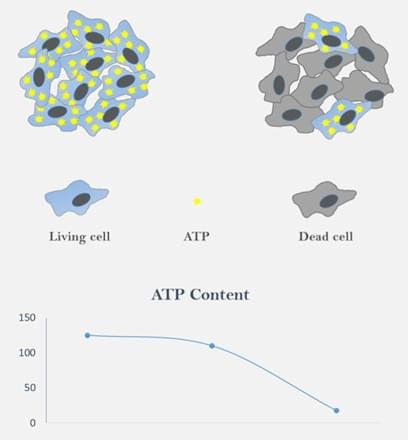
With our well developed 3D cell culture models, effects of drugs can be monitored in an in-vivo like microenvironment which enables the generation of more reliable and predictive results. With 3D cell culture models derived from different cell types, this assay can be used to measure hepatotoxicity, cardiotoxicity, nephrotoxicity, and more.
Creative Bioarray can also provide other assays based on 3D cell cultures, and is capable of adjusting the assays according to the request of the customers. With our highly experienced scientific team, a various collection of functional 3D cell cultures, advanced techniques and equipment, we are confident in our ability to accommodate all your needs. If you have any questions, please feel free to contact us.
Explore Other Options

For research use only. Not for any other purpose.
Services
-
Cell Services
- Cell Line Authentication
- Cell Surface Marker Validation Service
-
Cell Line Testing and Assays
- Drug-Resistant Cell Models
- Cell Viability Assays
- Cell Proliferation Assays
- Cell Migration Assays
- Soft Agar Colony Formation Assay Service
- SRB Assay
- Cell Apoptosis Assays
- Cell Cycle Assays
- Cell Angiogenesis Assays
- DNA/RNA Extraction
- Cellular Phosphorylation Assays
- Stability Testing
- Sterility Testing
- Endotoxin Detection and Removal
- Phagocytosis Assays
- Cell-Based Screening and Profiling Services
- 3D-Based Services
- Custom Cell Services
- Cell-based LNP Evaluation
-
Stem Cell Research
- iPSC Generation
- iPSC Characterization
-
iPSC Differentiation
- Neural Stem Cells Differentiation Service from iPSC
- Astrocyte Differentiation Service from iPSC
- Retinal Pigment Epithelium (RPE) Differentiation Service from iPSC
- Cardiomyocyte Differentiation Service from iPSC
- T Cell, NK Cell Differentiation Service from iPSC
- Hepatocyte Differentiation Service from iPSC
- Beta Cell Differentiation Service from iPSC
- Brain Organoid Differentiation Service from iPSC
- Cardiac Organoid Differentiation Service from iPSC
- Kidney Organoid Differentiation Service from iPSC
- GABAnergic Neuron Differentiation Service from iPSC
- Undifferentiated iPSC Detection
- iPSC Gene Editing
- iPSC Expanding Service
- MSC Services
- Stem Cell Assay Development and Screening
- Cell Immortalization
-
Molecular Biology Solutions
- Chromosome & Genomic Analysis
-
Cytogenetics & Molecular Cytogenetics Analysis
- Fluorescent In Situ Hybridization (FISH)
- In Situ Hybridization (ISH) & RNAscope
- ImmunoFISH (FISH+IHC)
- I-FISH
- Splice Variant Analysis (FISH)
- RNA FISH in Plant
- mtRNA Analysis (FISH)
- Digital ISH Image Quantification and Statistical Analysis
- Telomere Length Analysis (Q-FISH)
- Telomere Length Analysis (qPCR assay)
- Droplet Digital PCR (ddPCR)
- QuantiGene Plex Assay
- Probe Development & Quality Control
- ISH/FISH Analysis for Therapeutic R&D
- Cell Line Characterization
- Pathogen & Microbial Analysis
- Histology Services
- Exosome Research Services
- Drug Metabolism and Pharmacokinetics (DMPK)
-
Safety Evaluation Services
- High-Throughput Toxicity Screening
- High-Content Cytotoxicity Screening
- In Vitro Cardiotoxicity
- In Vitro Genotoxicity
- In Vitro Hepatotoxicity
- In Vitro Neurotoxicity
- In Vitro Nephrotoxicity
- In Vitro Dermal Toxicology
- Ocular Toxicity
- In Vitro Cytotoxicity
- Endocrine Disruption Screening Assay
- In Vivo Toxicity Study