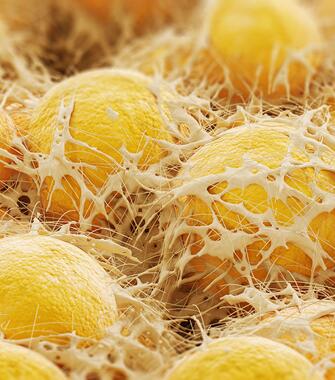

Adipose Cells
Adipose tissue is a highly active metabolic and endocrine organ involved in energy storage, lipid metabolism, insulin sensitivity, inflammation, and vascular regulation. Adipose-derived cells are widely used in obesity, diabetes, metabolic syndrome, and adipogenesis research.
Our adipose cell collection includes preadipocytes, adipose microvascular endothelial cells, mesenteric-derived cells, and diabetes-related adipose disease models. These well-characterized cell systems provide reliable in vitro platforms for studying adipocyte differentiation, metabolic dysfunction, insulin resistance, and adipose tissue biology.

Our Adipose Cell Portfolio Highlights
-
Diverse Adipose Cell Types
- Subcutaneous and visceral human preadipocytes
- Omental and peri-renal adipose precursor cells
- Adipose microvascular endothelial cells and mesenteric cells
-
Disease-Relevant Adipose Models
- Type I diabetes-associated adipose cell models
- Type II diabetes-associated adipose cell models
- Depot-specific adipose cells for metabolic research
-
Flexible Supply Options
- Ready-to-use cryopreserved cells
- Custom cell sourcing and procurement

-
Disease-Oriented Model Selection
Guidance in selecting healthy or disease-associated adipose cell models for obesity, diabetes, and metabolic disease research.
-
Depot-Specific Cell Resources
Access to adipose cells derived from subcutaneous, visceral, omental, and peri-renal fat depots for comparative studies.
-
Adipose Microenvironment Studies
Support for investigations involving adipocytes, stromal cells, and vascular components of adipose tissue.
-
Scalable Project Supply
Flexible supply solutions for exploratory research, long-term metabolic studies, and larger-scale screening programs.
What types of adipose cells are available?
Our portfolio includes human preadipocytes from subcutaneous, visceral, omental, and peri-renal adipose tissues, mesenteric cells, adipose microvascular endothelial cells, and disease-associated adipose cell models.
Do you offer adipose cells from different fat depots?
Yes. We provide adipose-derived cells from multiple anatomical locations, including subcutaneous, visceral, omental, and peri-renal adipose tissues, allowing researchers to investigate depot-specific biological functions and disease mechanisms.
Are disease-related adipose cell models available?
Yes. We offer adipose cell models derived from donors with Type I and Type II diabetes, supporting studies of insulin resistance, adipose dysfunction, metabolic regulation, and diabetes-associated tissue remodeling.
Can these cells be used for adipogenesis studies?
Yes. Preadipocytes can be expanded and induced to differentiate into mature adipocytes, making them suitable for investigations of adipogenesis, lipid accumulation, metabolic regulation, and obesity-related mechanisms.
What applications are adipose cells commonly used for?
Adipose cells are widely used in obesity research, diabetes studies, adipogenesis assays, metabolic disease modeling, inflammation studies, adipose tissue vascularization research, and investigations of adipose tissue microenvironment interactions.
Filters Clear all filters
Species
- Human (797)
- Mouse (3)
- Rat (1)
Source
- Adipose (9)
- Adrenal Gland (4)
- Airway (7)
- Aorta (16)
- Artery (47)
- Bile Duct (1)
- Bladder (8)
- Blood (157)
- Bone (3)
- Bone Marrow (81)
- Brain (36)
- Breast (10)
- Bronchus (20)
- Cartilage (6)
- Chorion (2)
- Choroid (3)
- Ciliary Body (1)
- Colon (10)
- Conjunctiva (2)
- Cord Blood (24)
- Cornea (2)
- Dental Pulp (4)
- Dermis (43)
- Embryo (2)
- Endometrium (2)
- Epidermis (19)
- Esophagus (4)
- Eye (20)
- Foreskin (2)
- Gallbladder (1)
- Gingiva (2)
- Hair Follicle (5)
- Heart (14)
- Intestine (20)
- Iris (1)
- Kidney (31)
- Lens (1)
- Liver (34)
- Lung (56)
- Lymph Node (2)
- Mesentery (3)
- Nose (1)
- Oral Cavity (3)
- Ovary (10)
- Pancreas (8)
- Pancreatic Islet (1)
- Perineurium (1)
- Periodontal Ligament (2)
- Periodontium (4)
- Peripheral Blood (130)
- Peritoneal Cavity (2)
- Placenta (11)
- Prostate (8)
- Rectum (1)
- Retina (9)
- Seminal Vesicle (1)
- Skeletal Muscle (9)
- Skin (78)
- Small Intestine (5)
- Spinal Cord (1)
- Spleen (6)
- Stomach (3)
- Synovial Fluid (2)
- Synovium (8)
- Tendon (1)
- Testis (3)
- Thymus (3)
- Thyroid (4)
- Tongue (1)
- Tonsil (3)
- Tooth (4)
- Trabecular Meshwork (1)
- Trachea (6)
- Umbilical Cord (23)
- Uterus (7)
- Vas Deferens (1)
- Vein (30)
Cell Type
- Astrocyte (9)
- B Cell (22)
- Basophil (1)
- Cardiomyocyte (2)
- CD133+ Cell (6)
- CD34+ Cell (16)
- Cholangiocyte (1)
- Chondrocyte (4)
- Dendritic Cell (4)
- Endothelial Cell (133)
- Eosinophil (1)
- Epithelial Cell (84)
- Fibroblast (139)
- Glial Cell (14)
- Granule Cell (1)
- Granulocyte (3)
- Hepatic Stellate Cell (3)
- Hepatocyte (8)
- Interstitial Cell (1)
- Keratinocyte (14)
- Keratocyte (1)
- Kupffer Cell (1)
- Lymphocyte (55)
- Macrophage (4)
- Melanocyte (10)
- Meningeal Cell (1)
- Mesangial Cell (2)
- Mesothelial Cell (2)
- Microglia (1)
- Microvascular Cell (61)
- Monocyte (7)
- Mononuclear Cell (98)
- Myeloid Cell (2)
- Myoblast (5)
- Myosatellite Cell (1)
- Neuron (7)
- Neutrophil (2)
- NK Cell (5)
- Oligodendrocyte Progenitor Cell (3)
- Osteoblast (3)
- Pancreatic Stellate Cell (1)
- Pericyte (10)
- Podocyte (1)
- Preadipocyte (10)
- Progenitor Cell (4)
- Red Blood Cell (1)
- Satellite Cell (1)
- Schwann Cell (1)
- Sebocyte (1)
- Sertoli Cell (1)
- Skeletal Muscle Cell (2)
- Smooth Muscle Cell (48)
- Stromal Cell (16)
- Synoviocyte (6)
- T Cell (28)
- Tenocyte (1)
- Trabecular Meshwork Cell (1)
- Trophoblast (1)
Disease
- Acute Lymphocytic Leukemia (ALL) (15)
- Acute Myeloid Leukemia (AML) (13)
- Amyotrophic Lateral Sclerosis (ALS) (4)
- Aplastic Anemia (AA) (1)
- Arteriovenous Malformation (AVM) (1)
- Asthma (5)
- Astrocytoma (2)
- Autoimmune Hemolytic Anemia (AIHA) (1)
- Autoimmune Lymphoproliferative Syndrome (ALPS) (1)
- Breast Cancer (3)
- Cancer (121)
- Chronic Lymphocytic Leukemia (CLL) (19)
- Chronic Myeloid Leukemia (CML) (14)
- Chronic Obstructive Pulmonary Disease (COPD) (6)
- Colon Cancer (4)
- Crohn's Disease (3)
- Cystic Fibrosis (CF) (7)
- Diabetes (35)
- Diabetes Type 1 (16)
- Diabetes Type 2 (18)
- Diffuse Large B-Cell Lymphoma (4)
- Dilated Cardiomyopathy (DCM) (1)
- Duchenne Muscular Dystrophy (DMD) (5)
- Essential Thrombocythemia (ET) (1)
- Glioblastoma (3)
- Guillain-Barre Syndrome (GBS) (1)
- Hypertension (27)
- Idiopathic Thrombocytopenic Purpura (ITP) (1)
- Inflammatory Bowel Disease (IBD) (5)
- Iron-Deficiency Anemia (1)
- Kidney Cancer (3)
- Legg–Calvé–Perthes Disease (LCPD) (2)
- Leukopenia (1)
- Liver Cancer (3)
- Lung Cancer (6)
- Mantle Cell Lymphoma (MCL) (8)
- Melanoma (2)
- Mucopolysaccharidosis (2)
- Multiple Myeloma (MM) (12)
- Multiple Sclerosis (MS) (3)
- Muscular Dystrophy (MD) (1)
- Myelodysplastic Syndrome (MDS) (3)
- Neurofibromatosis (NF) (3)
- Non-Hodgkin Lymphoma (NHL) (10)
- Normal (524)
- Osteoarthritis (OA) (5)
- Ovarian Cancer (6)
- Pancreatic Cancer (1)
- Pancytopenia (1)
- Parkinson's Disease (PD) (2)
- Plasmacytoma (1)
- Polycythemia (1)
- Prostate Cancer (3)
- Psoriasis (4)
- Rheumatoid Arthritis (RA) (7)
- Robertsonian Translocation (ROB) (1)
- Sickle Cell Anemia (2)
- Systemic Lupus Erythematosus (SLE) (4)
- Thrombocytopenia (1)
- Transverse Myelitis (TM) (1)
- Ulcerative Colitis (UC) (2)
- Waldenström Macroglobulinemia (WM) (2)
Description: Preadipocytes are isolated from omental, mesenteric, or perirenal adipose tissue and are tested for ...
Description: Visceral preadipocytes can be cultured as growing precursor cells or differentiated into adipocytes ...
Description: 3T3-L1 murine adipocytes have been fundamental in metabolic disease research for over 30 years. ...
Description: Adipocytes play an important role in energy storage and metabolism. Adipocyte differentiation is a ...
Description: Microvascular endothelial cells line blood vessels and contribute to many biological processes such ...
Description: Preadipocytes, found in adipose tissues throughout adulthood, can proliferate and differentiate ...
Description: Diseased Preadiopcytes are isolated from diabetic type I donors. Further donor information may be ...
Description: Diseased Preadiopcytes are isolated from diabetic type II donors. Further donor information may be ...
Description: Diseased Preadiopcytes are isolated from diabetic type I or type II donors. Further donor ...