
MS-5
Cat.No.: CSC-C2763
Species: Mus musculus (Mouse)
Source: Bone Marrow
Morphology: adherent fibroblastic cells growing in monolayers
Culture Properties: monolayer
- Specification
- Scientific Data
- Q & A
- Customer Review
Viruses: PCR: SMRV -
TAF1 is required for fetal but not adult hematopoiesis in mice
Background
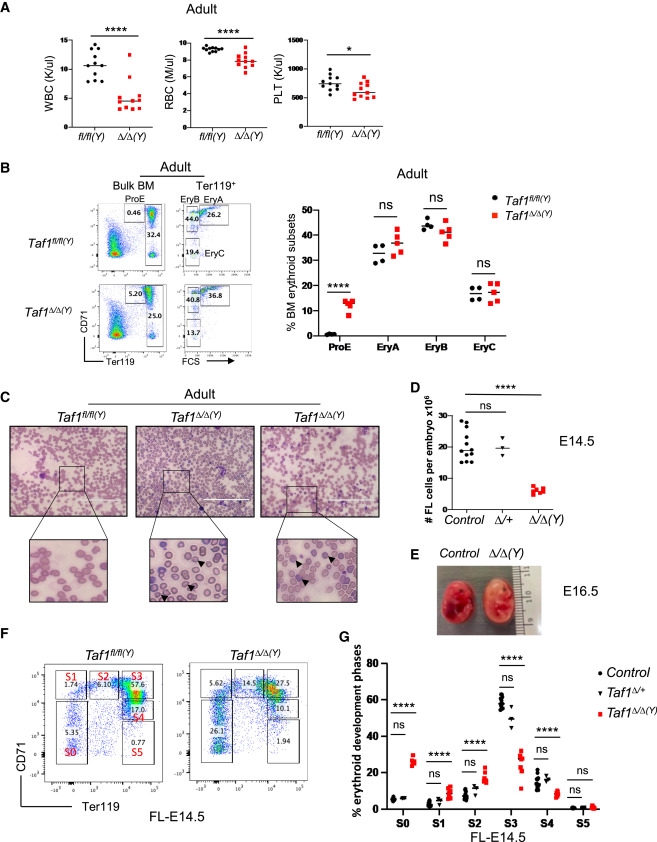
This study investigates TAF1, the largest TFIID subunit, in normal hematopoiesis using conditional knockout mice. TAF1 is essential for fetal hematopoiesis; its loss causes embryonic lethality and severe anemia. In contrast, adult hematopoiesis persists without TAF1 but shows HSPC expansion, enhanced self-renewal, and impaired differentiation. TAF1-null HSPCs fail to activate differentiation genes, and TAF1 loss disrupts TFIID chromatin recruitment, reduces RNAPII promoter-proximal pausing, and decreases promoter accessibility. These results reveal stage-specific transcriptional requirements and distinct mechanisms for self-renewal versus differentiation.
Key Findings
Using Taf1 conditional knockout mice, the authors show TAF1 is essential for fetal hematopoiesis, as Vav1-iCre-mediated deletion is embryonic lethal with severe fetal liver anemia and blocked erythroid differentiation. In contrast, adult Mx1-Cre-mediated TAF1 loss is not lethal; it causes HSPC expansion, increased self-renewal, impaired multilineage differentiation, and defective B/T cell development. TAF1-null HSPCs fail to upregulate key differentiation genes (Klf4, Gfi1, Cebpb, Csf1r) upon in vitro differentiation, while self-renewal genes remain largely unaffected. Mechanistically, TAF1 loss disrupts TFIID chromatin recruitment, reduces RNAPII promoter-proximal pausing/traveling ratio, decreases promoter-TSS accessibility, and impairs RNAPII promoter recruitment. Fetal HSPCs show stronger transcriptome changes, p53 activation, apoptosis, and cell-cycle defects than adult HSPCs.
Contribution
Creative Bioarray provided the MS5 murine stromal cell line (Cat# CSC-C2763), which was used as the stromal layer for cobblestone-area-forming cell (CAFC) and long-term culture-initiating cell (LTC-IC) assays. This supported assessment of HSPC self-renewal and differentiation capacity in TAF1-deficient cells.
A Thymus-Independent Artificial Organoid System Supports Complete Thymopoiesis from Rhesus Macaque-Derived Hematopoietic Stem and Progenitor Cells
Background
This study developed a rhesus macaque-specific artificial thymic organoid (RhATO) to model thymopoiesis without primary thymus tissue. Mouse MS5 stromal cells expressing rhesus DLL1 were aggregated with bone marrow-derived CD34+CD3− HSPCs in 3D culture. RhATOs supported sequential thymocyte intermediates—CD7+ thymus-seeding progenitors, CD4+CD3− immature single-positive cells, CD4+CD8+ double-positive thymocytes—and mature CD4+ and CD8+ single-positive T cells. Generated T cells expressed CD38, resembled recent thymic emigrants, underwent TCRαβ selection, and produced cytokines upon stimulation, establishing a versatile ex vivo platform for NHP T cell development.
Key Findings
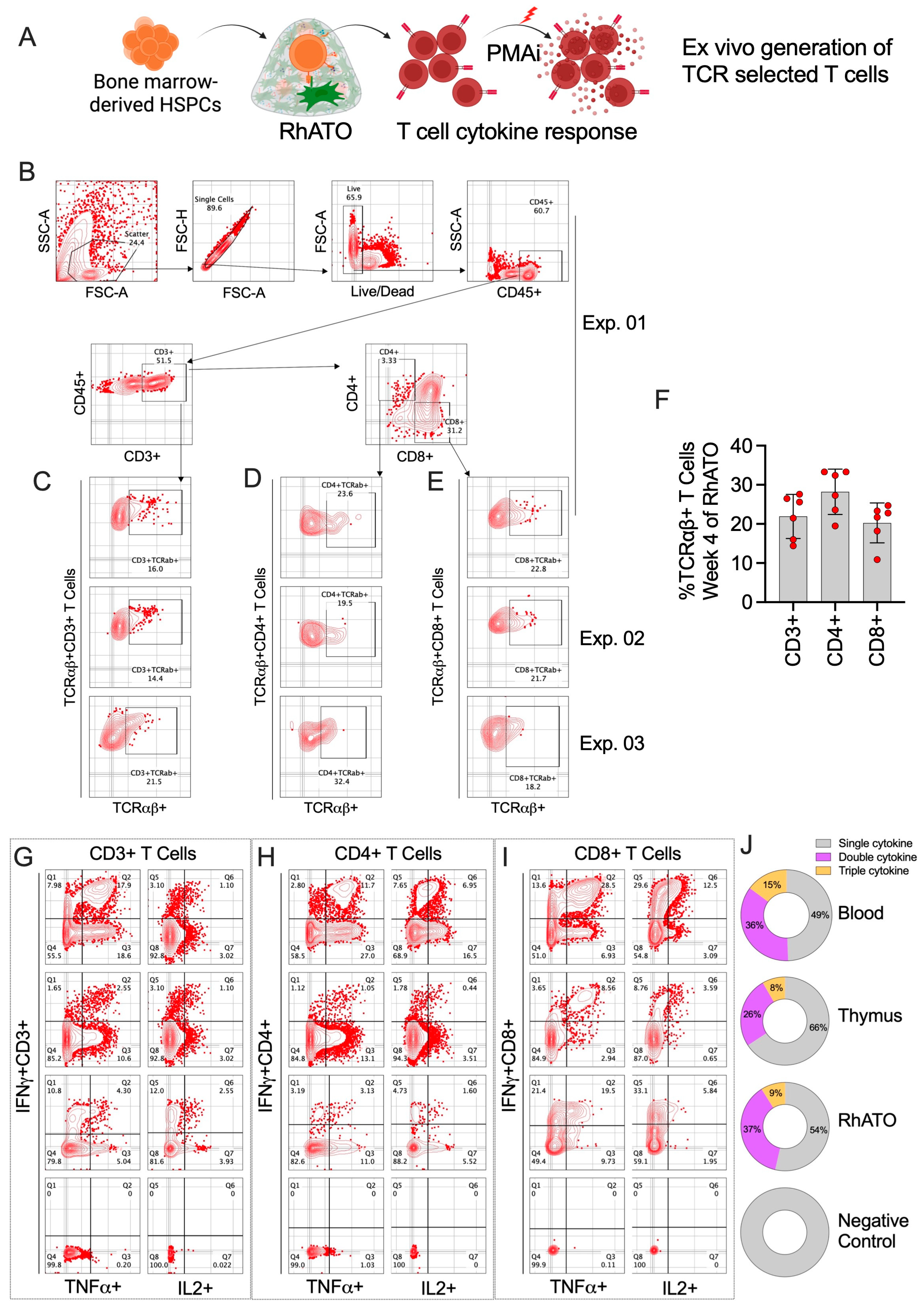
RhATOs recapitulated complete thymopoietic ontogeny from rhesus bone marrow HSPCs: thymus-seeding progenitors, CD4+CD3− immature single-positive thymocytes, CD4+CD8+ double-positive thymocytes, and mature CD3+CD4+ or CD3+CD8+ single-positive T cells. The system favored T cell lineage differentiation over B/NK cells, with CD7+ cells comprising ~80% of lymphocytes. Mature T cells expressed CD38 at frequencies comparable to thymus (CD4+ ~81%, CD8+ ~86%), consistent with recent thymic emigrant phenotype. By four weeks, RhATOs yielded TCRαβ-selected CD3+ T cells (~21%) and CD4+/CD8+ subsets (~27%/~20%). Upon PMA/ionomycin stimulation, RhATO-derived T cells produced IFN-γ, TNF-α, and IL-2, including polyfunctional single, double, and triple cytokine responders, demonstrating functional competence. RhATO also supported human HSPC-derived T cell development, underscoring cross-species utility.
Contribution
Creative Bioarray provided the murine bone marrow stromal MS-5 cell line (Cat #CSC-C2763) used as the base for lentiviral transduction with rhesus DLL1. This MS5-RhDLL1 line was essential for generating the RhATO 3D culture system, enabling species-specific Notch signaling and complete thymopoiesis from rhesus HSPCs.
Kitlo hematopoietic stem cells exhibit distinct lymphoid-primed chromatin landscapes that enhance thymic reconstitution
Background
Hematopoietic stem cells (HSCs) with multilineage potential are essential for T cell reconstitution after allogeneic hematopoietic cell transplantation. This study identifies Kitlo HSCs as a functionally distinct subset enriched for lymphoid-primed chromatin landscapes. Using mouse allo-HCT models, multiome single-cell sequencing, and human bone marrow analysis, the authors show Kitlo HSCs have superior thymic recovery, T cell reconstitution, and immune responses to infection. ZBTB1 is a key lymphoid-specifying transcription factor; its deletion impairs HSC engraftment and T cell potential, while overexpression rescues lymphoid defects in Kithi and aged HSCs. An analogous human KITlo HSC subset is described.
Key Findings
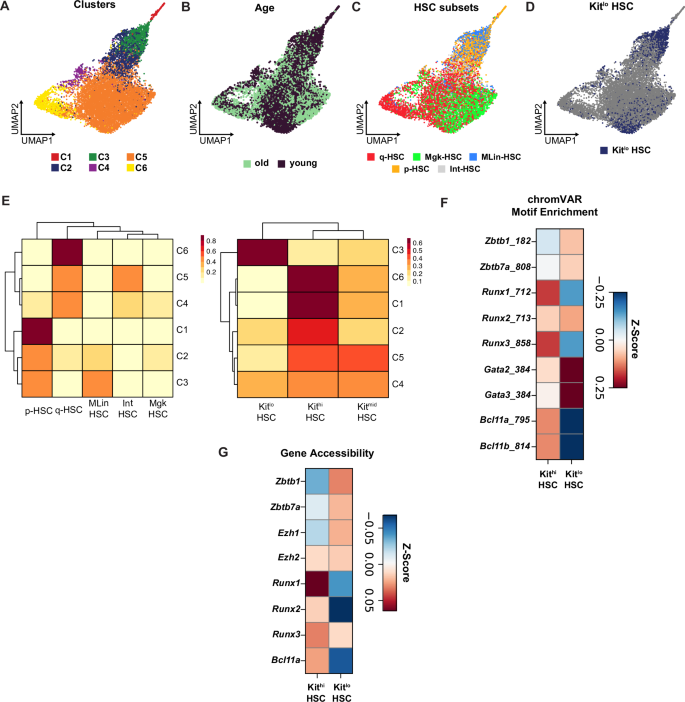
Kitlo HSCs represent a functionally distinct, lymphoid-primed HSC subset with enhanced T cell potential, superior thymic reconstitution, and improved post-transplant immune responses in preclinical allogeneic HCT models. Multiome single-cell RNA/ATAC sequencing revealed that Kitlo HSCs have distinct chromatin accessibility and elevated activity of lymphoid-specifying transcription factors, including ZBTB1. Kitlo HSC frequency declines with age, and aged Kitlo HSCs retain lymphoid potential but with reduced per-cell capacity. Zbtb1 deletion impaired HSC engraftment, multilineage reconstitution, and T cell potential, whereas Zbtb1 overexpression in megakaryocytic-biased Kithi HSCs or aged HSCs rescued lymphoid defects and improved thymic recovery. In human bone marrow, a KITlo HSC subset displayed enhanced lymphoid potential, suggesting conservation. The findings identify KIT expression and ZBTB1 as key regulators of lymphoid-competent HSC function and age-related immune decline.
Contribution
Creative Bioarray contributed the MS5 stromal cell line (Creative Bioarray, #CSC-C2763), which was used in the human lympho-myeloid differentiation assay to assess multilineage differentiation potential of KITlo and KITHI HSC subsets. This reagent supported functional validation of enhanced lymphoid output from human KITlo HSCs.
Ask a Question
Write your own review
- You May Also Need
Description: neuroglial and neuronal character coexpressing ependymoma cell line.
Description: Cloned from the C1300 mouse neuroblastoma line. Adapted to culture by alternate in vivo and in vitro passage. Cells have characteristics of mature neurons and secrete the enzymes for the synthesis of ...
Description: FL83B is a spontaneously immortalized hepatocyte cell line derived from the liver of a 15 to 17-day-old fetal C57BL/6J mouse.
Description: EMT6 was established from a transplantable murine mammary carcinoma that arose in a BALB/cCRGL mouse after implantation of a hyperplastic mammary alveolar nodule.
Description: 6-thioguanine resistant mutant of cell line N4 that was established from a mouse of strain A/J with neuroblastoma C1300; cells were described to form increased levels of cAMP in response to ...
- Adipose Tissue-Derived Stem Cells
- Human Neurons
- Mouse Probe
- Whole Chromosome Painting Probes
- Hepatic Cells
- Renal Cells
- In Vitro ADME Kits
- Tissue Microarray
- Tissue Blocks
- Tissue Sections
- FFPE Cell Pellet
- Probe
- Centromere Probes
- Telomere Probes
- Satellite Enumeration Probes
- Subtelomere Specific Probes
- Bacterial Probes
- ISH/FISH Probes
- Exosome Isolation Kit
- Human Adult Stem Cells
- Mouse Stem Cells
- iPSCs
- Mouse Embryonic Stem Cells
- iPSC Differentiation Kits
- Mesenchymal Stem Cells
- Immortalized Human Cells
- Immortalized Murine Cells
- Cell Immortalization Kit
- Adipose Cells
- Cardiac Cells
- Dermal Cells
- Epidermal Cells
- Peripheral Blood Mononuclear Cells
- Umbilical Cord Cells
- Monkey Primary Cells
- Mouse Primary Cells
- Breast Tumor Cells
- Colorectal Tumor Cells
- Esophageal Tumor Cells
- Lung Tumor Cells
- Leukemia/Lymphoma/Myeloma Cells
- Ovarian Tumor Cells
- Pancreatic Tumor Cells
- Mouse Tumor Cells