
Epithelial Cells
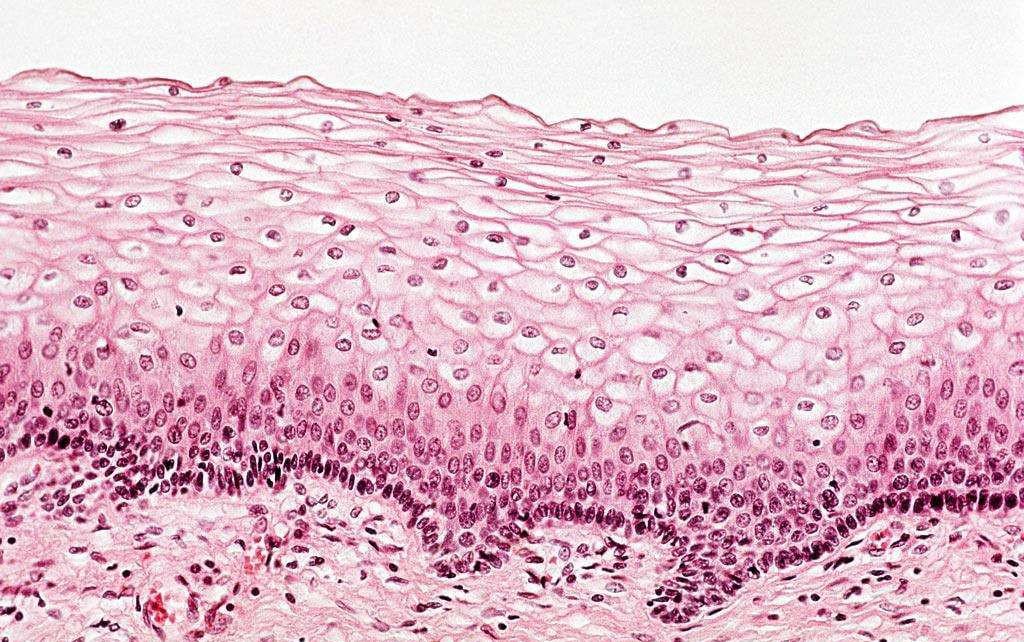
Epithelial cells are arranged in tightly packed layers that line the surfaces and cavities of tissues and organs throughout the body. It covers rang skins, respiratory tracts( nasal cavity and lungs ), alimentary tracts(oral cavity, stomach, intestines ), urogenital tract (kidney, vesicae, uterus and epididymis ), from all anacrine glnads (pancreas, gallbladder, mammary gland, salivary glands, lacrimal gland, sweat gland and etc. ), even some immune system organ (like thymus gland ).
The principle function of epithelial cells is to provide a protective layer for the organ they enclose but also provide other biological functions including secretion, selective absorption, filtration, protection and detection of sensation. The dysfunction of epithelial cells leads to a variety of diseases, infections and tumors. Therefore, epithelial cells are used in multiple research areas such as physiology, immunology, cytobiology, development and reproductive biology, molecular biology.
- Thymus epithelial cell (TECs): TECs are considered as the key components in thymic microenvironment. Studies about TECs focus on its development and differentiation processes which regulated by transcriptional factors Foxn1 and Aire and signals RANK, CD40 and LTβR, and its related thymic epithelial tumor. The therapy of thymic epithelial tumor is targeted signals including insulin-like growth factor-1 receptor and vascular endothelial growth factor receptor.
- Ovarian Surface Epithelial Cells (OSECs): About 85% of ovarian cancer originates have been suggested to arise from the ovarian epithelium, which is a complex biological process involving multiple factors, multiple genes, and multiple stages. Therefore, cultured ovarian epithelial cells play an important role in the prevention and treatment of ovarian cancer.
- Alveolar epithelial cells (AECs): AECs are divided into two cell types as alveolar epithelial type I (ATI) and alveolar epithelial type II (ATII) cells. The pleiotropic functions of AECs including gas exchange, pulmonary surfactant secretion and pulmonary water transportation. Its dysregulation is implicated with various pulmonary diseases like lung cancer, pneumonedema, pneumonia.
- Prostatic Epithelial Cells (PECs): Epithelial cells and prostate function are closely related, epithelial cell damage is the main disease of prostatitis, severe prostatitis in the prostatic fluid can be detected exfoliated epithelial cells, which is a sign of epithelial cell damage. Therefore, in vitro culture of prostatic epithelial cells is the premise and basis for the study of prostatitis and prostatic intraepithelial neoplasia and other diseases.
- Enterocyte: Enterocyte, also known as intestinal absorptive cells, is responsible for digestion and absorption of whole body, protective screen of intestinal tract, antigen presentation and secretion of SIgA. Intestinal diseases are complex and varied since enterocyte in different position relates to different diseases, for instance, colonic epithelial cells is related to colon tumor and colon cancer. Thus, enterocyte is the useful tool for research of enteric functions.
Epithelial cells from Creative Bioarray have been isolated from human normal, diseased donors of various tissues and animals such as mouse, rat, monkey and bovine with high purity, low passage, rigorously characterized, and performance tested. Those cells have numerous applications as below:
| ☆ | Air-Liquid Interface |
| ☆ | Respiratory Research |
| ☆ | Reproductive Research |
| ☆ | Dermal research |
| ☆ | Cancer Research |
At Creative Bioarray, we offer high-quality Epithelial Cell Growth Medium to support your research.
Filters Clear all filters
Species
- Bovine (22)
- Cat (45)
- Chicken (11)
- Chinchilla (1)
- Dog (118)
- Fish (1)
- Fruitfly (1)
- Goat (46)
- Guinea Pig (8)
- Hamster (94)
- Horse (1)
- Human (800)
- Minipig (2)
- Monkey (129)
- Mouse (875)
- Pig (110)
- Rabbit (249)
- Rat (324)
- Sheep (2)
- Squirrel (1)
- Turkey (1)
Source
- Adipose (32)
- Adrenal Gland (11)
- Airway (8)
- Anus (3)
- Aorta (86)
- Artery (180)
- Bile Duct (9)
- Bladder (49)
- Blood (193)
- Bone (13)
- Bone Marrow (157)
- Brain (163)
- Breast (64)
- Bronchus (43)
- Cartilage (29)
- Cervix (5)
- Chorion (5)
- Choroid (9)
- Ciliary Body (1)
- Colon (63)
- Conjunctiva (9)
- Cord Blood (24)
- Cornea (27)
- Dental Pulp (4)
- Dermis (111)
- Diaphragm (3)
- Ear (12)
- Embryo (24)
- Endometrium (11)
- Epidermis (26)
- Epididymis (3)
- Esophagus (35)
- Eye (95)
- Foreskin (2)
- Gallbladder (4)
- Gingiva (20)
- Hair Follicle (15)
- Heart (72)
- Intestine (152)
- Iris (1)
- Kidney (151)
- Lens (4)
- Liver (117)
- Lung (193)
- Lymph Node (27)
- Mesentery (18)
- Nose (5)
- Olfactory Bulb (1)
- Oral Cavity (12)
- Ovary (72)
- Oviduct (7)
- Pancreas (68)
- Pancreatic Duct (3)
- Pancreatic Islet (11)
- Parathyroid Gland (4)
- Penis (7)
- Perineurium (1)
- Periodontal Ligament (5)
- Periodontium (25)
- Peripheral Blood (153)
- Peritoneal Cavity (14)
- Placenta (29)
- Prostate (62)
- Pudenda (2)
- Rectum (3)
- Retina (38)
- Salivary Gland (3)
- Sclera (3)
- Seminal Vesicle (1)
- Skeletal Muscle (36)
- Skin (155)
- Small Intestine (56)
- Spinal Cord (10)
- Spleen (76)
- Stomach (37)
- Synovial Fluid (2)
- Synovium (13)
- Tendon (8)
- Testis (15)
- Thymus (51)
- Thyroid (34)
- Tongue (6)
- Tonsil (3)
- Tooth (4)
- Trabecular Meshwork (3)
- Trachea (46)
- Umbilical Cord (29)
- Ureter (10)
- Urethra (3)
- Uterus (61)
- Vas Deferens (1)
- Vein (104)
Cell Type
- Adipocyte (4)
- Astrocyte (34)
- B Cell (30)
- Basal Cell (3)
- Basophil (1)
- Beta Cell (3)
- Cardiomyocyte (18)
- CD133+ Cell (6)
- CD34+ Cell (21)
- Cholangiocyte (9)
- Chondrocyte (19)
- Dendritic Cell (15)
- Endothelial Cell (688)
- Endothelial Progenitor Cell (7)
- Eosinophil (1)
- Epithelial Cell (516)
- Fibroblast (473)
- Glial Cell (58)
- Goblet Cell (1)
- Granule Cell (2)
- Granulocyte (12)
- Granulosa Cell (1)
- Hepatic Stellate Cell (9)
- Hepatocyte (22)
- Interstitial Cell (10)
- Keratinocyte (24)
- Keratocyte (3)
- Kupffer Cell (8)
- Leydig Cell (3)
- Lymphocyte (84)
- Macrophage (31)
- Mast Cell (3)
- Melanocyte (11)
- Meningeal Cell (5)
- Mesangial Cell (10)
- Mesothelial Cell (5)
- Microglia (7)
- Microvascular Cell (308)
- Monocyte (16)
- Mononuclear Cell (110)
- Myeloid Cell (2)
- Myoblast (5)
- Myofibroblast (3)
- Myosatellite Cell (2)
- Neuron (50)
- Neutrophil (10)
- NK Cell (11)
- Oligodendrocyte (3)
- Oligodendrocyte Progenitor Cell (4)
- Osteoblast (8)
- Osteoclast (2)
- Osteocyte (3)
- Pancreatic Stellate Cell (4)
- Pericyte (20)
- Podocyte (5)
- Preadipocyte (21)
- Progenitor Cell (15)
- Red Blood Cell (12)
- Retinal Ganglion Cell (3)
- Satellite Cell (2)
- Schwann Cell (4)
- Sebocyte (1)
- Sertoli Cell (5)
- Skeletal Muscle Cell (11)
- Smooth Muscle Cell (241)
- Spermatogonium (3)
- Stromal Cell (41)
- Synoviocyte (11)
- T Cell (39)
- Tenocyte (8)
- Trabecular Meshwork Cell (3)
- Trophoblast (4)
Disease
- Acute Lymphocytic Leukemia (ALL) (15)
- Acute Myeloid Leukemia (AML) (13)
- Amyotrophic Lateral Sclerosis (ALS) (4)
- Aplastic Anemia (AA) (1)
- Arteriovenous Malformation (AVM) (1)
- Asthma (5)
- Astrocytoma (2)
- Autoimmune Hemolytic Anemia (AIHA) (1)
- Autoimmune Lymphoproliferative Syndrome (ALPS) (1)
- Breast Cancer (8)
- Cancer (144)
- Cervical Cancer (2)
- Chronic Lymphocytic Leukemia (CLL) (19)
- Chronic Myeloid Leukemia (CML) (14)
- Chronic Obstructive Pulmonary Disease (COPD) (6)
- Colon Cancer (9)
- Crohn's Disease (3)
- Cystic Fibrosis (CF) (7)
- Diabetes (110)
- Diabetes Type 1 (16)
- Diabetes Type 2 (18)
- Diffuse Large B-Cell Lymphoma (4)
- Dilated Cardiomyopathy (DCM) (1)
- Duchenne Muscular Dystrophy (DMD) (5)
- Essential Thrombocythemia (ET) (1)
- Glioblastoma (3)
- Guillain-Barre Syndrome (GBS) (1)
- Hypertension (27)
- Idiopathic Thrombocytopenic Purpura (ITP) (1)
- Inflammatory Bowel Disease (IBD) (5)
- Iron-Deficiency Anemia (1)
- Kidney Cancer (3)
- Legg–Calvé–Perthes Disease (LCPD) (2)
- Leukopenia (1)
- Liver Cancer (3)
- Lung Cancer (12)
- Mantle Cell Lymphoma (MCL) (8)
- Melanoma (2)
- Mucopolysaccharidosis (2)
- Multiple Myeloma (MM) (12)
- Multiple Sclerosis (MS) (3)
- Muscular Dystrophy (MD) (1)
- Myelodysplastic Syndrome (MDS) (3)
- Neurofibromatosis (NF) (3)
- Non-Hodgkin Lymphoma (NHL) (10)
- Normal (2466)
- Osteoarthritis (OA) (5)
- Ovarian Cancer (6)
- Pancreatic Cancer (3)
- Pancytopenia (1)
- Parkinson's Disease (PD) (2)
- Plasmacytoma (1)
- Polycythemia (1)
- Prostate Cancer (6)
- Psoriasis (4)
- Rheumatoid Arthritis (RA) (7)
- Robertsonian Translocation (ROB) (1)
- Sickle Cell Anemia (2)
- Systemic Lupus Erythematosus (SLE) (4)
- Thrombocytopenia (1)
- Transverse Myelitis (TM) (1)
- Ulcerative Colitis (UC) (2)
- Waldenström Macroglobulinemia (WM) (2)
Description: Creative Bioarray offers a normal human Renal Proximal Convoluted Tubule Epithelial cell system. ...
Description: The majority of breast cancers originate in the lobular or ductal cells of the milk-producing ...
Description: HTonEpiC from Creative Bioarray are isolated from human normal tonsil tissue. HTonEpiC are ...
Description: HRPTEpiC from Creative Bioarray Research Laboratories are isolated from human kidney. HRPTEpiC are ...
Description: Human Non-Pigment Ciliary Epithelial Cells (HNPCEpiC) from Creative Bioarray are isolated from ...
Description: Human Lens Epithelial Cells (HLEpiC) from Creative Bioarray are isolated from the human lens. ...
Description: Human Iris Pigment Epithelial Cells (HIPEpiC) from Creative Bioarray are isolated from the human ...
Description: The human esophagus is lined by a non-keratinizing, moist stratified squamous epithelium whose ...
Description: Human Conjunctival Epithelial Cells (HConEC) from Creative Bioarray are isolated from human ...
Description: Human Choroid Plexus Epithelial Cells (HCPEpiC) from Creative Bioarray are isolated from human ...
Description: HAEpiC from Creative Bioarray are isolated from human amniotic membranes. HAEpiC are cryopreserved ...
Description: Bovine Thymus Epithelial Cells from Creative Bioarray are isolated from the bovine thymus tissue. ...
Description: Canine Biliary Epithelial Cells from Creative Bioarray are isolated from canine liver. The method ...
Description: Sheep Thymus Epithelial Cells from Creative Bioarray are isolated from sheep thymus tissue. The ...
Description: Human oral epithelial cells from Creative Bioarray are isolated from the oral cavity epithelial ...
Description: Chicken small intestinal epithelial cells from Creative Bioarray are isolated from the chicken ...
Description: Chicken tracheal epithelial cells from Creative Bioarray are isolated from the chicken tracheal ...


