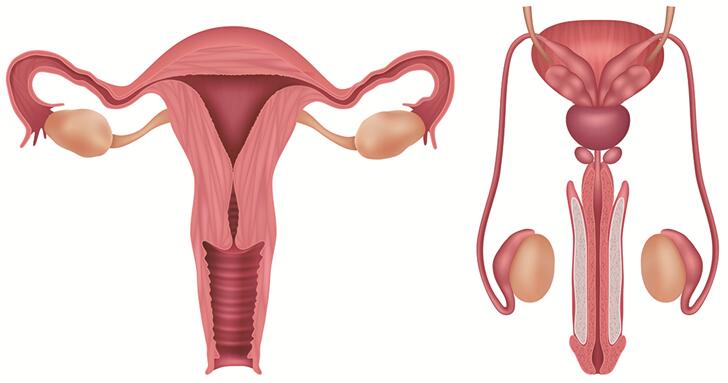
Reproductive System Cells

The reproductive system relies on coordinated interactions among epithelial, stromal, endothelial, and supporting cell populations that regulate fertility, hormone responsiveness, tissue homeostasis, and reproductive development. These specialized cells play essential roles in gametogenesis, reproductive tract function, embryo implantation, and reproductive vascularization.

Our reproductive system cell portfolio includes ovarian, uterine, testicular, endothelial, stromal, and Sertoli cell models representing key components of both female and male reproductive tissues. These physiologically relevant resources support studies in reproductive biology, fertility research, reproductive toxicology, endocrine signaling, developmental biology, and regenerative medicine.

Product List

Our Reproductive System Cell Portfolio Highlights

Diverse Reproductive Cell Resources

Our collection includes key cell populations involved in reproductive function, fertility regulation, and tissue homeostasis.

  • Female Reproductive Cell Models
    • Ovarian epithelial cells
    • Uterine epithelial cells
    • Uterine microvascular endothelial cells
  • Male Reproductive Cell Models
    • Sertoli cells
    • Testicular endothelial cells
    • Models supporting reproductive function studies
  • Stromal and Advanced Cell Models
    • Gonadal stromal cells
    • GFP-labeled endothelial models
    • Resources for co-culture and imaging studies

Applications in Reproductive Research

These cell models support investigations into reproductive physiology, fertility, endocrine regulation, and therapeutic development.

  • Reproductive Biology Studies

    Study cellular mechanisms underlying reproductive tissue development, maintenance, and physiological function.

  • Fertility Research

    Investigate factors regulating gametogenesis, reproductive support functions, implantation, and fertility outcomes.

  • Endocrine Signaling Research

    Evaluate hormone-responsive pathways and cellular responses involved in reproductive health and disease.

  • Reproductive Toxicology & Drug Development

    Support safety assessment, reproductive toxicology studies, and development of reproductive therapeutics.

3
Reproductive Tissue
Systems

100 %
Mycoplasma-Free
Tested

4 +
Research Applications
Supported

Frequently
Asked
Questions

Find your question here or ask us

Ask Question

What role do Sertoli cells play in reproductive research?

Sertoli cells provide structural and metabolic support for developing germ cells and are essential for spermatogenesis, making them valuable models for male fertility and testicular biology studies.

Why are reproductive endothelial cells important?

Reproductive endothelial cells contribute to tissue vascularization, nutrient delivery, and hormone-responsive vascular remodeling, which are critical for reproductive function and reproductive tissue maintenance.

Can these cells be used for fertility research?

Yes. Ovarian epithelial cells, uterine epithelial cells, Sertoli cells, and gonadal stromal cells are frequently used to investigate reproductive physiology, fertility mechanisms, and reproductive disorders.

What are gonadal stromal cells commonly used for?

Gonadal stromal cells help regulate tissue architecture, cellular communication, and hormone-responsive microenvironments within reproductive organs and are often incorporated into co-culture studies.

How can uterine epithelial cells support implantation research?

Uterine epithelial cells form a key component of the endometrial surface and are widely used to study embryo-endometrium interactions, epithelial barrier function, and implantation-related signaling pathways.

What are GFP-expressing uterine endothelial cells used for?

These fluorescently labeled cells facilitate live-cell imaging, angiogenesis studies, vascular network formation assays, and real-time visualization of cellular interactions in reproductive tissue models.

Filters Clear all filters

Species

  • Human (797)
  • Mouse (3)
  • Rat (1)

Source

  • Adipose (9)
  • Adrenal Gland (4)
  • Airway (7)
  • Aorta (16)
  • Artery (47)
  • Bile Duct (1)
  • Bladder (8)
  • Blood (157)
  • Bone (3)
  • Bone Marrow (81)
  • Brain (36)
  • Breast (10)
  • Bronchus (20)
  • Cartilage (6)
  • Chorion (2)
  • Choroid (3)
  • Ciliary Body (1)
  • Colon (10)
  • Conjunctiva (2)
  • Cord Blood (24)
  • Cornea (2)
  • Dental Pulp (4)
  • Dermis (43)
  • Embryo (2)
  • Endometrium (2)
  • Epidermis (19)
  • Esophagus (4)
  • Eye (20)
  • Foreskin (2)
  • Gallbladder (1)
  • Gingiva (2)
  • Hair Follicle (5)
  • Heart (14)
  • Intestine (20)
  • Iris (1)
  • Kidney (31)
  • Lens (1)
  • Liver (34)
  • Lung (56)
  • Lymph Node (2)
  • Mesentery (3)
  • Nose (1)
  • Oral Cavity (3)
  • Ovary (10)
  • Pancreas (8)
  • Pancreatic Islet (1)
  • Perineurium (1)
  • Periodontal Ligament (2)
  • Periodontium (4)
  • Peripheral Blood (130)
  • Peritoneal Cavity (2)
  • Placenta (11)
  • Prostate (8)
  • Rectum (1)
  • Retina (9)
  • Seminal Vesicle (1)
  • Skeletal Muscle (9)
  • Skin (78)
  • Small Intestine (5)
  • Spinal Cord (1)
  • Spleen (6)
  • Stomach (3)
  • Synovial Fluid (2)
  • Synovium (8)
  • Tendon (1)
  • Testis (3)
  • Thymus (3)
  • Thyroid (4)
  • Tongue (1)
  • Tonsil (3)
  • Tooth (4)
  • Trabecular Meshwork (1)
  • Trachea (6)
  • Umbilical Cord (23)
  • Uterus (7)
  • Vas Deferens (1)
  • Vein (30)

Cell Type

  • Astrocyte (9)
  • B Cell (22)
  • Basophil (1)
  • Cardiomyocyte (2)
  • CD133+ Cell (6)
  • CD34+ Cell (16)
  • Cholangiocyte (1)
  • Chondrocyte (4)
  • Dendritic Cell (4)
  • Endothelial Cell (133)
  • Eosinophil (1)
  • Epithelial Cell (84)
  • Fibroblast (139)
  • Glial Cell (14)
  • Granule Cell (1)
  • Granulocyte (3)
  • Hepatic Stellate Cell (3)
  • Hepatocyte (8)
  • Interstitial Cell (1)
  • Keratinocyte (14)
  • Keratocyte (1)
  • Kupffer Cell (1)
  • Lymphocyte (55)
  • Macrophage (4)
  • Melanocyte (10)
  • Meningeal Cell (1)
  • Mesangial Cell (2)
  • Mesothelial Cell (2)
  • Microglia (1)
  • Microvascular Cell (61)
  • Monocyte (7)
  • Mononuclear Cell (98)
  • Myeloid Cell (2)
  • Myoblast (5)
  • Myosatellite Cell (1)
  • Neuron (7)
  • Neutrophil (2)
  • NK Cell (5)
  • Oligodendrocyte Progenitor Cell (3)
  • Osteoblast (3)
  • Pancreatic Stellate Cell (1)
  • Pericyte (10)
  • Podocyte (1)
  • Preadipocyte (10)
  • Progenitor Cell (4)
  • Red Blood Cell (1)
  • Satellite Cell (1)
  • Schwann Cell (1)
  • Sebocyte (1)
  • Sertoli Cell (1)
  • Skeletal Muscle Cell (2)
  • Smooth Muscle Cell (48)
  • Stromal Cell (16)
  • Synoviocyte (6)
  • T Cell (28)
  • Tenocyte (1)
  • Trabecular Meshwork Cell (1)
  • Trophoblast (1)

Disease

  • Acute Lymphocytic Leukemia (ALL) (15)
  • Acute Myeloid Leukemia (AML) (13)
  • Amyotrophic Lateral Sclerosis (ALS) (4)
  • Aplastic Anemia (AA) (1)
  • Arteriovenous Malformation (AVM) (1)
  • Asthma (5)
  • Astrocytoma (2)
  • Autoimmune Hemolytic Anemia (AIHA) (1)
  • Autoimmune Lymphoproliferative Syndrome (ALPS) (1)
  • Breast Cancer (3)
  • Cancer (121)
  • Chronic Lymphocytic Leukemia (CLL) (19)
  • Chronic Myeloid Leukemia (CML) (14)
  • Chronic Obstructive Pulmonary Disease (COPD) (6)
  • Colon Cancer (4)
  • Crohn's Disease (3)
  • Cystic Fibrosis (CF) (7)
  • Diabetes (35)
  • Diabetes Type 1 (16)
  • Diabetes Type 2 (18)
  • Diffuse Large B-Cell Lymphoma (4)
  • Dilated Cardiomyopathy (DCM) (1)
  • Duchenne Muscular Dystrophy (DMD) (5)
  • Essential Thrombocythemia (ET) (1)
  • Glioblastoma (3)
  • Guillain-Barre Syndrome (GBS) (1)
  • Hypertension (27)
  • Idiopathic Thrombocytopenic Purpura (ITP) (1)
  • Inflammatory Bowel Disease (IBD) (5)
  • Iron-Deficiency Anemia (1)
  • Kidney Cancer (3)
  • Legg–Calvé–Perthes Disease (LCPD) (2)
  • Leukopenia (1)
  • Liver Cancer (3)
  • Lung Cancer (6)
  • Mantle Cell Lymphoma (MCL) (8)
  • Melanoma (2)
  • Mucopolysaccharidosis (2)
  • Multiple Myeloma (MM) (12)
  • Multiple Sclerosis (MS) (3)
  • Muscular Dystrophy (MD) (1)
  • Myelodysplastic Syndrome (MDS) (3)
  • Neurofibromatosis (NF) (3)
  • Non-Hodgkin Lymphoma (NHL) (10)
  • Normal (524)
  • Osteoarthritis (OA) (5)
  • Ovarian Cancer (6)
  • Pancreatic Cancer (1)
  • Pancytopenia (1)
  • Parkinson's Disease (PD) (2)
  • Plasmacytoma (1)
  • Polycythemia (1)
  • Prostate Cancer (3)
  • Psoriasis (4)
  • Rheumatoid Arthritis (RA) (7)
  • Robertsonian Translocation (ROB) (1)
  • Sickle Cell Anemia (2)
  • Systemic Lupus Erythematosus (SLE) (4)
  • Thrombocytopenia (1)
  • Transverse Myelitis (TM) (1)
  • Ulcerative Colitis (UC) (2)
  • Waldenström Macroglobulinemia (WM) (2)

Description: Human Ovarian Epithelial Cells are isolated from normal human ovary tissue.

Cat#: CSC-C4876L INQUIRY

Description: Human Uterine Epithelial Cells are isolated from normal human uterine tissue.

Cat#: CSC-C4880L INQUIRY

Description: GFP Expressing Human Uterine Microvascular Endothelial Cells (GFP-HUMECs) provided by Creative ...

Cat#: CSC-C5453W INQUIRY

Description: Origin: HumanDesease: Robertsonian Translocation (RTL)Application: These cells can be used to ...

Cat#: CSC-C8110L INQUIRY

Description: Human Primary Sertoli Cells are isolated form normal human prostate tissue. T25 flasks is required ...

Cat#: CSC-C9380W INQUIRY

Description: Human Testicular Endothelial Cells are isolated form normal human tesis tissue. T25 flasks is ...

Cat#: CSC-C9381W INQUIRY

For research use only. Not for any other purpose.