
Nasopharyngeal Tumor Cells

Nasopharyngeal Carcinoma (NPC) is a unique epithelial malignancy with a distinct geographical distribution, showing high prevalence in Southern China and Southeast Asia. Its pathogenesis is closely linked to Epstein-Barr virus (EBV) infection, genetic susceptibility, and environmental factors.

Our nasopharyngeal tumor cell line collection offers a diverse range of models, including differentiated and undifferentiated non-keratinizing carcinoma types. These cell lines serve as critical tools for investigating viral oncogenesis, understanding the mechanisms of high metastatic potential, and screening for novel radiosensitizers and immunotherapeutic agents.

EBV-Related Highly Characterized Metastatic Models Quality Assured
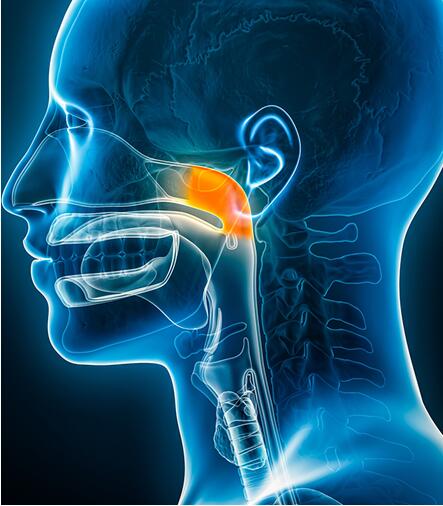
Nasopharyngeal Tumor Cells
Product List

Key Features & Expertise

Our nasopharyngeal tumor cell lines are meticulously validated to provide high-performance models for head and neck oncology research:

Comprehensive Histological Range

  • Models covering keratinizing squamous cell carcinoma (WHO type I) and non-keratinizing (WHO type II/III).
  • Includes cell lines derived from primary sites and metastatic lymph nodes.
  • Diverse differentiation states reflecting the clinical heterogeneity of NPC.

Viral & Molecular Profiling

  • Ideal platforms for studying EBV latency and viral oncoproteins like LMP1 and EBNA1.
  • Documented genetic alterations, including characteristic 1p, 3p, and 9p deletions.
  • Verified signaling pathways status, including NF-κB, PI3K/AKT, and Wnt/β-catenin.

Research-Ready Reliability

  • STR authenticated to ensure cell identity and prevent cross-contamination (e.g., HeLa contamination).
  • Certified Mycoplasma-free to ensure experimental reproducibility and data accuracy.
  • Optimized for radiosensitivity studies, angiogenesis assays, and xenograft modeling.

FAQ

Do all nasopharyngeal carcinoma cell lines carry the EBV virus?

Not all NPC cell lines retain the EBV genome during long-term in vitro culture; some classic lines may lose the virus. We clearly state the EBV status for each line in our product list to help you select the most appropriate model.

Which cell lines are best for studying NPC metastasis?

Cell lines derived from metastatic sites or those characterized with a highly invasive phenotype are recommended. These models show strong migration capabilities in Transwell assays and in vivo models.

What are the recommended culture conditions for NPC cells?

Most NPC lines grow well in RPMI-1640 or DMEM supplemented with 10% FBS. We provide detailed culture protocols and specific media recommendations for each cell line to ensure optimal growth and phenotype maintenance.

Do you provide normal nasopharyngeal epithelial cell lines as controls?

Yes, we offer immortalized normal nasopharyngeal epithelial cells, which serve as ideal controls for studying early molecular changes and evaluating drug toxicity.

Filters Clear all filters

Species

  • Cat (1)
  • Human (989)
  • Mouse (5)
  • Rat (1)

Source

  • Abdomen Metastasis (2)
  • Adrenal Gland (7)
  • Adrenal Gland Metastasis (2)
  • Ascites (23)
  • Ascites Metastasis (32)
  • Bile Duct (3)
  • Bladder (12)
  • Blood (120)
  • Bone (21)
  • Bone Marrow (43)
  • Bone Marrow Metastasis (18)
  • Bone Metastasis (6)
  • Brain (31)
  • Brain Metastasis (6)
  • Breast (8)
  • Bronchus (1)
  • Cecum (3)
  • Cerebrospinal Fluid (1)
  • Cerebrospinal Fluid Metastasis (1)
  • Cervix (32)
  • Colon (83)
  • Cornea (3)
  • Cutaneous Metastasis (1)
  • Dermis (1)
  • Duodenum (1)
  • Endometrium (17)
  • Esophagus (44)
  • Eye (12)
  • Eye Socket (5)
  • Fetus (1)
  • Foreskin (4)
  • Gallbladder (1)
  • Gingiva (2)
  • Globe (2)
  • Groin (1)
  • Hypodermis Metastasis (5)
  • Intestine (84)
  • kidney (1)
  • Kidney (9)
  • Liver (13)
  • Liver Metastasis (17)
  • Lung (42)
  • Lung Metastasis (8)
  • Lymph Node (5)
  • Lymph Node Metastasis (56)
  • Muscle (4)
  • Muscle Metastasis (2)
  • Nose (2)
  • Omentum Metastasis (2)
  • Oral Cavity (10)
  • Ovary (13)
  • Ovary Metastasis (2)
  • Pancreas (10)
  • Pelvic Wall Metastasis (1)
  • Pelvis (1)
  • Perianal Space Metastasis (1)
  • Pericardial Effusion (1)
  • Pericardial Effusion Metastasis (1)
  • Perineus (1)
  • Peripheral Blood (119)
  • Peritoneal Effusion (2)
  • Peritoneum (1)
  • Peritoneum Metastasis (1)
  • Pharynx (3)
  • Pleural Effusion (54)
  • Pleural Effusion Metastasis (44)
  • Prostate (4)
  • Rectum (13)
  • Renal Pelvis (1)
  • Retroperitoneal Space (2)
  • Salivary Gland (2)
  • Skeletal Muscle (1)
  • Skin (22)
  • Skin Metastasis (3)
  • Small Intestine (1)
  • Small Intestine Metastasis (1)
  • Soft Tissue Metastasis (1)
  • Stomach (4)
  • Testis (9)
  • Thoracic Cavity Metastasis (6)
  • Thyroid Gland (15)
  • Thyroid Gland Metastasis (1)
  • Tongue (5)
  • Umbilical Cord (1)
  • Umbilical Cord Blood (1)
  • Urachus (1)
  • Ureter (1)
  • Uterus (53)
  • Uvea (2)
  • Vagina (2)
  • Vulva (1)

Disease

  • Acute Biphenotypic Leukemia (1)
  • Acute Erythroid Leukemia (4)
  • Acute Megakaryoblastic Leukemia (4)
  • Acute Monocytic Leukemia (9)
  • Acute Myeloid Leukemia (25)
  • Acute Promyelocytic Leukemia (2)
  • Adrenal Gland Neuroblastoma (11)
  • Adult B Acute Lymphoblastic leukemia (1)
  • Adult B Acute Lymphoblastic Leukemia (6)
  • Adult T Acute Lymphoblastic Leukemia (6)
  • Adult T Lymphoblastic Lymphoma (2)
  • Adult T-Cell Leukemia/Lymphoma (1)
  • Alveolar Rhabdomyosarcoma (4)
  • Alveolar Ridge Squamous Cell Carcinoma (1)
  • Amelanotic Melanoma (3)
  • Ampulla of Vater Adenocarcinoma (1)
  • Ampulla of Vater Adenosquamous Carcinoma (3)
  • Anaplastic Astrocytoma (3)
  • Anaplastic Large Cell Lymphoma (7)
  • Askin Tumor (1)
  • Astrocytoma (5)
  • B Acute Lymphoblastic Leukemia (2)
  • B-Cell Non-Hodgkin Lymphoma (5)
  • Bare Lymphocyte Syndrome Type 2 (1)
  • Barrett Adenocarcinoma (2)
  • Benign Prostatic Hyperplasia (1)
  • Bladder Carcinoma (12)
  • Bladder Squamous Cell Carcinoma (1)
  • Breast Adenocarcinoma (1)
  • Breast Carcinoma (9)
  • Breast Ductal Carcinoma (2)
  • Burkitt Lymphoma (17)
  • Canavan Disease (1)
  • Cecum Adenocarcinoma (3)
  • Central Nervous System Lymphoma (2)
  • Cervical Adenocarcinoma (2)
  • Cervical Adenosquamous Carcinoma (2)
  • Cervical Small Cell Carcinoma (1)
  • Cervical Squamous Cell Carcinoma (2)
  • Childhood B Acute Lymphoblastic Leukemia (13)
  • Childhood T Acute Lymphoblastic Leukemia (16)
  • Childhood T Lymphoblastic Lymphoma (1)
  • Cholangiocarcinoma (2)
  • Chronic Eosinophilic Leukemia (1)
  • Chronic Lymphocytic Leukemia (2)
  • Chronic Myeloid Leukemia (23)
  • Clear Cell Renal Cell Carcinoma (2)
  • Colon Adenocarcinoma (53)
  • Colon Carcinoma (33)
  • Colorectal Adenocarcinoma (1)
  • Colorectal Carcinoma (1)
  • Congenital Pure Red Cell Aplasia (1)
  • Cutaneous Melanoma (10)
  • Dedifferentiated Chondrosarcoma (1)
  • Desmoplastic Melanoma (1)
  • Diffuse Large B-Cell Lymphoma (28)
  • Down Syndrome (2)
  • EBV-Related Burkitt Lymphoma (12)
  • Embryonal Carcinoma (3)
  • Embryonal Rhabdomyosarcoma (3)
  • Endometrial Adenocarcinoma (13)
  • Endometrial Adenosquamous Carcinoma (2)
  • Endometrial Carcinoma (2)
  • Endometrioid Stromal Sarcoma (1)
  • Epithelioid Hemangioendothelioma (1)
  • Epithelioid Sarcoma (3)
  • Esophageal Adenocarcinoma (6)
  • Esophageal Squamous Cell Carcinoma (41)
  • Essential Thrombocythemia (1)
  • Ewing Sarcoma (2)
  • Extraskeletal Myxoid Chondrosarcoma (1)
  • Fanconi Anemia (1)
  • Fibrosarcoma (1)
  • Follicular Lymphoma (2)
  • Gallbladder Carcinoma (2)
  • Gallbladder Undifferentiated Carcinoma (2)
  • Gastric Adenocarcinoma (6)
  • Gastric Adenosquamous Carcinoma (1)
  • Gastric Carcinoma (5)
  • Gastric Choriocarcinoma (1)
  • Gastric Fundus Carcinoma (1)
  • Gastric Signet Ring Cell Adenocarcinoma (1)
  • Gastric Small Cell Carcinoma (2)
  • Gastric Tubular Adenocarcinoma (5)
  • Gastroesophageal Junction Adenocarcinoma (1)
  • Gestational Choriocarcinoma (1)
  • Gingival Squamous Cell Carcinoma (2)
  • Glioblastoma (18)
  • Gliosarcoma (1)
  • Hairy Cell Leukemia (1)
  • Hepatoblastoma (2)
  • Hepatocellular Carcinoma (6)
  • Hepatosplenic T-Cell Lymphoma (2)
  • Hereditary Thyroid Gland Medullary Carcinoma (1)
  • High Grade B-Cell Lymphoma (1)
  • High Grade Ovarian Serous Adenocarcinoma (8)
  • Hodgkin Lymphoma (9)
  • Hypopharyngeal Squamous Cell Carcinoma (2)
  • Infectious Mononucleosis (1)
  • Intrahepatic Cholangiocarcinoma (6)
  • Invasive Breast Carcinoma of No Special Type (12)
  • Kidney Neoplasm (1)
  • Kidney Rhabdoid Tumor (1)
  • Krukenberg Tumor (1)
  • Liposarcoma (1)
  • Lung Adenocarcinoma (17)
  • Lung Giant Cell Carcinoma (8)
  • Lung Large Cell Carcinoma (9)
  • Lung Mucoepidermoid Carcinoma (1)
  • Lung Non-Small Cell Carcinoma (2)
  • Lung Small Cell Carcinoma (25)
  • Lung Squamous Cell Carcinoma (9)
  • Lymphoblastic Lymphoma (1)
  • Malignant Peripheral Nerve Sheath Tumor (1)
  • Mantle Cell Lymphoma (5)
  • Mature Gastric Teratoma (1)
  • Maxillary Sinus Squamous Cell Carcinoma (1)
  • Medulloblastoma (3)
  • Melanoma (24)
  • Meningioma (2)
  • Minimally Invasive Lung Adenocarcinoma (1)
  • Monophasic Synovial Sarcoma (1)
  • Mouse Intestinal Tract Neuroendocrine Adenoma (1)
  • Mouse Mammary Gland Malignant Neoplasm (2)
  • Mouse Plasmacytoma (1)
  • Mycosis Fungoides (1)
  • Myelodysplastic Syndrome (1)
  • Myxofibrosarcoma (1)
  • Natural Killer Cell Lymphoblastic Leukemia/Lymphoma (2)
  • Neuroblastoma (26)
  • Oral Cavity Squamous Cell Carcinoma (15)
  • Osteoid Osteoma (1)
  • Osteosarcoma (15)
  • Ovarian Carcinoma (1)
  • Ovarian Clear Cell Adenocarcinoma (1)
  • Ovarian Endometrioid Adenocarcinoma (4)
  • Ovarian Granulosa Cell Tumor (1)
  • Ovarian Mucinous Adenocarcinoma (2)
  • Ovarian Serous Adenocarcinoma (2)
  • Ovarian Serous Cystadenocarcinoma (2)
  • Ovarian Small Cell Carcinoma (1)
  • Pancreatic Adenocarcinoma (13)
  • Pancreatic Carcinoma (5)
  • Pancreatic Ductal Adenocarcinoma (12)
  • Papillomavirus-Independent Cervical Squamous Cell Carcinoma (1)
  • Papillomavirus-Related Cervical Adenocarcinoma (7)
  • Papillomavirus-Related Cervical Squamous Cell Carcinoma (4)
  • Papillomavirus-Related Endocervical Adenocarcinoma (16)
  • Paroxysmal Nocturnal Hemoglobinuria (3)
  • Pharyngeal Squamous Cell Carcinoma (1)
  • Plasma Cell Myeloma (15)
  • Pleural Epithelioid Mesothelioma (5)
  • Pleural Sarcomatoid Mesothelioma (2)
  • Poorly Differentiated Thyroid Gland Carcinoma (1)
  • Primary Cutaneous T-Cell Non-Hodgkin Lymphoma (1)
  • Primary Effusion Lymphoma (7)
  • Primitive Neuroectodermal Tumor (1)
  • Prostate carcinoma (1)
  • Prostate Carcinoma (9)
  • Rectal Adenocarcinoma (13)
  • Rectosigmoid Adenocarcinoma (1)
  • Recurrent Bladder Carcinoma (1)
  • Renal Cell Carcinoma (7)
  • Renal Pelvis Urothelial Carcinoma (1)
  • Retinoblastoma (11)
  • Sacral Chordoma (1)
  • Sacrococcygeal Teratoma (1)
  • Salivary Gland Squamous Cell Carcinoma (1)
  • Sezary Syndrome (1)
  • Shwachman-Diamond Syndrome (1)
  • Skin Squamous Cell Carcinoma (2)
  • Splenic Marginal Zone Lymphoma (1)
  • Testicular Embryonal Carcinoma (8)
  • Testicular Teratoma (2)
  • Testicular Yolk Sac Tumor (1)
  • Thyroid Gland Anaplastic Carcinoma (10)
  • Thyroid Gland Follicular Carcinoma (4)
  • Thyroid Gland Papillary Carcinoma (3)
  • Thyroid Gland Sarcoma (1)
  • Thyroid Gland Squamous Cell Carcinoma (2)
  • Tongue Adenosquamous Carcinoma (1)
  • Tongue Squamous Cell Carcinoma (6)
  • Type I Endometrial Adenocarcinoma (1)
  • Ureter Urothelial Carcinoma (1)
  • Uterine Carcinosarcoma (2)
  • Uterine Corpus Leiomyosarcoma (1)
  • Uterine Corpus Sarcoma (2)
  • Uveal Melanoma (2)
  • Vaginal Melanoma (2)
  • Vulvar Melanoma (1)
  • Vulvar Squamous Cell Carcinoma (1)

Description: The Paclitaxel-resistant cell line WSU-HN30/Taxol has been developed by repeatedly exposing the ...

Cat#: CSC-C30079J-Taxol INQUIRY

Description: Japanese maxillary simus squamous carcinoma.

Cat#: CSC-C6450J INQUIRY

Description: The Cisplatin-resistant cell line FADU/DDP has been developed by repeatedly exposing the parent ...

Cat#: CSC-C9379L-DDP INQUIRY

For research use only. Not for any other purpose.