Mammary Cells
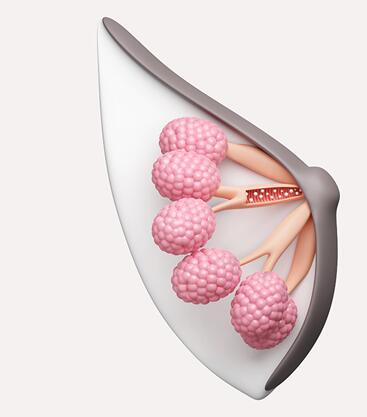
Mammary cells are vital for investigating breast development, epithelial differentiation, lactation biology, tumor growth and stromal-epithelial interactions. The mammary gland is a highly dynamic tissue that consists of epithelial, fibroblastic, endothelial and immune-associated cell populations, which collectively govern tissue homeostasis and disease progression.
Our collection of mammary cells includes physiologically relevant in vitro models for breast biology, cancer investigations, hormone signaling, tumor microenvironment studies, and regenerative medicine applications. The portfolio contains normal mammary epithelial cells, luminal and basal epithelial populations, breast carcinoma epithelial cells, cancer related fibroblasts and mammary endothelial cells.

Our Mammary Cell Portfolio Highlights
-
Normal Mammary Cell Models
- Mammary epithelial cells from male and female donors
- Mammary fibroblasts and microvascular endothelial cells
-
Breast Cancer Cell Resources
- Primary breast carcinoma epithelial cells
- Cryopreserved luminal and basal epithelial models
- Clinically relevant breast tumor research tools
-
Tumor Microenvironment Models
- Breast cancer-associated fibroblasts (CAFs)
- Tumor-associated endothelial cells
- Suitable for co-culture and tumor-stroma interaction studies
-
Flexible Research Solutions
- Cryopreserved primary mammary cells
- Customized sourcing and project-specific support

-
Mammary Gland Biology
Primary mammary epithelial and stromal cells support investigations of mammary tissue development, epithelial differentiation, hormone-responsive signaling, and tissue homeostasis.
-
Breast Cancer Research
Breast carcinoma epithelial cells provide physiologically relevant models for studying tumor initiation, progression, invasion, metastasis, and treatment response.
-
Tumor Microenvironment Studies
CAFs and tumor-associated endothelial cells enable research into tumor-stroma interactions, extracellular matrix remodeling, angiogenesis, and cancer progression.
-
Drug Discovery & Precision Oncology
Primary mammary cell models facilitate target validation, anti-cancer drug screening, biomarker discovery, and translational breast cancer research.
What types of mammary cells are available?
Our portfolio includes mammary epithelial cells, male and female mammary epithelial cells, mammary fibroblasts, mammary microvascular endothelial cells, breast carcinoma epithelial cells, cancer-associated fibroblasts, and tumor-associated endothelial cells.
Do you provide breast cancer-related primary cells?
Yes. We offer primary breast carcinoma epithelial cells, breast cancer-associated fibroblasts (CAFs), and breast tumor-associated endothelial cells to support clinically relevant breast cancer research.
What applications are cancer-associated fibroblasts (CAFs) used for?
CAFs are widely used to investigate tumor-stroma interactions, extracellular matrix remodeling, cancer progression, angiogenesis, immune modulation, and mechanisms of therapeutic resistance.
Can these cells be used for co-culture and tumor microenvironment studies?
Yes. Mammary epithelial cells, breast cancer cells, CAFs, and endothelial cells can be combined in co-culture and 3D models to study complex tumor microenvironment interactions.
What research applications are supported?
These primary mammary cell models are widely used in breast cancer biology, metastasis research, angiogenesis studies, biomarker discovery, precision oncology, and anti-cancer drug development.
Filters Clear all filters
Species
- Human (797)
- Mouse (3)
- Rat (1)
Source
- Adipose (9)
- Adrenal Gland (4)
- Airway (7)
- Aorta (16)
- Artery (47)
- Bile Duct (1)
- Bladder (8)
- Blood (157)
- Bone (3)
- Bone Marrow (81)
- Brain (36)
- Breast (10)
- Bronchus (20)
- Cartilage (6)
- Chorion (2)
- Choroid (3)
- Ciliary Body (1)
- Colon (10)
- Conjunctiva (2)
- Cord Blood (24)
- Cornea (2)
- Dental Pulp (4)
- Dermis (43)
- Embryo (2)
- Endometrium (2)
- Epidermis (19)
- Esophagus (4)
- Eye (20)
- Foreskin (2)
- Gallbladder (1)
- Gingiva (2)
- Hair Follicle (5)
- Heart (14)
- Intestine (20)
- Iris (1)
- Kidney (31)
- Lens (1)
- Liver (34)
- Lung (56)
- Lymph Node (2)
- Mesentery (3)
- Nose (1)
- Oral Cavity (3)
- Ovary (10)
- Pancreas (8)
- Pancreatic Islet (1)
- Perineurium (1)
- Periodontal Ligament (2)
- Periodontium (4)
- Peripheral Blood (130)
- Peritoneal Cavity (2)
- Placenta (11)
- Prostate (8)
- Rectum (1)
- Retina (9)
- Seminal Vesicle (1)
- Skeletal Muscle (9)
- Skin (78)
- Small Intestine (5)
- Spinal Cord (1)
- Spleen (6)
- Stomach (3)
- Synovial Fluid (2)
- Synovium (8)
- Tendon (1)
- Testis (3)
- Thymus (3)
- Thyroid (4)
- Tongue (1)
- Tonsil (3)
- Tooth (4)
- Trabecular Meshwork (1)
- Trachea (6)
- Umbilical Cord (23)
- Uterus (7)
- Vas Deferens (1)
- Vein (30)
Cell Type
- Astrocyte (9)
- B Cell (22)
- Basophil (1)
- Cardiomyocyte (2)
- CD133+ Cell (6)
- CD34+ Cell (16)
- Cholangiocyte (1)
- Chondrocyte (4)
- Dendritic Cell (4)
- Endothelial Cell (133)
- Eosinophil (1)
- Epithelial Cell (84)
- Fibroblast (139)
- Glial Cell (14)
- Granule Cell (1)
- Granulocyte (3)
- Hepatic Stellate Cell (3)
- Hepatocyte (8)
- Interstitial Cell (1)
- Keratinocyte (14)
- Keratocyte (1)
- Kupffer Cell (1)
- Lymphocyte (55)
- Macrophage (4)
- Melanocyte (10)
- Meningeal Cell (1)
- Mesangial Cell (2)
- Mesothelial Cell (2)
- Microglia (1)
- Microvascular Cell (61)
- Monocyte (7)
- Mononuclear Cell (98)
- Myeloid Cell (2)
- Myoblast (5)
- Myosatellite Cell (1)
- Neuron (7)
- Neutrophil (2)
- NK Cell (5)
- Oligodendrocyte Progenitor Cell (3)
- Osteoblast (3)
- Pancreatic Stellate Cell (1)
- Pericyte (10)
- Podocyte (1)
- Preadipocyte (10)
- Progenitor Cell (4)
- Red Blood Cell (1)
- Satellite Cell (1)
- Schwann Cell (1)
- Sebocyte (1)
- Sertoli Cell (1)
- Skeletal Muscle Cell (2)
- Smooth Muscle Cell (48)
- Stromal Cell (16)
- Synoviocyte (6)
- T Cell (28)
- Tenocyte (1)
- Trabecular Meshwork Cell (1)
- Trophoblast (1)
Disease
- Acute Lymphocytic Leukemia (ALL) (15)
- Acute Myeloid Leukemia (AML) (13)
- Amyotrophic Lateral Sclerosis (ALS) (4)
- Aplastic Anemia (AA) (1)
- Arteriovenous Malformation (AVM) (1)
- Asthma (5)
- Astrocytoma (2)
- Autoimmune Hemolytic Anemia (AIHA) (1)
- Autoimmune Lymphoproliferative Syndrome (ALPS) (1)
- Breast Cancer (3)
- Cancer (121)
- Chronic Lymphocytic Leukemia (CLL) (19)
- Chronic Myeloid Leukemia (CML) (14)
- Chronic Obstructive Pulmonary Disease (COPD) (6)
- Colon Cancer (4)
- Crohn's Disease (3)
- Cystic Fibrosis (CF) (7)
- Diabetes (35)
- Diabetes Type 1 (16)
- Diabetes Type 2 (18)
- Diffuse Large B-Cell Lymphoma (4)
- Dilated Cardiomyopathy (DCM) (1)
- Duchenne Muscular Dystrophy (DMD) (5)
- Essential Thrombocythemia (ET) (1)
- Glioblastoma (3)
- Guillain-Barre Syndrome (GBS) (1)
- Hypertension (27)
- Idiopathic Thrombocytopenic Purpura (ITP) (1)
- Inflammatory Bowel Disease (IBD) (5)
- Iron-Deficiency Anemia (1)
- Kidney Cancer (3)
- Legg–Calvé–Perthes Disease (LCPD) (2)
- Leukopenia (1)
- Liver Cancer (3)
- Lung Cancer (6)
- Mantle Cell Lymphoma (MCL) (8)
- Melanoma (2)
- Mucopolysaccharidosis (2)
- Multiple Myeloma (MM) (12)
- Multiple Sclerosis (MS) (3)
- Muscular Dystrophy (MD) (1)
- Myelodysplastic Syndrome (MDS) (3)
- Neurofibromatosis (NF) (3)
- Non-Hodgkin Lymphoma (NHL) (10)
- Normal (524)
- Osteoarthritis (OA) (5)
- Ovarian Cancer (6)
- Pancreatic Cancer (1)
- Pancytopenia (1)
- Parkinson's Disease (PD) (2)
- Plasmacytoma (1)
- Polycythemia (1)
- Prostate Cancer (3)
- Psoriasis (4)
- Rheumatoid Arthritis (RA) (7)
- Robertsonian Translocation (ROB) (1)
- Sickle Cell Anemia (2)
- Systemic Lupus Erythematosus (SLE) (4)
- Thrombocytopenia (1)
- Transverse Myelitis (TM) (1)
- Ulcerative Colitis (UC) (2)
- Waldenström Macroglobulinemia (WM) (2)
Description: The majority of breast cancers originate in the lobular or ductal cells of the milk-producing ...
Description: Fibroblasts are the most common types of mammary stromal cells. Mammary stromal cells differentiate ...
Description: Recent research indicates cancer associated fibroblasts (CAFs) significant involvement in crucial ...
Description: Human Mammary Epithelial Cells (HMECs) produced at Creative Bioarray are isolated from human ...
Description: Creative Bioarray's normal Human Mammary Epithelial Cells, when grown in Creative Bioarray's LIMam ...
Description: Human Thymus Fibroblasts are isolated from normal human thymus tissue.
Description: Human Thymus Microvascular Endothelial Cells are isolated from human thymus tissue.
Description: Human Breast Tumor-Associated Endothelial Cells from Creative Bioarray are isolated from human ...
Description: Human Mammary Microvascular Endothelial Cells from Creative Bioarray are isolated from human breast ...
Description: Human Breast Carcinoma Epithelial Cells from Creative Bioarray are isolated from human breast tumor ...