Post-Translational Modification (PTM) Analysis
- Background
- Services
- Applications
- Advantages
- FAQ
Proteins undergo numerous post-translational modifications (PTMs) following their synthesis. These modifications, which can be enzymatic or non-enzymatic, impact a protein’s activity, structure, interactions, stability and localization. PTMs serve as critical molecular switches that modulate almost all physiological and pathological processes, from signal transduction and metabolism to immune responses and disease progression.
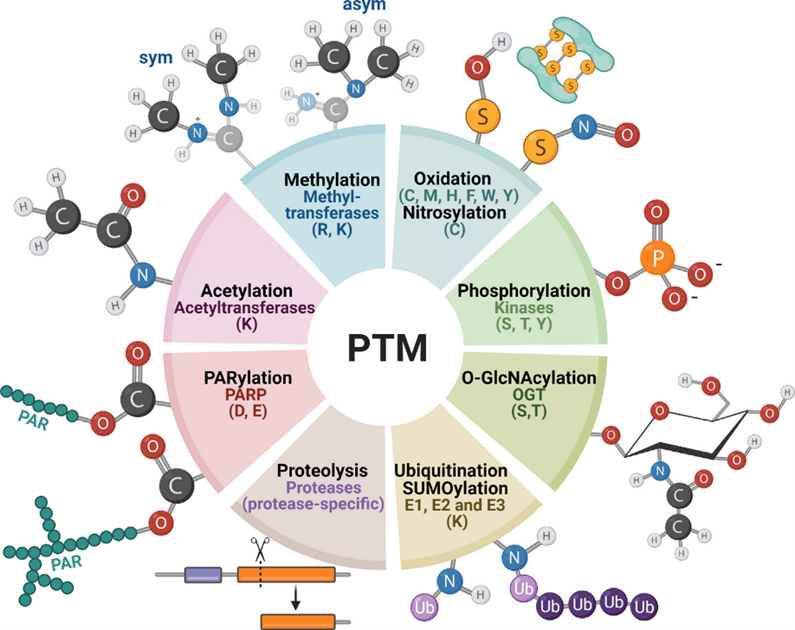 Fig. 1. Diagram showing the chemical nature of post-translational
modifications (PTMs), enzymes that introduce them, and
modified amino acids (Sternburg EL, et al., 2022).
Why PTM Analysis Matters
PTMs are essential for understanding how proteins function in complex biological systems. Systematic PTM profiling enables:
- Identification of signaling pathway activation and regulation
- Discovery of disease-associated modification patterns
- Characterization of drug targets and therapeutic mechanisms
- Investigation of protein stability and degradation pathways
Our PTM Analysis Services
We provide comprehensive, high-sensitivity mass-spectrometry-based PTM profiling using optimized sample preparation workflows, advanced enrichment technologies, and state-of-the-art LC-MS/MS platforms.
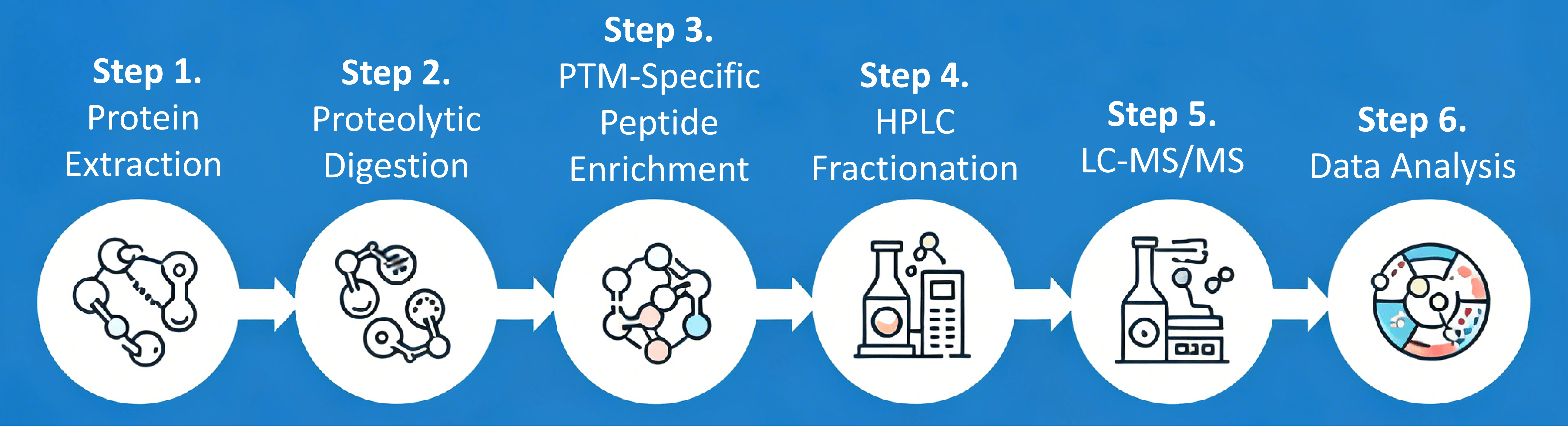
Available PTM Profiling Services

Phosphorylation Proteomics
Identifies and quantifies phosphoproteins to study kinase signaling networks in disease and drug response.
Ubiquitylation Proteomics
Detection of ubiquitin-modified proteins and ubiquitin-linkage types to elucidate degradation pathways or non-canonical signaling.
Acetylation Proteomics
Large-scale identification and quantification of lysine acetylation sites, revealing changes in metabolic regulation and epigenetic control.
Glycosylation Proteomics
Comprehensive N- and O-glycoproteomic characterization, including site-specific glycan structural mapping.
Methylation Proteomics
Identification and quantification of mono-, di-, and tri-methylation on lysine and arginine residues.

SUMOylation Proteomics
Detection of proteins modified by SUMO tags (e.g., SUMO1, 2, 3), crucial for understanding changes in nuclear transport and transcriptional regulation.
Disulfide Bond Analysis
Non-reductive sample preparation and analysis to accurately map the location and configuration of disulfide bridges.
Supported Sample Types
- Cell lines (adherent and suspension)
- Fresh or frozen tissues (mammalian, plant, microbial)
- Biofluids (serum, plasma, urine, CSF)
- Purified protein complexes
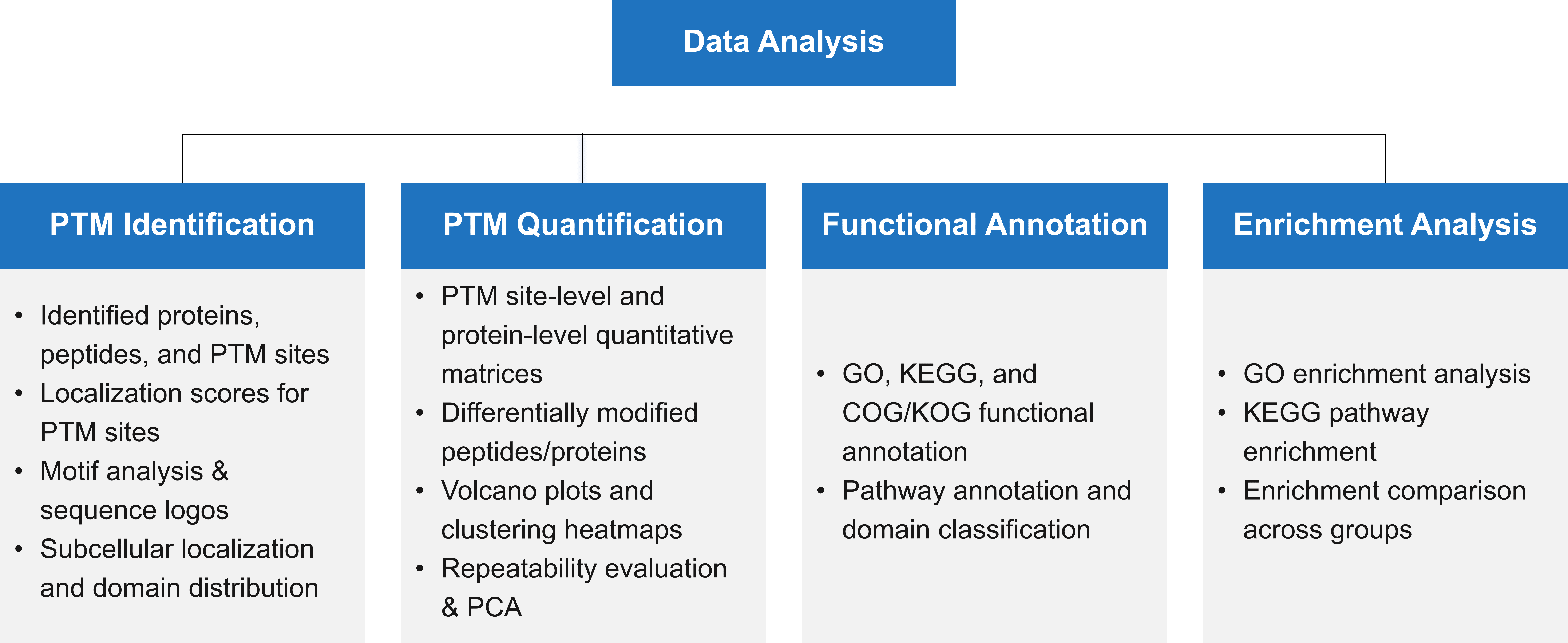
Data Deliverables
Applications
Our PTM profiling supports a wide range of research and development applications:
- Mapping signaling networks and pathway activation
- Identifying biomarkers and therapeutic targets
- Studying epigenetic regulation & chromatin dynamics
- Investigating proteostasis and protein degradation
- Comparing PTM landscapes across disease models
- Analyzing structural stability and protein folding
- Supporting drug mechanism-of-action (MoA) studies
Why Choose Us

Specialized PTM Enrichment
We have specialized PTM Enrichment Kits & Protocols for maximal recovery of low-abundance modified peptides.

Comprehensive Bioinformatics
Our service includes comprehensive Bioinformatics with PTM site validation, motif analysis, pathway enrichment, and quantitative comparisons.

Expert Experimental Support
We have an expert team in Proteomics & PTM Biology for customized experimental design and data interpretation.

End-to-End
Service
We offer End-to-End Service from sample processing to biological insight delivery.
FAQ
How much sample is required for a PTM analysis?
The required amount depends highly on the target PTM and the chosen enrichment strategy. In general, we recommend a total protein amount of at least 1-5 mg per sample for global PTM studies to have enough material for a robust enrichment. Our technical support team can help you to estimate the best amount for your samples and your project.
Can I target multiple PTMs in one analysis?
Yes, we can. We offer analysis of multiple PTMs in one project (e.g. phosphorylation and acetylation) with an adapted workflow.
Can you differentiate phosphorylation on Serine, Threonine and Tyrosine?
Yes, using high-resolution LC-MS/MS we can identify the specific amino acid residue and the sequence context, i.e. we can determine if a peptide is modified on Ser, Thr or Tyr.
Ready to accelerate your PTM research?
Contact our experts today to design a customized PTM analysis strategy tailored to your project.
References
- Kim DN, Yin T, et al. Artificial Intelligence Transforming Post-Translational Modification Research. Bioengineering. 2025; 12(1):26.
- Sternburg EL, Gruijs da Silva LA, Dormann D, et al. Post-translational modifications on RNA-binding proteins: accelerators, brakes, or passengers in neurodegeneration? Trends Biochem Sci. 2022 Jan;47(1):6-22.
Explore Other Options