Administration Routes and Biofluid Sampling
- Service Details
- Features
- FAQ
- Explore Other Options
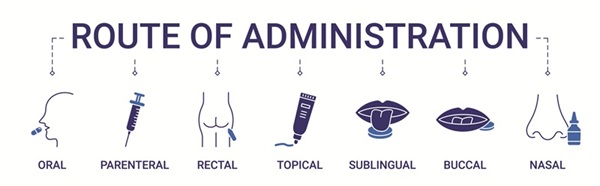
In drug development, the route of administration (ROA) refers to the pathway through which a drug or other substance enters the body. Common routes include oral, intravenous, inhalation, and transdermal delivery. The selected route critically influences a compound's absorption, distribution, metabolism, and excretion (ADME) characteristics—ultimately shaping its bioavailability, plasma concentration–time profile, and therapeutic efficacy and safety. Variations in administration route can significantly affect systemic exposure, onset of action, and duration of effect.
The importance of routes of administration in preclinical research
Preclinical research is a critical stage in the path from the laboratory to the clinic. One of the key elements in this phase is the appropriate evaluation and selection of the administration route that can not only simulate the intended human use, but also ensure the accuracy and reliability of data obtained from PD and PK studies. A systematic exploration of different administration routes in preclinical stages can help to:
- Predict the behavior of the drug in the body and provide a scientific basis for subsequent dose selection and toxicology studies.
- Optimize the drug formulation to improve its bioavailability and stability.
- Minimize potential safety risks, such as injection site irritation or incomplete absorption.
Our Services
Creative Bioarray's capabilities in administration routes
Creative Bioarray's experts support traditional and advanced delivery routes to ensure optimal drug exposure, bioavailability, and effect. From oral and injectable to pulmonary, ocular, and transdermal, we guide innovators through the evaluation of dosing strategies early in drug development and provide the translational data needed for success in the clinic.
We have also supported the development of novel drug delivery systems such as liposomes, nanoparticles, and exosomes and assisted with the design and execution of studies across multiple species with integrated bioanalytical services to ensure robust PK/PD assessment.
| Traditional Routes of Administration | Novel Drug Delivery Systems |
|
|
Biofluid sampling services
To comprehensively evaluate a drug's dynamic behavior in the body, we offer multi-point biofluid sampling services, including but not limited to:
- Portal Vein
- Bile
- Intubation
- Urine
- Lymphatics
- Cerebrospinal Fluid
- Synovial Fluid
Additionally, we offer a complementary Bioanalytical Package Service, utilizing advanced technologies like LC-MS/MS and ELISA to accurately quantify drugs and their metabolites in biological samples, creating a complete closed-loop DMPK research service.
Key Features

Diverse administration expertise
From conventional dosing to advanced drug delivery technologies.

Integrated study design
Coordinated DMPK, toxicology, and bioanalytical workflows for consistent data packages.

Customizable approaches
Tailored to compound class, target indication, and clinical translation needs.

Experienced technical team
Proven track record in handling small molecules, biologics, and complex formulations.
FAQ
Why is it important to evaluate multiple routes of administration in preclinical studies?
Different routes can significantly alter drug absorption and exposure. Early evaluation ensures identification of the most suitable clinical dosing strategy and reduces late-stage development risks.
What species are typically evaluated for ROAs?
We have experience with small rodents (mouse, rat) and commonly used non-rodent species such as dog, minipig, rabbit, and non-human primates as indicated.
How do you ensure the accuracy of your study data across different administration methods?
We have strict standard operating procedures (SOPs) in place to ensure quality and repeatability of data. Standardization of the entire workflow, right from exact weighing of drug amounts, controlling the volume delivered, health monitoring of the animal, and standard operating procedures for collection and storage of biological samples to ensure reproducible and robust data.
Do you provide customized dosing protocols for unique formulations?
Yes. Flexible and custom designed dosing regimens based on physicochemical properties and therapeutic objectives of each drug candidate are designed.
Can you handle both small molecules and biologics?
Absolutely. Our expertise covers small molecules, peptides, proteins, antibodies, nucleic acids, and advanced biologics with specialized handling requirements.
Explore Other Options