
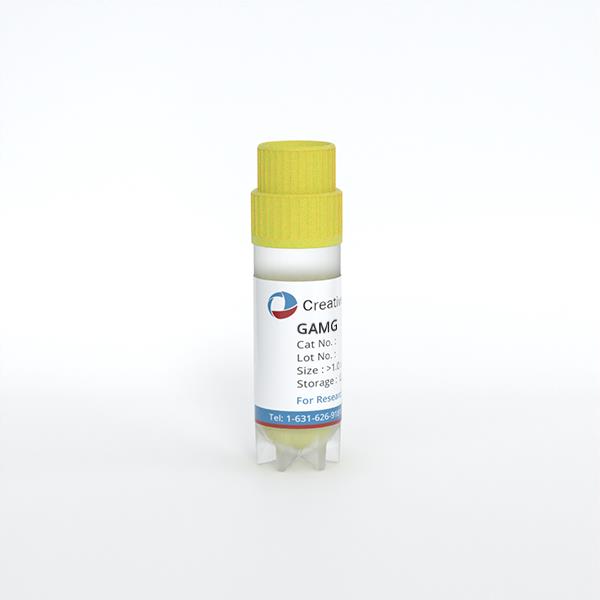
GAMG
Cat.No.: CSC-C0345
Species: Homo sapiens (Human)
Source: Brain
Morphology: adherent, large, spindle-like cells growing in monolayers
Culture Properties: monolayer
- Specification
- Background
- Scientific Data
- Q & A
- Customer Review
Immunology: cytokeratin -, cytokeratin-7 -, cytokeratin-8 -, cytokeratin-17 -, cytokeratin-18 -, desmin -,
Derived from the biopsy specimen of a 42-year-old female patient with histologically confirmed glioblastoma, GaMG (also designated GaMg or GAMG) is a hypotriploid human cell line that retains key genotypic and phenotypic hallmarks of primary glioblastoma. Its provenance and characterized karyotypic features-including polyploidy, double minutes (dm), and structural rearrangements-position it as a biologically faithful surrogate for the aggressive, genetically unstable nature of de novo GBM.
- Validated Hypoxia-Responsive Phenotype: GaMG demonstrates robust, inducible expression of HIF-1α and downstream targets (e.g., NDRG1) under low oxygen tension, faithfully recapitulating the pseudohypoxic signaling axis central to GBM chemoresistance and invasion. This renders it a preferred system for interrogating oxygen-dependent transcriptional programs and validating hypoxia-targeted interventions.
- Reference Caliber for Molecular Normalization: Critically, GaMG exhibits stable GAPDH expression refractory to hypoxic regulation. This attribute establishes it as a gold-standard reference for quantitative PCR and Western blot normalization in GBM research, eliminating a common confounder in tumor microenvironment studies.
- Translational Relevance for Pharmacogenomics: Beyond hypoxia biology, GaMG responds transcriptionally to clinically approved psychotropic and chemotherapeutic agents via LXR/SREBP pathways, providing a human-relevant platform to study drug-induced lipid metabolism, off-target toxicities, and adjuvant repurposing.
These characteristics establish GaMG not merely as another glioblastoma line, but as a clinically annotated, physiologically responsive tool optimized for hypoxia signaling, reference-standard normalization, and mechanism-driven neuro-oncology discovery.
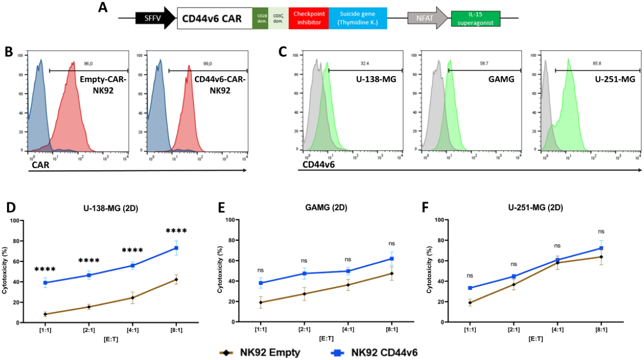
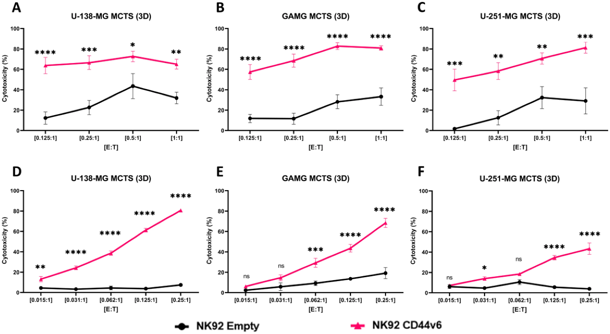
Chimeric Antigen Receptor (CAR)-NK92 Cells Effective Against Glioblastoma, Breast- and Pancreatic Cancer In Vitro
Aggressive tumors such as glioblastoma, breast, ovarian and pancreatic cancer have low survival rates and new therapies are urgently needed. One potential target is CD44v6, a splice variant of CD44 that is associated with poor prognosis. Recently, NK cells expressing CAR molecules have shown promise in combining specific targeting of solid tumors with a low risk of side effects. This study aimed to explore the efficacy of the CD44v6-CAR construct expressed in the NK cell line NK92 against solid tumors.
Flow cytometry was used to evaluate the expression of CD44v6 on glioblastoma, breast, ovarian and pancreatic cancer cell lines. In order to investigate the efficacy of CD44v6-CAR-NK92 against these solid tumors in 2D and 3D models, cytotoxicity was measured using a luminescent cell viability assay. Additionally, we assessed the levels of IFN-γ in cell culture supernatants using an ELISA method.
CD44v6-CAR-NK92 cells exhibit specific cytotoxicity against glioblastoma, breast, ovarian and pancreatic cancer after 24 h compared to the control, both in 2D and 3D models. Furthermore, the activity of CD44v6-CAR-NK92 was validated by quantifying specific cytokine release in response to target cells.
Ask a Question
Write your own review
- You May Also Need
Description: Established from the temporal lobe brain biopsy from a 63-year-old man with glioblastoma multiforme in 1990 (prior to treatment)
Description: Established from the frontal brain lobe of a 54-year-old woman with glioblastoma multiforme in 1989 (pre-treatment)
Description: Derived from an adult female with glioblastoma multiforme treated with local brain irradiation and multi drug chemotherapy. By flow cytometry these cells were almost 100% positive for MHC Class I.
Description: 1321N1 is a human astrocytoma cell line isolated in 1972 as a sub clone of the cell line 1181N1 which in turn was isolated from the parent line U-118 MG (one of a number of cell lines derived from ...
- Adipose Tissue-Derived Stem Cells
- Human Neurons
- Mouse Probe
- Whole Chromosome Painting Probes
- Hepatic Cells
- Renal Cells
- In Vitro ADME Kits
- Tissue Microarray
- Tissue Blocks
- Tissue Sections
- FFPE Cell Pellet
- Probe
- Centromere Probes
- Telomere Probes
- Satellite Enumeration Probes
- Subtelomere Specific Probes
- Bacterial Probes
- ISH/FISH Probes
- Exosome Isolation Kit
- Human Adult Stem Cells
- Mouse Stem Cells
- iPSCs
- Mouse Embryonic Stem Cells
- iPSC Differentiation Kits
- Mesenchymal Stem Cells
- Immortalized Human Cells
- Immortalized Murine Cells
- Cell Immortalization Kit
- Adipose Cells
- Cardiac Cells
- Dermal Cells
- Epidermal Cells
- Peripheral Blood Mononuclear Cells
- Umbilical Cord Cells
- Monkey Primary Cells
- Mouse Primary Cells
- Breast Tumor Cells
- Colorectal Tumor Cells
- Esophageal Tumor Cells
- Lung Tumor Cells
- Leukemia/Lymphoma/Myeloma Cells
- Ovarian Tumor Cells
- Pancreatic Tumor Cells
- Mouse Tumor Cells