
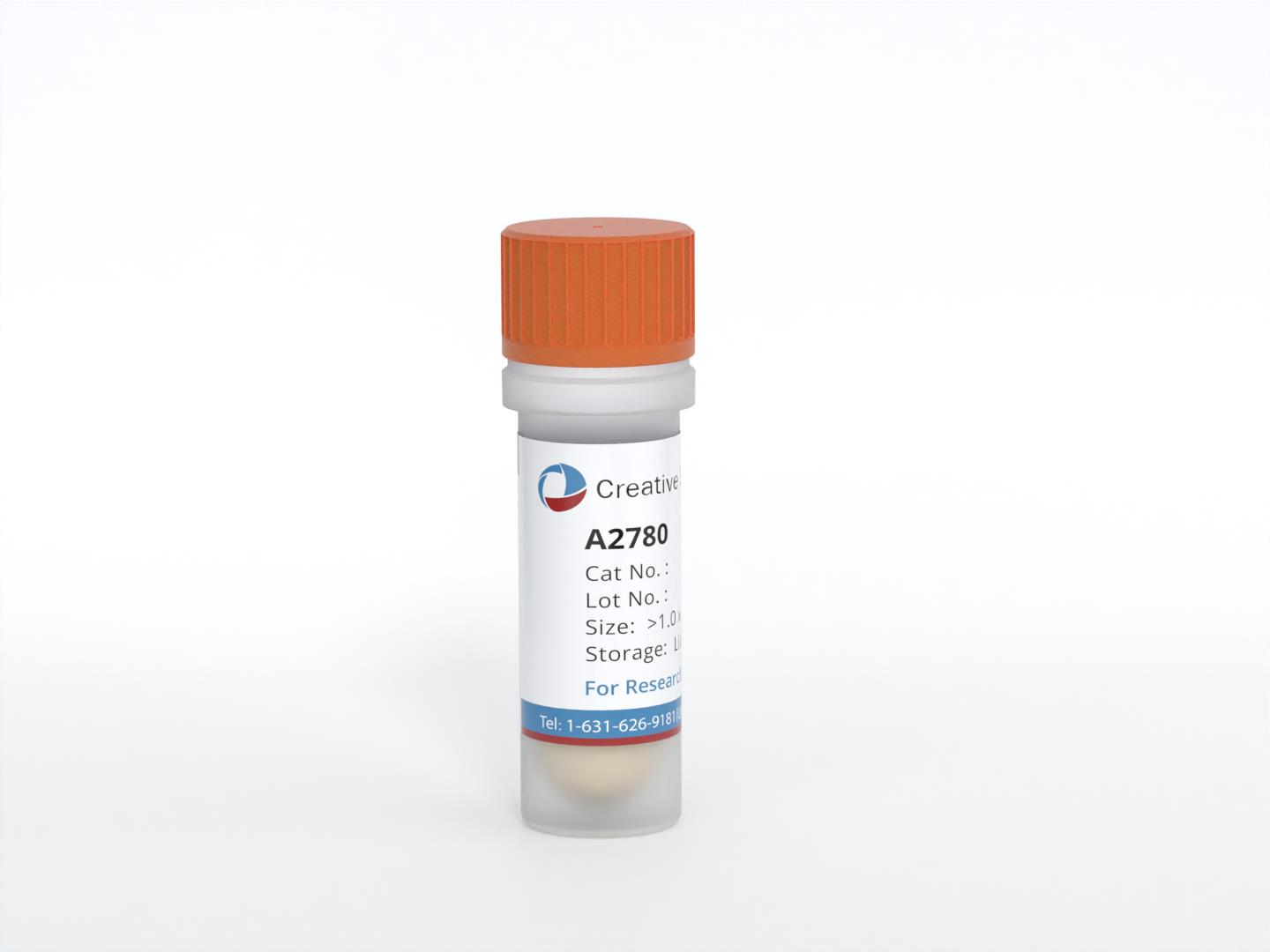
A2780
Cat.No.: CSC-C9491J
Species: Homo sapiens (Human)
Source: Ovary
Morphology: Epithelial
Culture Properties: Adherent
- Specification
- Background
- Scientific Data
- Q & A
- Customer Review
Never can cryopreserved cells be kept at -20 °C.
A2780 is a human ovarian endometrioid adenocarcinoma cell line, originally established in 1972 from an untreated patient with advanced-stage disease. Its singular scientific advantage resides in its status as the chemotherapy-sensitive parental archetype for isogenic drug resistance research. Unlike heterogeneous patient samples, A2780 provides a pure, syngeneic background against which resistance mechanisms can be experimentally isolated.
The line's power lies in its derivative platform. Chronic exposure of A2780 to cisplatin and adriamycin has generated the widely adopted resistant sublines A2780cis and A2780ADR, which exhibit cross-resistance to melphalan, vinblastine, and irradiation. This matched pair enables precise dissection of ATP-binding cassette (ABC) transporter efflux (MDR1/BCRP), EMT programming (VIM, SNAIL1/2), and ECM-mediated chemoprotection-mechanisms often confounded in non-isogenic comparisons.
Genomically, A2780 harbors clinically relevant driver mutations in TP53, BRCA1, PTEN (homozygous deletion), PIK3CA, and ATM. It retains stable, authenticated STR profiles and forms tumors in nude mice, bridging monolayer screening and in vivo efficacy. Critically, A2780 is exquisitely amenable to 3D multicellular spheroid culture, a configuration that recapitulates solid tumor hypoxia, G0-G1 cell cycle arrest, and p27-mediated chemoresistance-features lost in 2D.
Zein-Sodium Caseinate-Diosmin Nanoparticles as A Promising Anti-Cancer Agent with Targeted Efficacy Against A2780 Cell Line
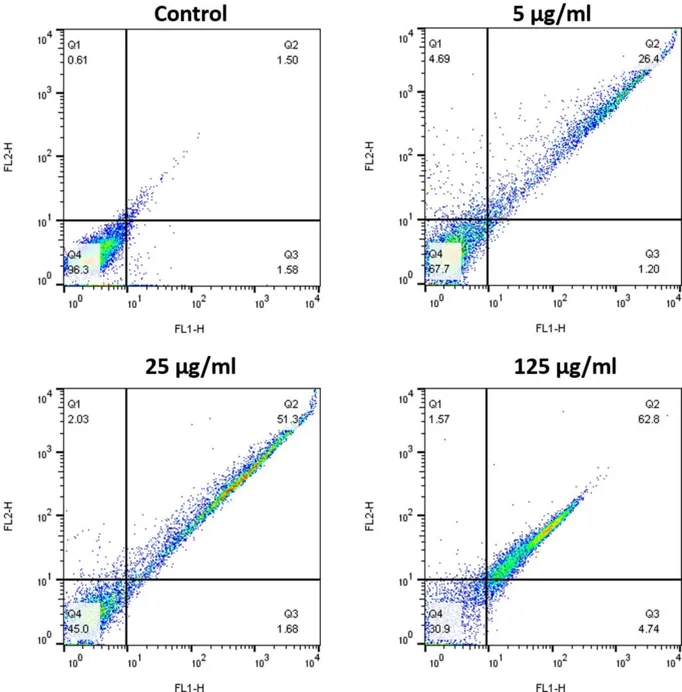
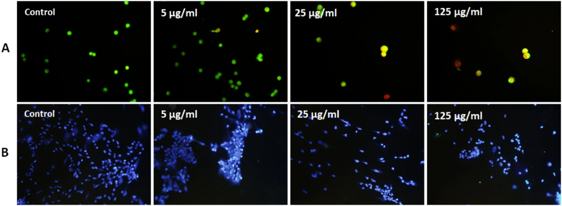
This research investigated the potential of zein-sodium caseinate-diosmin nanoparticles (ZCD-NPs) as an anti-cancer agent against the A2780 cell line. Dynamic light scattering (DLS) analysis showed that ZCD-NPs have an average size of 265.30 nm with a polydispersity index of 0.21, indicating good uniformity suitable for pharmaceutical applications. Cytotoxicity assays showed a dose-dependent effect of ZCD-NPs, with A2780 cells showing significant sensitivity compared to normal HDF cells, indicating selective targeting of cancer cells. Flow cytometry analysis confirmed that ZCD-NPs induced apoptosis and necrosis in A2780 cells, as evidenced by increased expression of apoptotic genes such as p53 and caspases 8 and 9. In addition, ZCD-NPs exhibited potent antioxidant activity, effectively scavenging free radicals. These results suggest that ZCD-NPs have promising properties for targeted cancer therapy and antioxidant applications, which warrant further exploration in clinical settings.
Ask a Question
Write your own review

Description: established from ovary of a 47-year-old female with ovarian endometrioid adenocarcinoma
Description: Japanese ovarian serous adenocarcinoma. Said CA125 producing. Cell growth is slow.
Description: Established post-hysterectomy from the tumor tissue of a 65-year-old Japanese woman with malignant ovarian carcinoma (stage: FIGO IIIc; histology: poorly differentiated serous papillary ...
Description: Established from the ascitic fluid of a 56-year-old Caucasian woman with dedifferentiated serous cystadenocarcinoma of the ovary in 1979
- Adipose Tissue-Derived Stem Cells
- Human Neurons
- Mouse Probe
- Whole Chromosome Painting Probes
- Hepatic Cells
- Renal Cells
- In Vitro ADME Kits
- Tissue Microarray
- Tissue Blocks
- Tissue Sections
- FFPE Cell Pellet
- Probe
- Centromere Probes
- Telomere Probes
- Satellite Enumeration Probes
- Subtelomere Specific Probes
- Bacterial Probes
- ISH/FISH Probes
- Exosome Isolation Kit
- Human Adult Stem Cells
- Mouse Stem Cells
- iPSCs
- Mouse Embryonic Stem Cells
- iPSC Differentiation Kits
- Mesenchymal Stem Cells
- Immortalized Human Cells
- Immortalized Murine Cells
- Cell Immortalization Kit
- Adipose Cells
- Cardiac Cells
- Dermal Cells
- Epidermal Cells
- Peripheral Blood Mononuclear Cells
- Umbilical Cord Cells
- Monkey Primary Cells
- Mouse Primary Cells
- Breast Tumor Cells
- Colorectal Tumor Cells
- Esophageal Tumor Cells
- Lung Tumor Cells
- Leukemia/Lymphoma/Myeloma Cells
- Ovarian Tumor Cells
- Pancreatic Tumor Cells
- Mouse Tumor Cells