
H-EMC-SS
Cat.No.: CSC-6258W
Species: Homo sapiens (Human)
Source: Muscle
Morphology: continuous culture, grown as monolayer, morphology epithelial-like and fibroblast-like, some round cells
Culture Properties: monolayer
- Specification
- Background
- Scientific Data
- Q & A
- Customer Review
Tumor: chondrosarcoma
H-EMC-SS is a human cell line derived from an extraskeletal myxoid chondrosarcoma (EMC) in a 77-year-old female. H-EMC-SS is an adherent, epithelial-like cell line with heterogeneous morphology showing fibroblast-like to round cells. It is MSS (microsatellite stable) (MS-Stable) with no fusion of EWSR1 gene. H-EMC-SS is frequently used in cancer research as it has been added to both COSMIC and Cancer Dependency Map databases and is available for genomic, epigenomic, and proteomic studies. It is recommended to be cultured in DMEM/Ham's F12 medium (1: 1) supplemented with 10% fetal bovine serum and antibiotics. H-EMC-SS requires an incubation environment of 37 °C and 5% CO₂. The cell line is STR profiled and mycoplasma-free. It can be used in studies exploring molecular mechanisms in soft tissue sarcomas and for high-throughput drug screening for putative drugs.
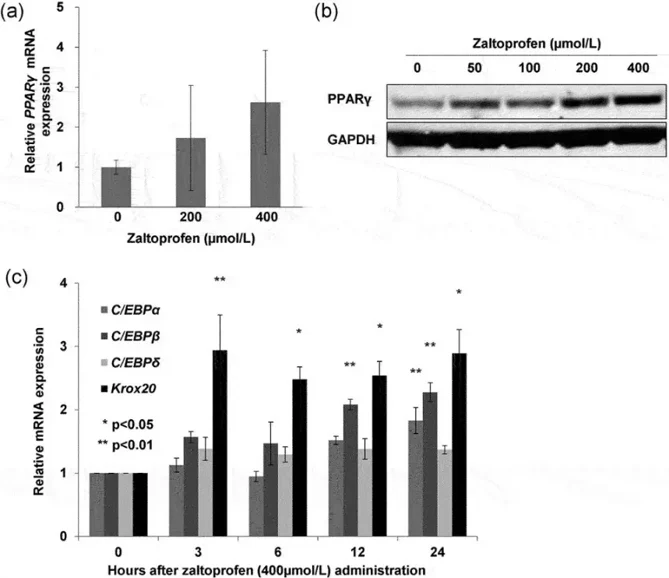
Induction of PPARγ by Zaltoprofen in H-EMC-SS Cells
Peroxisome proliferator-activated receptor gamma (PPARγ), one of the nuclear receptors for adipogenesis, has been known as a novel antitumor target in chondrosarcomas. In this study, Higuchi et al. show that zaltoprofen, a nonsteroidal anti-inflammatory drug, upregulated PPARγ mRNA and protein expression and its antitumor activity in human extraskeletal chondrosarcoma cells. Zaltoprofen treatment elevated PPARγ mRNA and protein levels in H-EMC-SS cells as revealed by qRT-PCR and western blot analysis (Fig. 1a, b). This suggests that zaltoprofen can induce PPARγ in H-EMC-SS cells. The upregulation of Krox20 from 3 to 24 hours, which was subsequently upregulated by C/EBPβ at 12 hours and C/EBPα at 24 hours by zaltoprofen (400 µmol/L), was detected (Fig. 1c). This indicates the signaling for PPARγ induction by zaltoprofen in H-EMC-SS cells.
Ask a Question
Write your own review
- You May Also Need
Description: Organism: Homo sapiens (human)Ethnicity: CaucasianAge/Stage: 36 years of ageGender: maleTissue: sarcomaGrowth Properties: monolayerDescription: in vitro established from a primary skin sarcoma (sole ...
Description: Human cell line derived from epithelioid sarcoma. Derived from a different patient from the patient of HS-ES-1 cell line.
Description: Established from an endometrial stromal sarcoma of the uterus of a 76-year-old Caucasian woman; cells were described as demonstrating a mainly mesenchymal phenotype with signs of epithelial ...
Description: Established from the alveololar rhabdomyosarcoma of the liver of a girl after chemotherapy; cells were described to contain a deletion mutation of p53 and to be resistant to FAS- and TRAIL-induced ...
- Adipose Tissue-Derived Stem Cells
- Human Neurons
- Mouse Probe
- Whole Chromosome Painting Probes
- Hepatic Cells
- Renal Cells
- In Vitro ADME Kits
- Tissue Microarray
- Tissue Blocks
- Tissue Sections
- FFPE Cell Pellet
- Probe
- Centromere Probes
- Telomere Probes
- Satellite Enumeration Probes
- Subtelomere Specific Probes
- Bacterial Probes
- ISH/FISH Probes
- Exosome Isolation Kit
- Human Adult Stem Cells
- Mouse Stem Cells
- iPSCs
- Mouse Embryonic Stem Cells
- iPSC Differentiation Kits
- Mesenchymal Stem Cells
- Immortalized Human Cells
- Immortalized Murine Cells
- Cell Immortalization Kit
- Adipose Cells
- Cardiac Cells
- Dermal Cells
- Epidermal Cells
- Peripheral Blood Mononuclear Cells
- Umbilical Cord Cells
- Monkey Primary Cells
- Mouse Primary Cells
- Breast Tumor Cells
- Colorectal Tumor Cells
- Esophageal Tumor Cells
- Lung Tumor Cells
- Leukemia/Lymphoma/Myeloma Cells
- Ovarian Tumor Cells
- Pancreatic Tumor Cells
- Mouse Tumor Cells