
SW480E
Cat.No.: CSC-C9730L
Species: Homo sapiens (Human)
Source: Intestine; Colon
Morphology: epithelial
Culture Properties: monolayer
- Specification
- Background
- Scientific Data
- Q & A
- Customer Review
vWA: 16
FGA: 24
Amelogenin: X
TH01: 8
TPOX: 11
CSF1P0: 13,14
D5S818: 13
D13S317: 12
D7S820: 8
Shipping Condition: Room Temperature
SW480E is a variation or epithelial enriched subpopulation from the human colorectal adenocarcinoma cell line SW480, which was obtained from a primary colon tumor of a Duke's B colorectal cancer patient. Similar to the ancestral SW480 line, SW480E maintains key molecular and phenotypic characteristics associated with colorectal cancer progression including dysregulated Wnt/β-catenin signaling, high proliferative potential and tumor-related epithelial features.
The SW480E cells are commonly employed in the cancer biology field to study the molecular pathways of tumor cell proliferation, epithelial-mesenchymal transition (EMT), migration, invasion, and treatment resistance. Because of their epithelial-like appearance and persistent in vitro growth features, these cells are particularly useful for studies on cell adhesion, signaling pathway modulation, and interactions between tumor cells and the tumor microenvironment.
Recent research using SW480E or related SW480 sublines have focused on cancer stem cell heterogeneity, metastatic behavior, apoptosis regulation, and responses to chemotherapeutic drugs or targeted therapies. This cell line is often used in tests such as proliferative assays, wound healing, trans-well invasion, colony formation, flow cytometry, and transcriptome profiling.
Impact of Bupivacaine on Malignant Proliferation, Apoptosis and Autophagy of Human Colorectal Cancer SW480 Cells
While local anesthetics like Bupivacaine exhibit anti-cancer properties in various malignancies, their effects in colorectal cancer (CRC) remain unclear. Liu's team investigated Bupivacaine's impact on CRC cell proliferation, migration, and apoptosis.
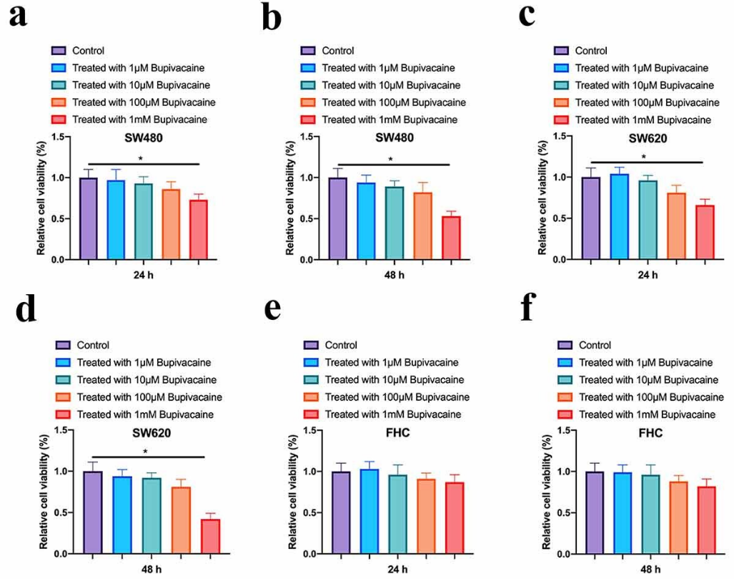
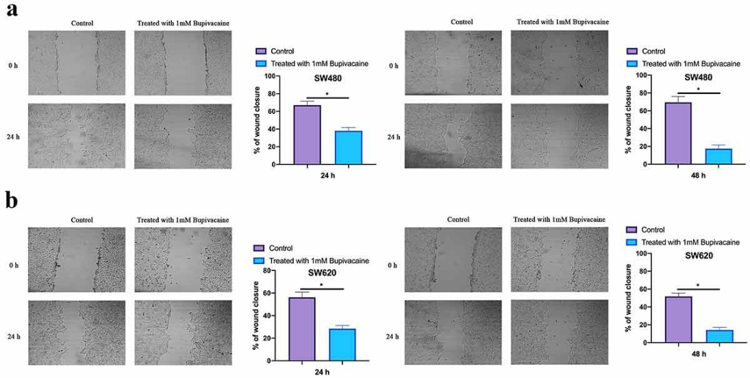
Treatment with 1 mM Bupivacaine for 24 or 48 hours significantly inhibited the viability of CRC cell lines (SW480, SW620), with a more pronounced effect at 48 hours (Fig. 1a-d). Importantly, this concentration did not affect the viability of normal colon cells (FHC) (Fig. 1e-f). Bupivacaine also significantly impaired CRC cell migration in scratch assays (Fig. 2a-d).
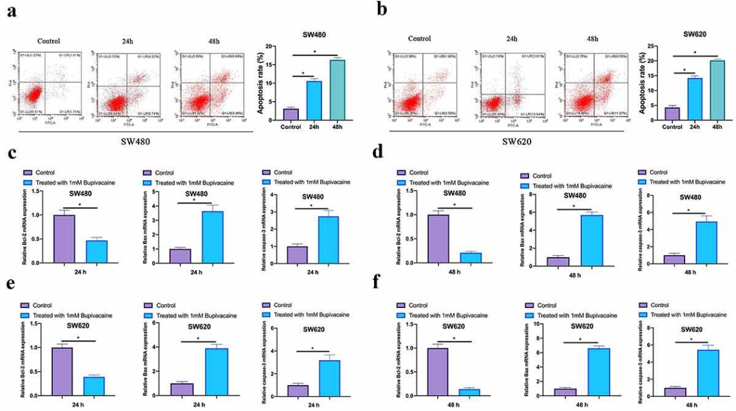
Furthermore, Bupivacaine induced apoptosis in a time-dependent manner (Fig. 3a-b), mechanistically linked to the downregulation of the anti-apoptotic protein Bcl-2 and the upregulation of pro-apoptotic proteins (Bax, cleaved caspase-3) (Fig. 3c-f). Collectively, these data suggest that Bupivacaine selectively suppresses CRC progression by inhibiting proliferation and migration while promoting apoptosis.
Ask a Question
Write your own review
- You May Also Need
Description: Established from an adenocarcinoma located in the ascending colon of a 68 year-old male patient. The adenocarcinoma was well differentiated and determined to be Dukes' stage B. Imperial College ...
Description: This is one cell line out of a series of colon carcinoma cell lines established by PD Dr. Michael Linnebacher.
Description: Rectal carcinoma from a Japanese patient. Cell growth is slow.
Description: The C80 cell line was established from a 69-year old male patient with a moderately well differentiated adenocarcinoma of the rectum classified as Dukes' stage D.
Description: RKO is a poorly differentiated colon carcinoma cell line developed by Michael Brattain.
- Adipose Tissue-Derived Stem Cells
- Human Neurons
- Mouse Probe
- Whole Chromosome Painting Probes
- Hepatic Cells
- Renal Cells
- In Vitro ADME Kits
- Tissue Microarray
- Tissue Blocks
- Tissue Sections
- FFPE Cell Pellet
- Probe
- Centromere Probes
- Telomere Probes
- Satellite Enumeration Probes
- Subtelomere Specific Probes
- Bacterial Probes
- ISH/FISH Probes
- Exosome Isolation Kit
- Human Adult Stem Cells
- Mouse Stem Cells
- iPSCs
- Mouse Embryonic Stem Cells
- iPSC Differentiation Kits
- Mesenchymal Stem Cells
- Immortalized Human Cells
- Immortalized Murine Cells
- Cell Immortalization Kit
- Adipose Cells
- Cardiac Cells
- Dermal Cells
- Epidermal Cells
- Peripheral Blood Mononuclear Cells
- Umbilical Cord Cells
- Monkey Primary Cells
- Mouse Primary Cells
- Breast Tumor Cells
- Colorectal Tumor Cells
- Esophageal Tumor Cells
- Lung Tumor Cells
- Leukemia/Lymphoma/Myeloma Cells
- Ovarian Tumor Cells
- Pancreatic Tumor Cells
- Mouse Tumor Cells