
Rat Hippocampal Neural Stem Cells
- Specification
- Background
- Scientific Data
- Q & A
- Customer Review
Never can primary cells be kept at -20 °C.
Rat hippocampal neural stem cells (rNSCs) are multipotent, self-renewing progenitor cells isolated from the hippocampal dentate gyrus. rNSCs express canonical neural stem cell markers including nestin, SOX2, Pax6, and glial fibrillary acidic protein (GFAP), while exhibiting low or absent expression of differentiation markers.
The defining advantage of rNSCs lies in their robust trilineage differentiation potential in vitro: upon withdrawal of mitogens, they generate neurons (βIII-tubulin+, NeuN+), astrocytes (GFAP+, S100β+), and oligodendrocytes (O4+, MBP+) in defined proportions. This property, combined with their capacity for long-term expansion without losing neurogenic competence, makes them an invaluable tool for studying neural development, synaptic integration, and circuit formation. Furthermore, the rat hippocampus is anatomically larger and more accessible than its murine counterpart, facilitating stereotaxic transplantation, electrophysiological recordings, and behavioral correlation in translational studies.
rNSCs have been extensively employed to investigate mechanisms of adult neurogenesis, ischemic injury, epilepsy, depression, and neurodegenerative disorders such as Alzheimer's disease. They are amenable to genetic manipulation via lentiviral or CRISPR/Cas9-mediated approaches, enabling functional gene interrogation. The ability to derive patient-specific or disease-model rNSCs from transgenic rat lines further extends their utility for preclinical drug screening and regenerative medicine.
Mechanosensitive Ion Channel Piezo1 Modulates the Response of Rat Hippocampus Neural Stem Cells to Rapid Stretch Injury
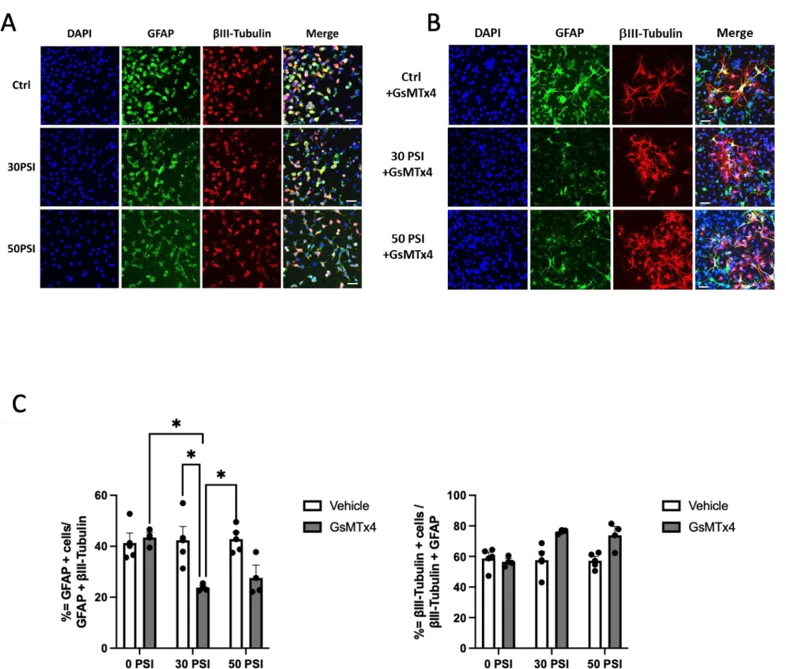
This study aimed to determine the impact of rapid stretch on the viability, proliferation, and differentiation of neural stem cells (NSC) isolated from rat hippocampus (Hipp-NSC) and to determine the role of the stretch-activated ion channel Piezo-1 in modulating their response to mechanical stress.
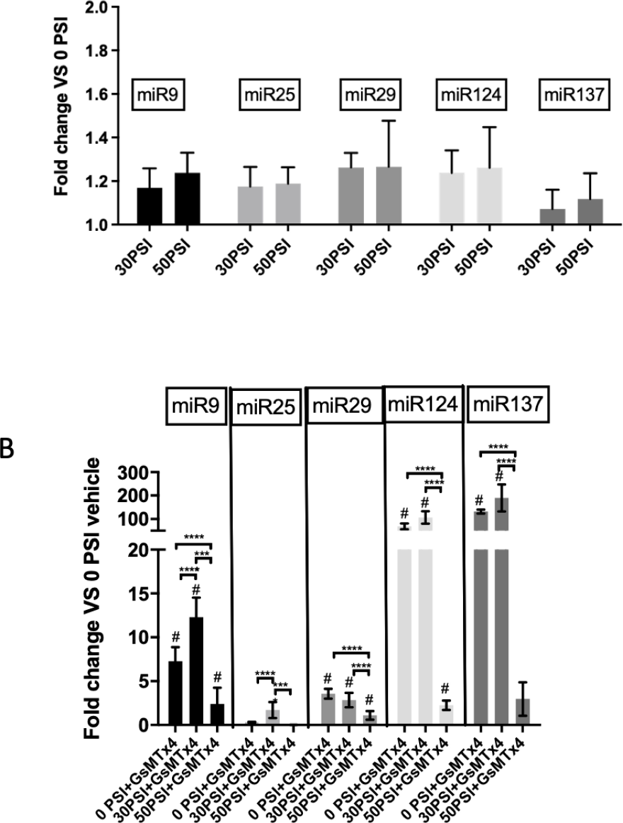
The results showed that while rapid stretch (30 and 50 PSI) reduced Hipp-NSC viability (measured as a function of LDH release), it did not change their proliferation and differentiation potentials. Interestingly, rapid stretch in the presence of a selective Piezo-1 inhibitor, GsMTx4, or Piezo1 targeting siRNA, directed Hipp-NSC differentiation toward a neurogenic lineage. Additionally, we found that inhibiting Piezo1 with the addition of a rapid stretch injury increased the expression of miRNAs known to regulate neurogenesis. This work presents a novel approach for studying the effect of mechanical stress on NSC in vitro and points to the critical role the stretch-activated ion channel Piezo-1 has in modulating the impact of traumatic Brain Injury (TBI) on hippocampal neurogenesis.
Ask a Question
Write your own review
- Adipose Tissue-Derived Stem Cells
- Human Neurons
- Mouse Probe
- Whole Chromosome Painting Probes
- Hepatic Cells
- Renal Cells
- In Vitro ADME Kits
- Tissue Microarray
- Tissue Blocks
- Tissue Sections
- FFPE Cell Pellet
- Probe
- Centromere Probes
- Telomere Probes
- Satellite Enumeration Probes
- Subtelomere Specific Probes
- Bacterial Probes
- ISH/FISH Probes
- Exosome Isolation Kit
- Human Adult Stem Cells
- Mouse Stem Cells
- iPSCs
- Mouse Embryonic Stem Cells
- iPSC Differentiation Kits
- Mesenchymal Stem Cells
- Immortalized Human Cells
- Immortalized Murine Cells
- Cell Immortalization Kit
- Adipose Cells
- Cardiac Cells
- Dermal Cells
- Epidermal Cells
- Peripheral Blood Mononuclear Cells
- Umbilical Cord Cells
- Monkey Primary Cells
- Mouse Primary Cells
- Breast Tumor Cells
- Colorectal Tumor Cells
- Esophageal Tumor Cells
- Lung Tumor Cells
- Leukemia/Lymphoma/Myeloma Cells
- Ovarian Tumor Cells
- Pancreatic Tumor Cells
- Mouse Tumor Cells