
Rat Preadipocytes- subcuntaneous
Cat.No.: CSC-C4735Z
Species: Rat
Source: Adipose
Cell Type: Preadipocyte
- Specification
- Background
- Scientific Data
- Q & A
- Customer Review
Never can cryopreserved cells be kept at -20 °C
Rat subcutaneous preadipocytes are primary mesenchymal progenitors isolated from the inguinal or dorsal subcutaneous adipose depots. As non-immortalized cells with a normal diploid karyotype, they faithfully recapitulate native adipocyte biology without the aberrant signaling of transformed lines. Their pivotal advantage lies in retaining the intrinsic, depot-specific program of subcutaneous adipose tissue, which differs fundamentally from visceral fat.
Subcutaneous preadipocytes exhibit superior adipogenic differentiation capacity and robust insulin sensitivity, yielding mature adipocytes that are highly responsive to insulin-stimulated glucose uptake. Crucially, these cells display a beneficial adipokine secretion profile characterized by high adiponectin and leptin production with comparatively low basal pro-inflammatory cytokine release, mirroring the metabolically protective nature of subcutaneous fat in vivo.
Furthermore, subcutaneous preadipocytes possess remarkable phenotypic plasticity: upon appropriate stimulation, they can be efficiently induced toward a beige adipocyte phenotype, expressing uncoupling protein 1 and acquiring thermogenic capacity. This makes them an unparalleled model for dissecting the molecular mechanisms of white-to-beige transdifferentiation. Combined with their amenability to siRNA-mediated gene silencing and lentiviral transduction, these cells offer a physiologically authentic, tractable system. They are therefore indispensable for investigating healthy adipose tissue expansion, adipokine regulation, and the therapeutic activation of beige fat to combat obesity-related metabolic disorders.
Phoenixin Regulates Proliferation and UCP1 Expression in Rat Brown Primary Preadipocytes
Phoenixin (PNX) is a neuropeptide initially identified for its role in regulating reproductive system functions. Recent studies have demonstrated that PNX may contribute to energy homeostasis by stimulating white adipogenesis. However, the role of PNX in regulating brown adipose tissue functions remains unclear. Therefore, this study aimed to evaluate the effects of PNX on the proliferation and differentiation of rat brown preadipocytes isolated from the interscapular fat of male Wistar rats into mature brown adipocytes.
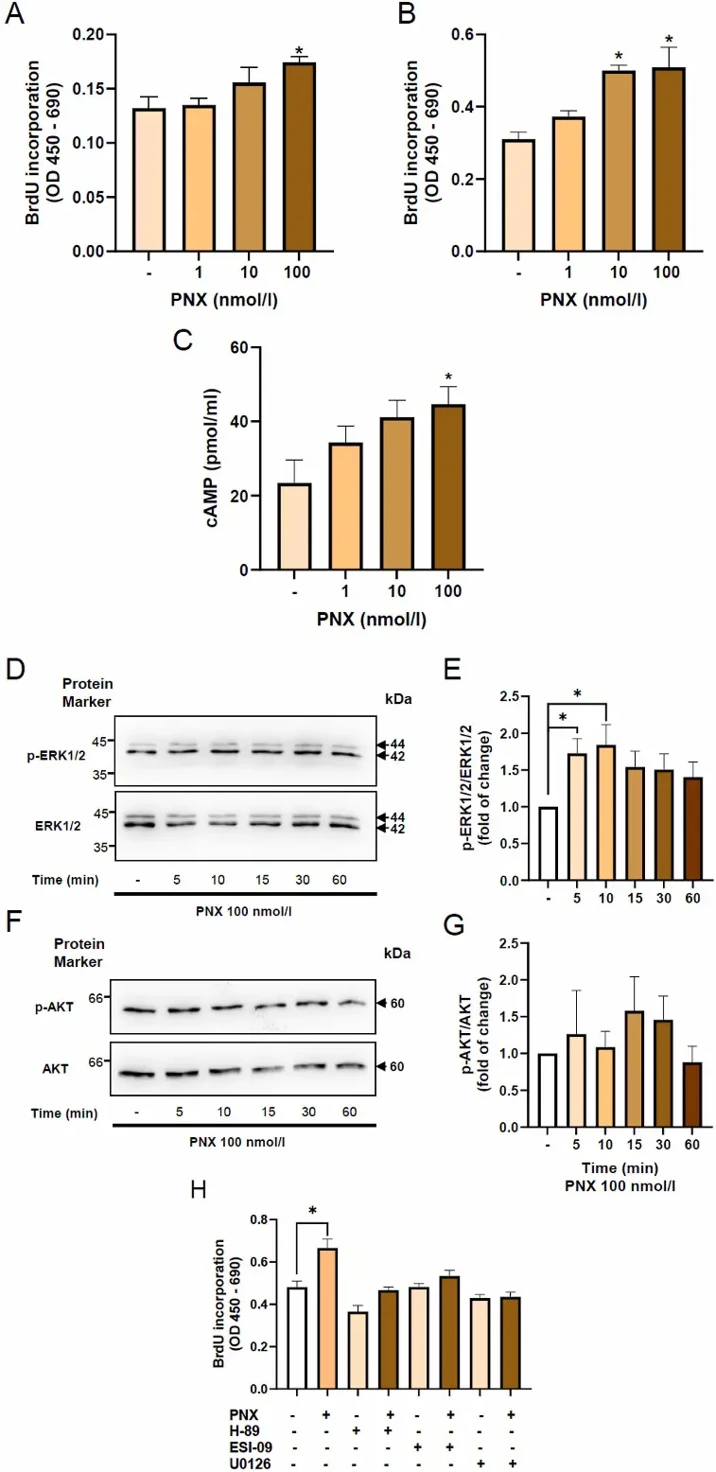
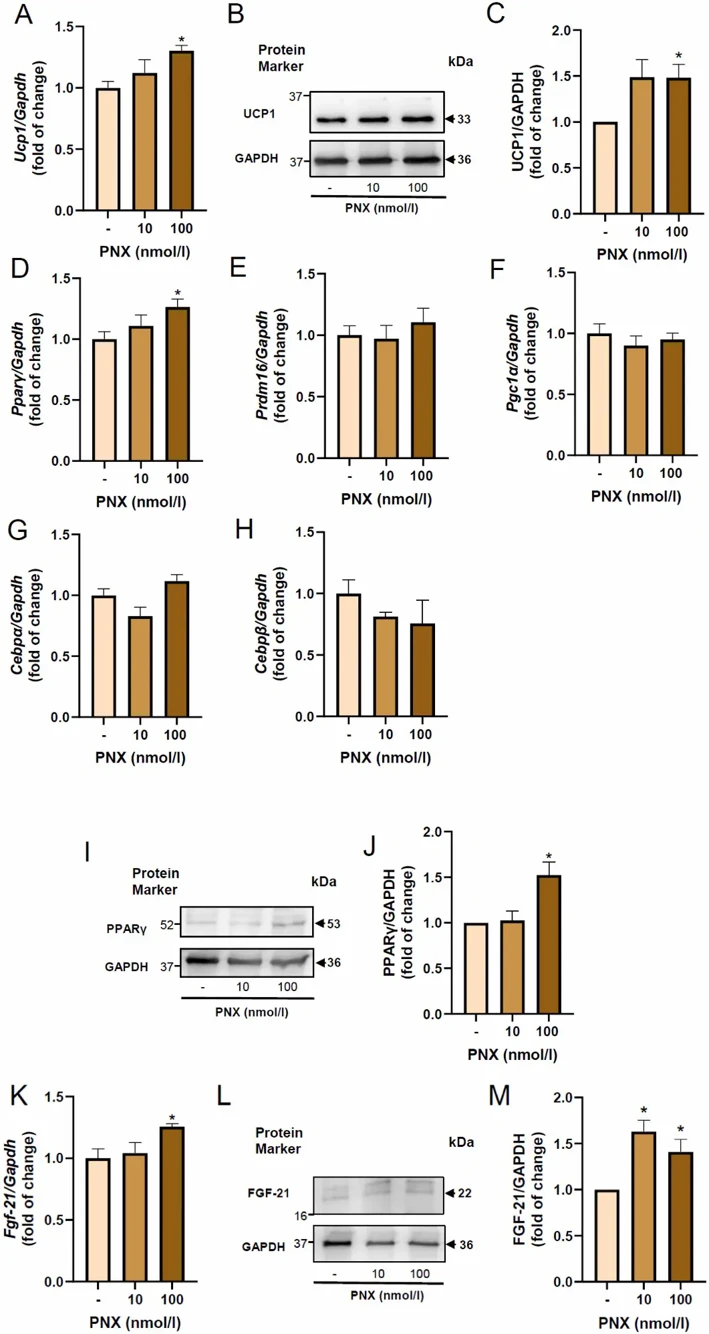
The results show that PNX peptide and its putative receptor, GPR173, are expressed in both undifferentiated and differentiated brown preadipocytes. Furthermore, PNX stimulates the proliferation of rat brown preadipocytes via cAMP/PKA/Epac- and ERK1/2-dependent mechanisms. Additionally, during the differentiation process, PNX upregulated the mRNA expression and protein production of UCP1 and FGF-21, which was accompanied by an increase in PPARγ expression. Conversely, PNX did not affect intracellular lipid accumulation or mitochondrial content during the differentiation of rat brown primary preadipocytes into mature brown fat cells.
Ask a Question
Write your own review
Description: The thoracic aorta is located in the chest cavity and gives off arteries that branch to the esophagus, pericardium, lungs, and trachea. The thoracic aorta can be subdivided into the ascending aorta, ...
Description: Rat Podocytes are isolated from normal rat kidney. The cells are characterized by immunofluorescence with antibodies specific to podocin, Ang1, Nephrin, ACTN4, NPHS2. T25 flasks is required for cell ...
Description: Rat Bronchial Smooth Muscle Cells are isolated from normal rat bronchi tissue. Rat Bronchial Smooth Muscle Cells are characterized by immunofluorescence with antibodies specific to alpha-actin. T25 ...
Description: Guinea Pig Endothelial Cells from Creative Bioarray are isolated from guinea pig tissue. Prior to shipping, cells at passage 2 are detached from flasks and immediately cryopreserved in vials. Each ...
Description: Rat Lung Epithelial Cells are isolated from normal rat lung tissue. The cells are characterized by immunofluorescence with antibodies specific to CK-18, CK-19. T25 flasks is required for cell ...
Description: Rat Vein Endothelial Cells from Creative Bioarray are isolated from inferior vena cava tissue of 6-8 week old laboratory Sprague-Dawley rat. Rat Vein Endothelial Cells are grown in T75 tissue culture ...