
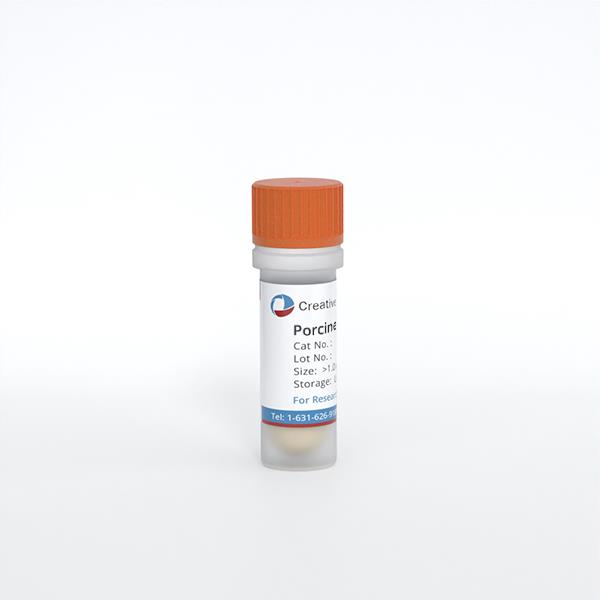
Porcine Dermal Fibroblasts- Adult
Cat.No.: CSC-C4888L
Species: Pig
Source: Dermis; Skin
Cell Type: Fibroblast
- Specification
- Background
- Scientific Data
- Q & A
- Customer Review
Never can cryopreserved cells be kept at -20 °C.
Porcine Dermal Fibroblasts (PDFs) are a premier cellular model in translational medicine, skin biology, and tissue engineering. Derived from the dermis of the domestic pig (Sus scrofa), these cells are widely regarded as the most physiologically relevant non-primate model for human skin research. Due to the remarkable histological and physiological similarities between porcine and human integumentary systems, PDFs serve as a critical bridge between in vitro assays and clinical applications.
- High Translational Fidelity: Porcine skin shares striking similarities with human skin in terms of dermal thickness, collagen fiber architecture, elastic fiber content, and vascularization. Consequently, PDFs provide a more predictive model for human dermal responses compared to murine or feline alternatives.
- Robust Extracellular Matrix (ECM) Synthesis: PDFs are highly proficient in the synthesis and remodeling of essential ECM components, including Type I and III collagen, elastin, and glycosaminoglycans. This makes them an ideal substrate for validating wound-healing therapeutics, anti-aging compounds, and bio-scaffold integration.
- Scalability for Tissue Engineering: These cells exhibit vigorous proliferative capacity and maintain phenotypic stability over multiple passages. Their robustness allows for the large-scale production of "living" skin equivalents and bio-printed constructs, essential for high-throughput dermatological screening.
- Optimized for Xenotransplantation and Immunology: Given the advancements in porcine genetic engineering, PDFs are the primary target for CRISPR/Cas9 modifications to create "humanized" porcine models. They are indispensable for studying xenograft rejection mechanisms and developing tolerance-inducing therapies.
Validated for purity through the expression of Vimentin and the absence of epithelial markers, our Porcine Dermal Fibroblasts offer a standardized, "assay-ready" system. By minimizing the translational gap often encountered with rodent models, this product provides a cost-effective, ethically viable, and scientifically rigorous platform for pharmaceutical R&D, cosmetic testing, and regenerative medicine innovation.
Highly Efficient Isolation and 3D Printing of Fibroblasts for Cultured Meat Production
Fibroblasts are important components of animal tissues such as muscle and skin, as they are the major producers of various matrix proteins. Matrix proteins such as collagen play an important role in meat products by providing unique nutrition, texture, and flavor. Cultured meat is an innovative meat alternative produced by culturing animal cells, but currently, relatively few studies have been conducted using fibroblasts as seed cells for cultured meat manufacturing.
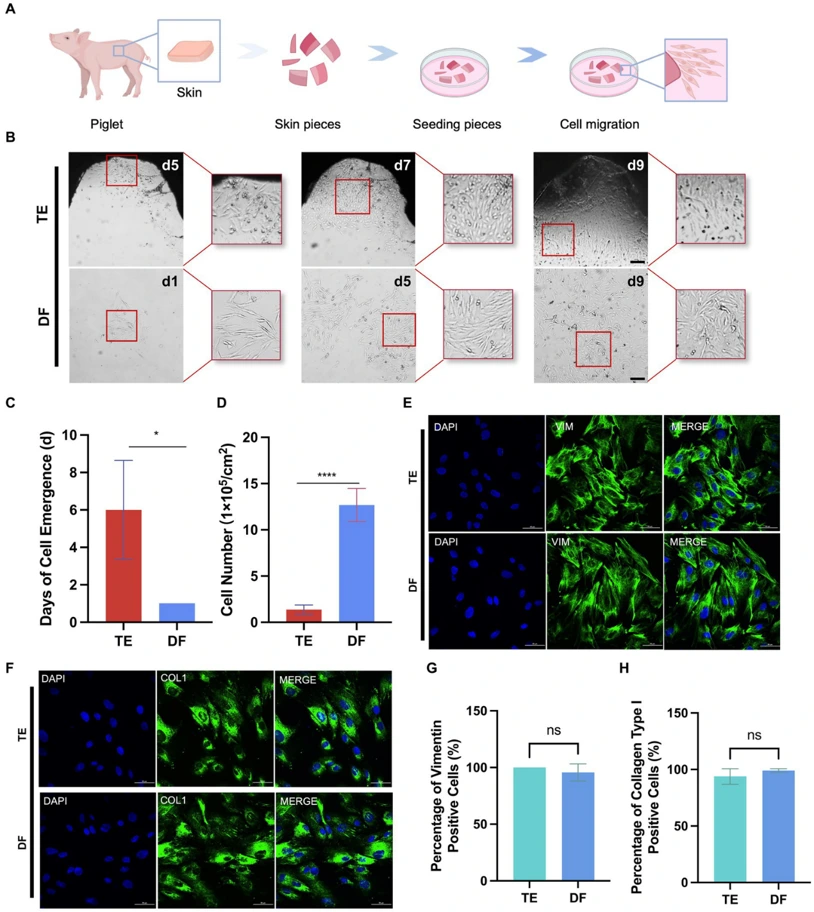
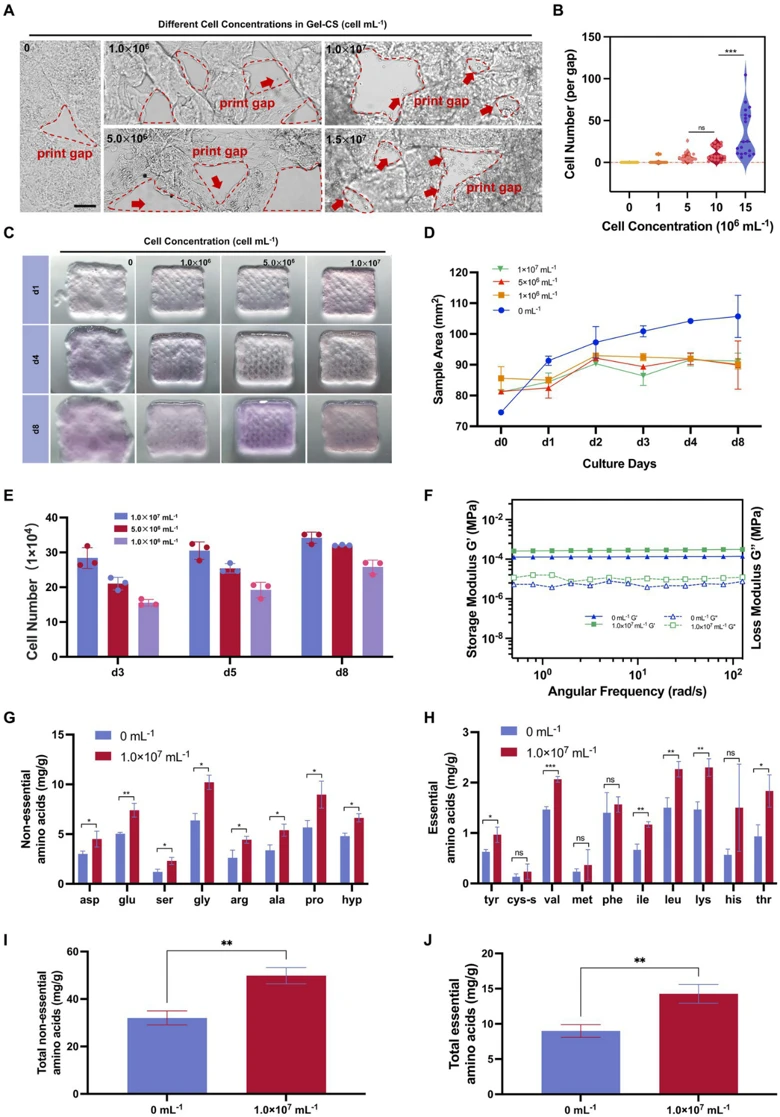
In this work, we first developed an innovative digestion-friction (DF) method for isolating fibroblasts from porcine skin efficiently and cost-effectively. After optimizing the enzymatic digestion and physical friction conditions, 2.39 ± 0.28 × 10⁵ fibroblasts were obtained from 1 cm2 of porcine skin tissue, which was about 9 times higher than the conventional tissue explant (TE) method. In addition, we identified an edible bio-ink composed of gelatin and chitosan that has good printing properties and supports fibroblast adhesion and growth. Furthermore, we fabricated fibroblast-based cultured meat by 3D printing with an initial cell density of 1.0 × 10⁷ mL-1 and evaluated its texture and nutritional properties. This work provides valuable insights and references for introducing fibroblasts into the production of cultured meat that is more comparable to structured animal meat.
Changing the medium specified by Creative Bioarray is not recommended because when the medium is changed, the nature of the cells may also change.
Ask a Question
Average Rating: 5.0 | 1 Scientist has reviewed this product
Distinctive
I had a distinctive experience with Creative Bioarray's cell culture products. Everything went smoothly and I was very satisfied with the results.
12 Aug 2023
Ease of use
After sales services
Value for money
Write your own review
Description: Porcine Corneal Epithelial Cells from Creative Bioarray are isolated from corneal tissue of porcine. Porcine Corneal Epithelial Cells are grown in a T25 tissue culture flask pre-coated with ...
Description: Porcine Brain Vascular Fibroblasts from Creative Bioarray are isolated from brain tissue of porcine. Porcine Brain Vascular Fibroblasts are grown in T75 tissue culture flasks pre-coated with ...

Description: Porcine Thymus Endothelial Cells from Creative Bioarray are isolated from thymus tissue of porcine. Porcine Thymus Endothelial Cells are grown in T25 tissue culture flasks pre-coated with ...
Description: Porcine Kidney Endothelial Cells from Creative Bioarray are isolated from kidney tissue of porcine. Porcine Kidney Endothelial Cells are grown in T25 tissue culture flasks pre-coated with ...
Description: Pig bone marrow from Creative Bioarray is procured from the fresh femurs. Bone Marrow-CD34+ stem/progenitor cells are positively isolated using a direct immunomagnetic CD34 MicroBead labeling system.
Description: Porcine Primary Thymus Fibroblasts from Creative Bioarray are isolated from thymus tissue of porcine. Porcine Primary Thymus Fibroblasts are grown in T75 tissue culture flasks pre-coated with ...