
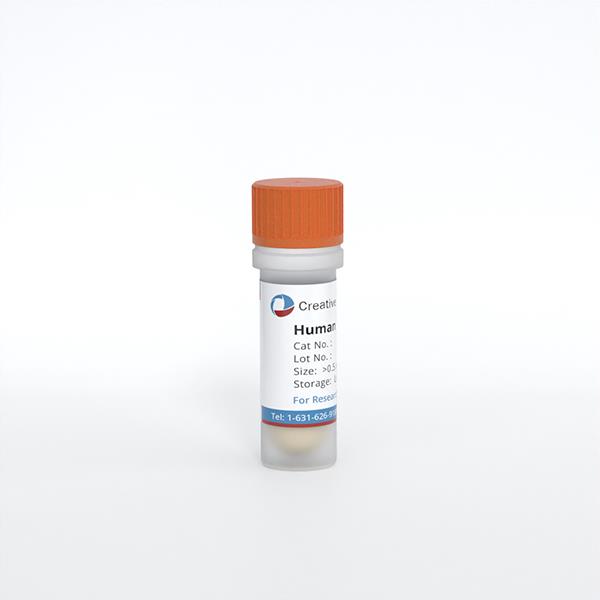
Human Uterine Epithelial Cells
Cat.No.: CSC-C4880L
Species: Human
Source: Uterus
Cell Type: Epithelial Cell
- Specification
- Background
- Scientific Data
- Q & A
- Customer Review
Never can cryopreserved cells be kept at -20 °C.
Human Uterine Epithelial Cells are primary cells isolated from the endometrial or cervical tissue of the human uterus. They compose the superficial lining of the uterine wall and are key players in reproductive physiology such as the menstrual cycle, embryonic implantation, and barrier defence against pathogens. Morphologically, these cells show a classical epithelial phenotype, generally presenting as a monolayer of adherent polygonal or cobblestone-shaped cells.
In vitro, they are cultured in a nutrient-rich basal medium supplemented with serum and essential amino acids to support proliferation and maintain phenotypic stability. Standard culture conditions require a humidified incubator at 37°C with 5% carbon dioxide. Normal protease solution is normally used for confluence with subculture.
Human Uterine Epithelial Cells are physiologically relevant and serve as an important in vitro model for the study of endometrial biology, hormone responses (e.g., to oestrogen and progesterone), maternal-fetal interactions and the pathogenesis of uterine disorders such as endometriosis, fibrosis and gynaecological cancers. In addition, they are widely used to evaluate drug efficacy and toxicity in the female reproductive tract.
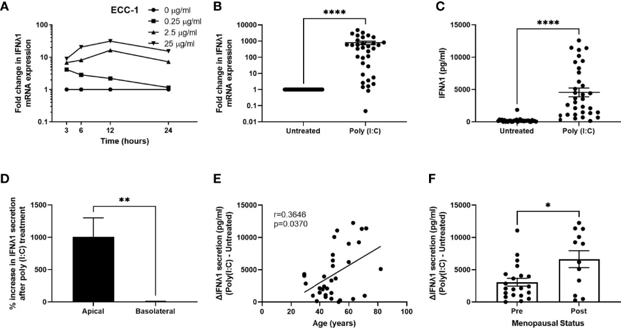
Poly (I:C) Induces IFNλ1 Expression and Secretion by Epithelial Cells
It is well known that estradiol (E2) and progesterone (P) modulate immune function in the uterine endometrium but their role in regulating IFNλ1 expression in the non-pregnant uterus has not been understood. To study this Patel et al. used purified cultures of human uterine epithelial and stromal cells.
While poly (I:C) has been shown to induce a strong innate immune response in female reproductive tract (FRT) cells previously, the specific function of IFNλ1 has not been elucidated. They found that poly (I:C) induced IFNλ1 mRNA in a dose-dependent manner with a maximum response at 12-24 h after stimulation with 25 µg/ml (Fig. 1A) in polarised ECC-1 epithelial cells. Poly (I:C) treatment of primary uterine epithelial cells for 24 hours induced a strong response, with IFNλ1 mRNA up-regulation averaging 790-fold (Fig. 1B) and apical secretion increasing to about 4500 pg/ml (Fig. 1C). Basolateral IFNλ1 levels were not altered (Fig. 1D), and apical constitutive secretion was relatively low (~20.5 pg/ml, Fig. 1D). There was considerable inter-patient variability with mRNA fold-changes from 0.04 to 4800 and apical secretion of 120-12300 pg/ml.
Ask a Question
Write your own review
Description: Human Metastatic Ovarian Tumor -Associated Endothelial Cells are isolated from human ovarian metastases tissue developed from colon cancer. Human Metastatic Ovarian Tumor -Associated Endothelial ...
Description: HOF from Creative Bioarray are isolated from human ovary tissue. HOF are cryopreserved at primary culture and delivered frozen. Each vial contains >5 x 10^5 cells in 1 ml volume. HOF are ...
Description: GFP Expressing Human Uterine Microvascular Endothelial Cells (GFP-HUMECs) provided by Creative Bioarray are puromycin-selected from Human Uterine Microvascular Endothelial Cells infected with ...
Description: HAEpiC from Creative Bioarray are isolated from human amniotic membranes. HAEpiC are cryopreserved at passage one and delivered frozen. Each vial contains >5 x 10^5 cells in 1 ml volume. HAEpiC are ...
Description: Human Ovarian Tumor-Associated Endothelial Cells from Creative Bioarray are isolated from human ovarian tumor tissue. Human Ovarian Tumor-Associated Endothelial Cells are grown in T25 tissue culture ...
Description: Human Metastatic Ovarian Carcinoma Epithelial Cells are isolated from human ovarian metastases tissue developed from colon cancer. Human Metastatic Ovarian Carcinoma Epithelial Cells are grown in T25 ...