
Bovine Preadipocytes
Cat.No.: CSC-C10000
Species: Bovine
Source: Adipose
Cell Type: Preadipocyte
- Specification
- Background
- Scientific Data
- Q & A
- Customer Review
Never can cryopreserved cells be kept at -20 °C
Bovine preadipocytes are fibroblast-like, undifferentiated progenitor cells residing within the stromal vascular fraction of adipose tissue depots. These cells exhibit characteristic spindle-shaped morphology and robust proliferative capacity prior to differentiation. Immunophenotypically, bovine preadipocytes can be characterized using surface markers including CD13, CD26, CD146, and CD54, with recent studies identifying CD13 as a bona-fide marker that enables 10.3-fold higher adipogenic efficiency upon cell sorting.
A key advantage of bovine preadipocytes lies in their depot-specific heterogeneity, which faithfully recapitulates in vivo adipose biology. Intramuscular preadipocytes express muscle-specific genes such as MYOG, MB, and MYH3 and are proposed to originate from satellite cells, whereas subcutaneous preadipocytes display distinct transcriptomic profiles and greater lipid-accumulating capacity. Upon adipogenic induction with insulin, dexamethasone, and PPARγ agonists, these cells undergo terminal differentiation into mature adipocytes, characterized by lipid droplet accumulation and upregulated expression of PPARγ, C/EBPα, FABP4, and ACC1. Spontaneously immortalized bovine preadipocyte lines have been established, proliferating over 100 days and 21 passages while retaining differentiation competence, with proteomic profiling identifying over 2,000 proteins enriched in PPAR signaling and ERK1/2 pathways.
Bovine preadipocytes serve as an indispensable ex vivo platform for studying adipogenesis, lipid metabolism, marbling deposition, and meat quality determination. They are widely employed in nutrigenomics, drug screening, and regulatory RNA research. Furthermore, their demonstrated viability in suspension and strong scaffold attachment make them a pivotal cellular resource for cultured fat production in cellular agriculture, bridging fundamental adipocyte biology with translational applications in food biotechnology and veterinary science.
Unravelling Bovine Preadipocyte Differentiation and Their Three-Dimensional Cultivation for Cellular Agriculture
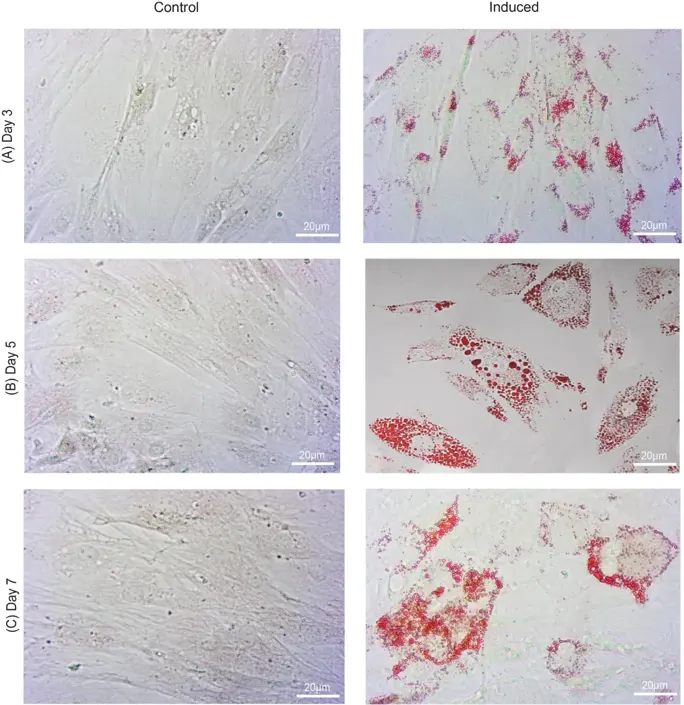
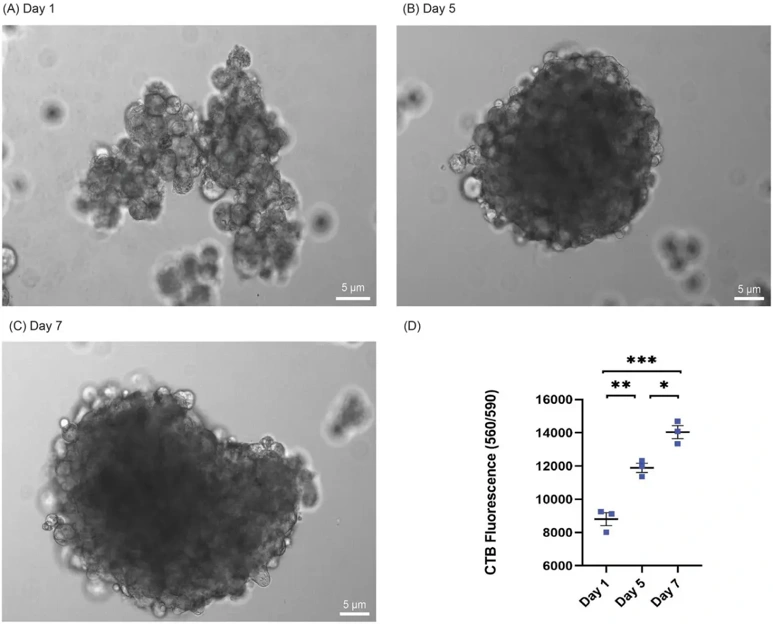
Cultured meat is an attractive concept to address environmental and ethical issues of livestock farming. Replication of conventional meat requires fat tissue, for flavor, texture, and mouthfeel. However, cultured meat production is limited by the lack of bovine adipogenic cells that are both proliferative and differentiable. Here, we demonstrate the isolation and characterization of bovine preadipocytes proliferating over 100 days and 21 passages, showing adipogenic differentiation. Upon induction, the cells accumulate lipids and express key adipogenic markers. Comparative RNA sequencing and proteomic analysis between induced and non-induced cells confirmed bovine origin, cell identity, and low tumor suppressor expression. Proteomic profiling identified over 2000 proteins, with enrichment in adipogenesis-associated pathways, including PPAR signaling and the ERK1/2 cascade. Additionally, the cells demonstrate viability in suspension and strong scaffold attachment. These results establish a reproducible bovine cell source for cultured fat supporting scale-up and bioprocess research in cellular agriculture.
Ask a Question
Write your own review
Description: Bovine Small Intestinal Epithelial Cells from Creative Bioarray are isolated from the bovine small intestinal tissue. The method we use to isolate bovine small intestinal epithelial cells were ...
Description: The BCHON cultures are on the base of bovine tissues. The BCHON are isolated according to known procedures. Then primary cultures are produced. After further culturing, the BCHON are frozen in a ...
Description: RFP Expressing Bovine Aortic Endothelial Cells (RFP-BAoECs) provided by Creative Bioarray are puromycin-selected from primary bovine aortic endothelial cells infected with lentivirus expressing RFP. ...
Description: Bovine Rumen Epithelial Cells from Creative Bioarray are isolated from the bovine rumen tissue. The method we use to isolate bovine rumen epithelial cells were developed based on a combination of ...
Description: Bovine Hepatic Stellate Cells from Creative Bioarray are isolated from the bovine liver tissue. The method we use to isolate bovine hepatic stellate cells were developed based on a combination of ...
Description: Bovine Lung Cells, fetal are isolated from lung tissue of a bovine fetus. It is often used as a model to study various bovine respiratory viruses including bovine parainfluenza virus, bovine viral ...