

RVH-421
Cat.No.: CSC-C0287
Species: Homo sapiens (Human)
Source: Brain Metastasis
Morphology: adherent, epithelial-like cells growing in monolayers
Culture Properties: monolayer
- Specification
- Background
- Scientific Data
- Q & A
- Customer Review
Immunology: cytokeratin -, desmin -, endothel -, GFAP -, HMB-45 +, neurofilament -, vimentin +
Viruses: ELISA: reverse transcriptase negative; PCR: EBV -, HBV -, HCV -, HHV-8
RVH-421 is a human melanoma cell line derived from a brain metastasis of malignant melanoma. This adherent cell line was derived from a 28-year-old male patient, has been thoroughly characterized and is frequently utilized as an in vitro model for investigating melanoma biology and targeted cancer therapy.
The molecular characterization has shown the BRAF V600E mutation, a prevalent oncogenic alteration in melanoma, which results in the constitutive activation of the MAPK signaling pathway. Additional genetic changes including mutations in the TERT promoter and TP53 were also found for RVH-421. These traits make the cell line a suitable model for studying melanoma development, signal transduction and responsiveness to therapy with BRAF- and MEK-targeted drugs. The RVH-421 cell line has been utilized in research of anticancer chemicals, drug sensitivity profiles, resistance mechanisms and molecular drivers of tumor cell survival. Derivatives of this cell line with acquired resistance to BRAF inhibitors were also produced and used to study causes of resistance to targeted therapy.
Targeting ZBP1-Mediated PANoptosis Induces Melanoma Cell Death
Cancer is characterized by resistance to programmed cell death (PCD). However, the therapeutic potential of particular compounds is often obscured by redundancy and crosstalk amongst PCD pathways. PANoptosis, an innate immune-driven inflammatory cell death mechanism that integrates elements of pyroptosis, apoptosis and necroptosis, has emerged as a critical determinant of cancer cell fate. Mall et al. systematically identified the important predictive influence of PANoptosis in several malignancies using a computational methodology. Interestingly, increased expression of critical PANoptosis molecules was connected with better patient survival in skin cutaneous melanoma (SKCM), indicating that induction of PANoptosis may be a promising treatment method.
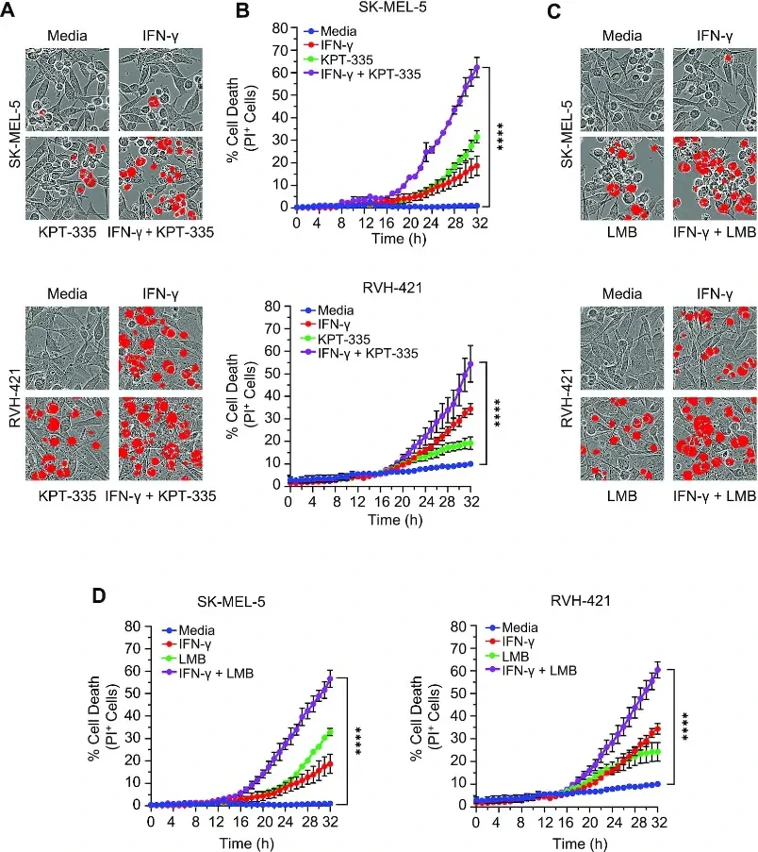
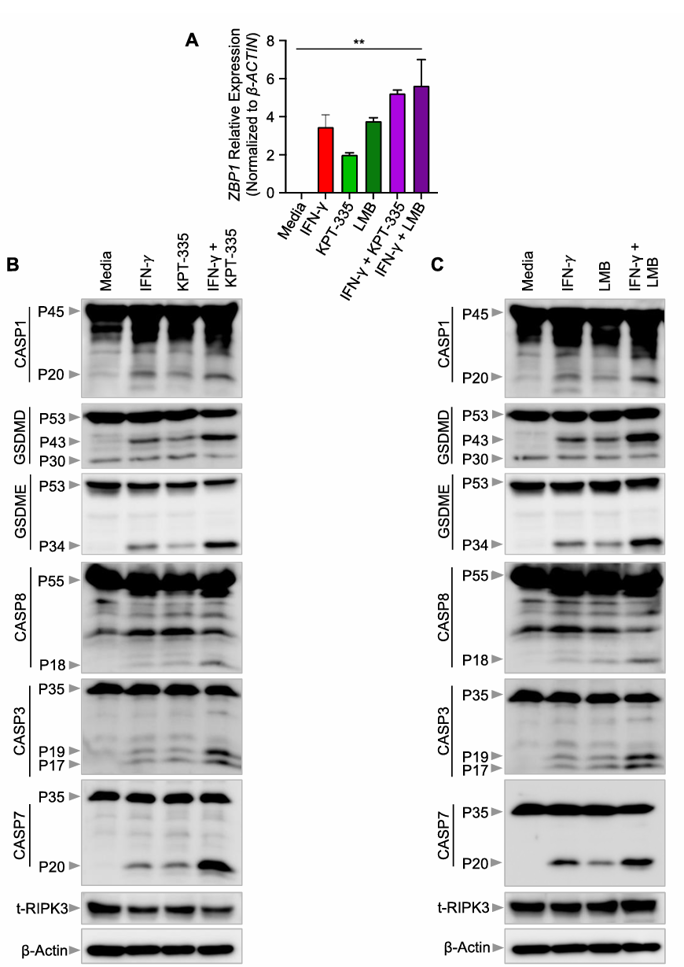
Z-DNA binding protein 1 (ZBP1) is the primary regulator of PANoptosis. In mouse models, ZBP1 binds nucleic acids via its Zα domain and interacts with the RHIM domain of RIPK3 to induce cell death. ZBP1 is known to trigger PANoptosis by activating NLRP3 inflammasome, caspase-8, caspase-7, GSDMD and MLKL. Given the positive correlation of ZBP1 with survival in SKCM, they anticipated that targeting ZBP1 could cause melanoma cell death. Two human melanoma cell lines, SK-MEL-5 and RVH-421, were selected for their variety in donor sex, tumor type and anatomical origin, and their high PANoptosis scores measured by ssGSEA. Nuclear export inhibitors KPT-335 or leptomycin B (LMB) plus interferon-gamma (IFN-γ) significantly boosted cell death relative to monotherapies or controls (Fig. 1A-D). Combination therapy induced upregulation of ZBP1 and activation of PANoptotic executioner molecules including caspase-1, GSDMD, GSDME, caspase-8, caspase-3 and caspase-7 in RVH-421 cells (Fig. 2).
These data suggest that pharmacological upregulation of ZBP1 expression initiates PANoptosis and strongly induces melanoma cell death. This validates the therapeutic importance of PANoptosis-related compounds found with computational frameworks and offers a path to next-generation cancer immunotherapies.
Ask a Question
Write your own review
- You May Also Need

Description: Established from the primary tumor (right cervical) of a 64-year-old woman with cutaneous melanoma

Description: Established from the lymph node metastasis of a malignant melanoma from a 42-year-old Caucasian woman

Description: Species: human - male, 31 years old, CaucasianIsoenzyme: G6PD, BProduction: melaninHistopathology: melanoma
Description: Epstein-Barr virus-positive cell line established from peripheral blood in 1977 from male patient with melanoma

Description: Established from the primary tumor of a 58-year-old woman with melanoma in 1977

Description: Established from the primary (achromic) cutaneous tumor (left thigh) of a 26-year-old man with malignant melanoma (primary tumor histology: SSM level IV); same patient as cell line IGR-37; described ...
- Adipose Tissue-Derived Stem Cells
- Human Neurons
- Mouse Probe
- Whole Chromosome Painting Probes
- Hepatic Cells
- Renal Cells
- In Vitro ADME Kits
- Tissue Microarray
- Tissue Blocks
- Tissue Sections
- FFPE Cell Pellet
- Probe
- Centromere Probes
- Telomere Probes
- Satellite Enumeration Probes
- Subtelomere Specific Probes
- Bacterial Probes
- ISH/FISH Probes
- Exosome Isolation Kit
- Human Adult Stem Cells
- Mouse Stem Cells
- iPSCs
- Mouse Embryonic Stem Cells
- iPSC Differentiation Kits
- Mesenchymal Stem Cells
- Immortalized Human Cells
- Immortalized Murine Cells
- Cell Immortalization Kit
- Adipose Cells
- Cardiac Cells
- Dermal Cells
- Epidermal Cells
- Peripheral Blood Mononuclear Cells
- Umbilical Cord Cells
- Monkey Primary Cells
- Mouse Primary Cells
- Breast Tumor Cells
- Colorectal Tumor Cells
- Esophageal Tumor Cells
- Lung Tumor Cells
- Leukemia/Lymphoma/Myeloma Cells
- Ovarian Tumor Cells
- Pancreatic Tumor Cells
- Mouse Tumor Cells