
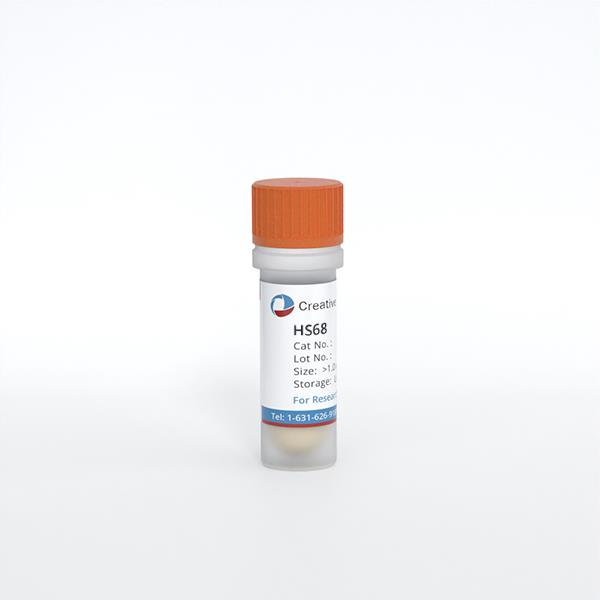
HS68
Cat.No.: CSC-C9105W
Species: Homo sapiens (Human)
Source: Skin; Foreskin
Morphology: fibroblast
- Specification
- Background
- Scientific Data
- Q & A
- Customer Review
Hs68 is a well-characterized normal human fibroblast cell line established in February 1969 from the foreskin of an apparently normal Caucasian newborn male.
A principal advantage of Hs68 is its normal diploid karyotype (46,XY) with a modal chromosome number of 46 and low polyploidy (3.6%). As a non-tumorigenic, finite lifespan cell line, Hs68 serves as an ideal normal control in comparative studies against cancerous or transformed fibroblasts. The cells can be propagated for up to 42 passages, providing a reproducible in vitro system for investigating cellular senescence, replicative aging, and oxidative stress responses. Hs68 has been extensively utilized in UVB-induced photodamage research, wound healing, drug toxicity screening, and 3D cell culture applications.
A distinctive feature of Hs68 is its unusually low level of the enzyme aspartoacylase (0.028 mU/mg or less), which is associated with Canavan disease-a devastating autosomal recessive neurodegenerative disorder. This characteristic renders Hs68 a unique and valuable model for studying the pathophysiology of Canavan disease and evaluating potential therapeutic interventions.
The Biomedical Potential of Hybrid Alginate-Graphene Composites
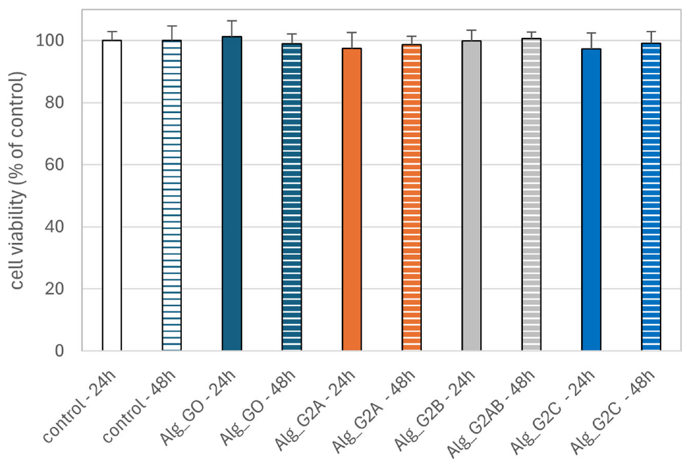
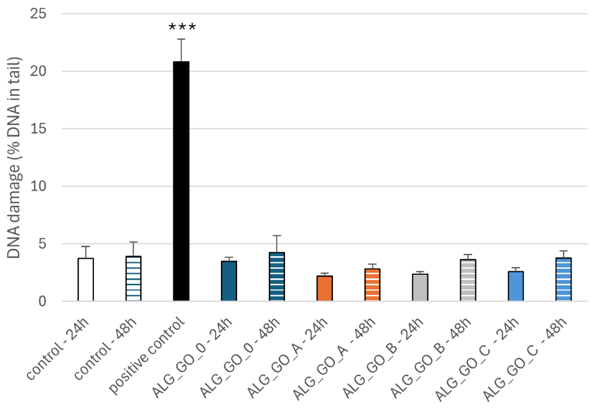
Alginate-based materials are widely studied for biomedical use, but their limited mechanical properties and variable biocompatibility pose challenges. In this study, Kudzin, Marcin H., et al. analyzed the effect of alginate-graphene oxide composites on the viability of peripheral blood mononuclear (PBM) cells and human foreskin fibroblasts from the Hs68 cell line. They also assessed the genotoxic potential of alginate-graphene oxide composites on these cells. The results showed no cyto- or genotoxic effects of the material on either cell type. These findings suggest the biocompatibility and safe character of alginate-graphene oxide composites for use with blood and skin cells.
Ask a Question
Write your own review
- You May Also Need
Description: Species: human female; Tissue: lymphocyte, B; Pathology: paroxysmal nocturnal hemoglobinuria; Transformed by: Epstein-Barr
Description: This cell line was established from a local recurrence of a sacrococcygeal after radiotherapy 4 years after initial surgery.
Description: HCEC-B4G12 is a clonal subpopulation started in 2005 from the parental cell line HCEC-12 established from normal cells of the posterior epithelium of the cornea of a 91-year-old Caucasian woman ...
Description: Human cell line derived from malignant peripheral nerve sheath tumor.
- Adipose Tissue-Derived Stem Cells
- Human Neurons
- Mouse Probe
- Whole Chromosome Painting Probes
- Hepatic Cells
- Renal Cells
- In Vitro ADME Kits
- Tissue Microarray
- Tissue Blocks
- Tissue Sections
- FFPE Cell Pellet
- Probe
- Centromere Probes
- Telomere Probes
- Satellite Enumeration Probes
- Subtelomere Specific Probes
- Bacterial Probes
- ISH/FISH Probes
- Exosome Isolation Kit
- Human Adult Stem Cells
- Mouse Stem Cells
- iPSCs
- Mouse Embryonic Stem Cells
- iPSC Differentiation Kits
- Mesenchymal Stem Cells
- Immortalized Human Cells
- Immortalized Murine Cells
- Cell Immortalization Kit
- Adipose Cells
- Cardiac Cells
- Dermal Cells
- Epidermal Cells
- Peripheral Blood Mononuclear Cells
- Umbilical Cord Cells
- Monkey Primary Cells
- Mouse Primary Cells
- Breast Tumor Cells
- Colorectal Tumor Cells
- Esophageal Tumor Cells
- Lung Tumor Cells
- Leukemia/Lymphoma/Myeloma Cells
- Ovarian Tumor Cells
- Pancreatic Tumor Cells
- Mouse Tumor Cells