
COLO-699
Cat.No.: CSC-C0321
Species: Homo sapiens (Human)
Source: Pleural Effusion Metastasis
Morphology: adherent, epitheloid cells growing as monolayers
Culture Properties: monolayer
- Specification
- Background
- Scientific Data
- Q & A
- Customer Review
Immunology: cytokeratin -, cytokeratin-7 -, cytokeratin-8 -, cytokeratin-17 -, cytokeratin-18 -, desmin -, endothel -, EpCAM -, GFAP -, neurofilament -, vimentin +; cells are
COLO-699 is a human non-small cell lung cancer (NSCLC) cell line established from the pleural effusion of a 58-year-old female patient with lung adenocarcinoma. It grows adherently with an epithelial morphology and faithfully retains the oncogenic driver lesions of its tumor of origin, most notably a homozygous KRAS G12V substitution and a TP53 missense mutation, while remaining wild-type for EGFR and ALK. This genotype positions COLO-699 as a clinically faithful model of the KRAS-driven adenocarcinoma subtype, which represents a substantial fraction of NSCLC cases and has historically proven refractory to conventional targeted agents.
Its derivation from a malignant pleural effusion is a paramount advantage, as the cells inherently harbor transcriptomic programs governing mesothelial invasion, anchorage-independent survival, and resistance to anoikis, thereby providing a unique system for dissecting the molecular determinants of pleural metastasis. COLO-699 is highly tumorigenic in immunocompromised mice, enabling in vivo efficacy testing of systemic and intracavitary therapies. Moreover, the cells are amenable to lentiviral transduction, siRNA-mediated silencing, and CRISPR-Cas9 genome editing, facilitating mechanistic gain- and loss-of-function studies.
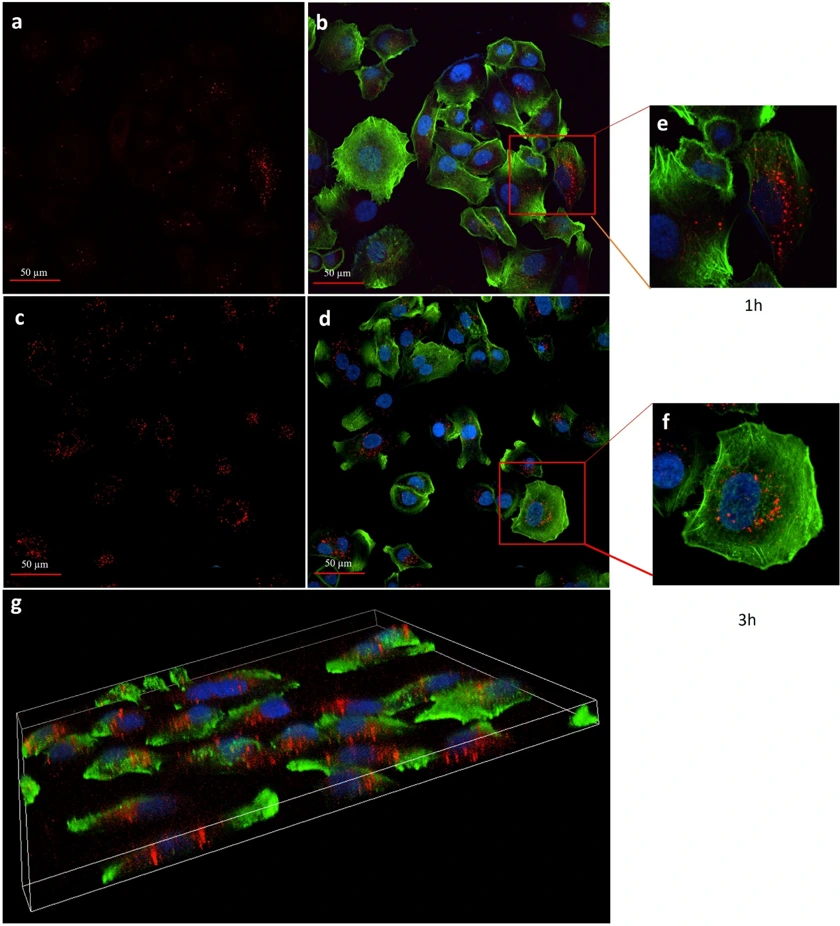
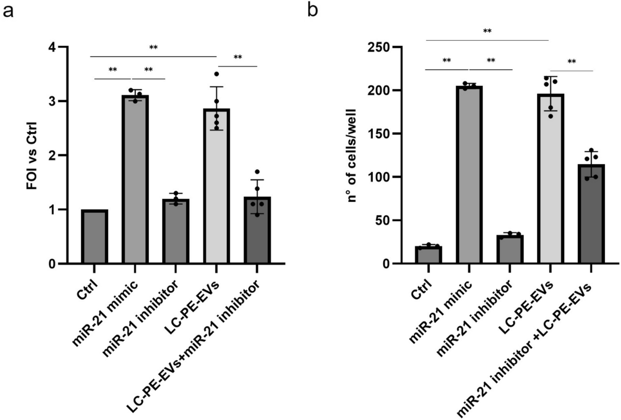
Effects of Small Extracellular Vesicles Isolated from Pleural Effusion on Lung Cancer Cell Proliferation and Migration
Pleural effusion (PE) is a common clinical manifestation associated with advanced stages of both malignant and non-malignant diseases. PE frequently occurs in advanced non-small cell lung cancer (NSCLC) and contributes to tumor progression. Extracellular vesicles (EVs) present in PE are emerging as key mediators of intercellular communication, capable of transferring oncogenic signals through their molecular cargo. Among these molecules, microRNAs (miRNAs) are increasingly recognized as important drivers of cancer progression. miR-21 is a representative onco-miRNA, involved in lung cancer progression; moreover EV-miR-21 upregulation at the pre-dissemination stage promotes cancer cell survival in the pleural cavity. This study compares, for the first time, the functional role of EVs isolated from malignant PE in NSCLC patients (NSCLC-PE-EVs) with those isolated from PE in patients with congestive heart failure (CHF-PE-EVs), focusing on their ability to modulate lung cancer cell behavior.
The effects of these EVs were evaluated on COLO699 lung adenocarcinoma cells with proliferation, migration, and gene expression assays. NSCLC-PE was found to contain approximately twice the amount of EVs compared to CHF-PE. NSCLC-PE-EVs were enriched in the oncogenic miR-21-5p, while CHF-PE-EVs had higher levels of the tumor-suppressive miR-126-3p. Only NSCLC-PE-EVs induced dose-dependent increases in COLO699 cell proliferation and migration, consistent with elevated miR-21-5p expression. Functional studies confirmed that miR-21-5p mediates these effects by downregulating PTEN and PDCD4, and by upregulating MMP9 expression.
Ask a Question
Write your own review
- You May Also Need

Description: Lung small cell carcinoma producing insulin-like growth factor II. Cell growth is slow.
Description: Lung Cancer-1/squamous. Parent cell line of LC-1/sq-SF, the same patient as LC-F. Cell growth is slow.
Description: Species: human - male, 47 years old, CaucasianTumorigenecity: does not produce tumorsIsoenzyme: Me-2, 1-2; PGM3, 1-2; PGM1, 1; ES D, 2; AK1, 1; GLO-1, 1-2; G6PD, BHistopathology: carcinoma, ...
Description: Established in 1979 from the bone marrow aspirated from a 55-year-old white man with small cell lung carcinoma prior to treatment; corresponds to NCI-H209; described as expressing neuroendocrine ...
- Adipose Tissue-Derived Stem Cells
- Human Neurons
- Mouse Probe
- Whole Chromosome Painting Probes
- Hepatic Cells
- Renal Cells
- In Vitro ADME Kits
- Tissue Microarray
- Tissue Blocks
- Tissue Sections
- FFPE Cell Pellet
- Probe
- Centromere Probes
- Telomere Probes
- Satellite Enumeration Probes
- Subtelomere Specific Probes
- Bacterial Probes
- ISH/FISH Probes
- Exosome Isolation Kit
- Human Adult Stem Cells
- Mouse Stem Cells
- iPSCs
- Mouse Embryonic Stem Cells
- iPSC Differentiation Kits
- Mesenchymal Stem Cells
- Immortalized Human Cells
- Immortalized Murine Cells
- Cell Immortalization Kit
- Adipose Cells
- Cardiac Cells
- Dermal Cells
- Epidermal Cells
- Peripheral Blood Mononuclear Cells
- Umbilical Cord Cells
- Monkey Primary Cells
- Mouse Primary Cells
- Breast Tumor Cells
- Colorectal Tumor Cells
- Esophageal Tumor Cells
- Lung Tumor Cells
- Leukemia/Lymphoma/Myeloma Cells
- Ovarian Tumor Cells
- Pancreatic Tumor Cells
- Mouse Tumor Cells