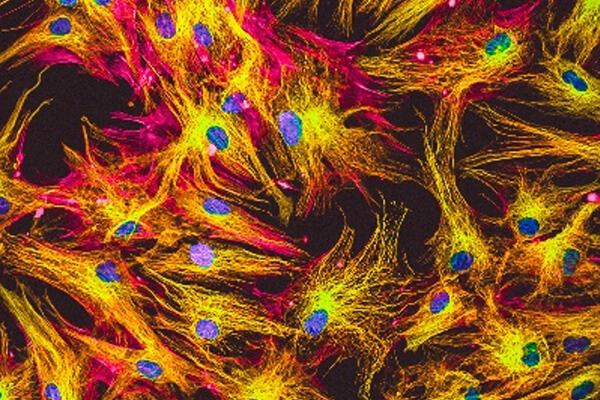
Animal Primary Cells
The animal cell model is an alternative for in vivo studying the biological functions of cells. As models for human systems, researchers can use animal cells to examine a wide range of disease mechanisms and evaluate novel treatments before applying the results of these investigations to humans. Animal cell culture has found use in diverse areas, from basic to advanced research.
- Studying basic cell biology, cell cycle mechanisms, specialized cellular functions, cell-cell and cell-matrix interactions
- Toxicity testing to study the effects of new drugs
- Gene therapy for replacing non-functional genes with functional gene-carrying cells
- Production of vaccines, monoclonal antibodies, and pharmaceutical drugs
- Production of viruses for use in vaccine production
Creative Bioarray's animal primary cells are isolated from normal or diseased animal tissues. They are rigorously quality tested to meet our high standard and specifications.
- Over 500 different lots available
- Isolated from both healthy and diseased animals
- Cryopreserved immediately after isolation
- Stored in frozen vials
Search our available specified cell types to find primary cell solutions for your research.
Filters Clear all filters
Species
- Bovine (22)
- Cat (45)
- Chicken (11)
- Chinchilla (1)
- Dog (118)
- Fish (1)
- Fruitfly (1)
- Goat (46)
- Guinea Pig (8)
- Hamster (94)
- Horse (1)
- Human (3)
- Minipig (2)
- Monkey (129)
- Mouse (872)
- Pig (110)
- Rabbit (249)
- Rat (323)
- Sheep (2)
- Squirrel (1)
- Turkey (1)
Source
- Adipose (23)
- Adrenal Gland (7)
- Airway (1)
- Anus (3)
- Aorta (70)
- Artery (133)
- Bile Duct (8)
- Bladder (41)
- Blood (36)
- Bone (10)
- Bone Marrow (76)
- Brain (127)
- Breast (54)
- Bronchus (23)
- Cartilage (23)
- Cervix (5)
- Chorion (3)
- Choroid (6)
- Colon (53)
- Conjunctiva (7)
- Cornea (25)
- Dermis (68)
- Diaphragm (3)
- Ear (12)
- Embryo (22)
- Endometrium (9)
- Epidermis (7)
- Epididymis (3)
- Esophagus (31)
- Eye (75)
- Gallbladder (3)
- Gingiva (18)
- Hair Follicle (10)
- Heart (58)
- Intestine (132)
- Kidney (120)
- Lens (3)
- Liver (83)
- Lung (137)
- Lymph Node (25)
- Mesentery (15)
- Nose (4)
- Olfactory Bulb (1)
- Oral Cavity (9)
- Ovary (62)
- Oviduct (7)
- Pancreas (60)
- Pancreatic Duct (3)
- Pancreatic Islet (10)
- Parathyroid Gland (4)
- Penis (7)
- Periodontal Ligament (3)
- Periodontium (21)
- Peripheral Blood (23)
- Peritoneal Cavity (12)
- Placenta (18)
- Prostate (54)
- Pudenda (2)
- Rectum (2)
- Retina (29)
- Salivary Gland (3)
- Sclera (3)
- Skeletal Muscle (27)
- Skin (77)
- Small Intestine (51)
- Spinal Cord (9)
- Spleen (70)
- Stomach (34)
- Synovium (5)
- Tendon (7)
- Testis (12)
- Thymus (48)
- Thyroid (30)
- Tongue (5)
- Trabecular Meshwork (2)
- Trachea (40)
- Umbilical Cord (6)
- Ureter (10)
- Urethra (3)
- Uterus (54)
- Vein (74)
Cell Type
- Adipocyte (4)
- Astrocyte (25)
- B Cell (8)
- Basal Cell (3)
- Beta Cell (3)
- Cardiomyocyte (16)
- CD34+ Cell (5)
- Cholangiocyte (8)
- Chondrocyte (15)
- Dendritic Cell (11)
- Endothelial Cell (555)
- Endothelial Progenitor Cell (7)
- Epithelial Cell (432)
- Fibroblast (334)
- Glial Cell (44)
- Goblet Cell (1)
- Granule Cell (1)
- Granulocyte (9)
- Granulosa Cell (1)
- Hepatic Stellate Cell (6)
- Hepatocyte (14)
- Interstitial Cell (9)
- Keratinocyte (10)
- Keratocyte (2)
- Kupffer Cell (7)
- Leydig Cell (3)
- Lymphocyte (29)
- Macrophage (27)
- Mast Cell (3)
- Melanocyte (1)
- Meningeal Cell (4)
- Mesangial Cell (8)
- Mesothelial Cell (3)
- Microglia (6)
- Microvascular Cell (247)
- Monocyte (9)
- Mononuclear Cell (12)
- Myofibroblast (3)
- Myosatellite Cell (1)
- Neuron (43)
- Neutrophil (8)
- NK Cell (6)
- Oligodendrocyte (3)
- Oligodendrocyte Progenitor Cell (1)
- Osteoblast (5)
- Osteoclast (2)
- Osteocyte (3)
- Pancreatic Stellate Cell (3)
- Pericyte (10)
- Podocyte (4)
- Preadipocyte (11)
- Progenitor Cell (11)
- Red Blood Cell (11)
- Retinal Ganglion Cell (3)
- Satellite Cell (1)
- Schwann Cell (3)
- Sertoli Cell (4)
- Skeletal Muscle Cell (9)
- Smooth Muscle Cell (193)
- Spermatogonium (3)
- Stromal Cell (25)
- Synoviocyte (5)
- T Cell (11)
- Tenocyte (7)
- Trabecular Meshwork Cell (2)
- Trophoblast (3)
Disease
- Breast Cancer (5)
- Cancer (23)
- Cervical Cancer (2)
- Colon Cancer (5)
- Diabetes (75)
- Lung Cancer (6)
- Normal (1942)
- Pancreatic Cancer (2)
- Prostate Cancer (3)
Description: The thymus is a superior mediastinal retrosternal organ. It is bilobed and has two subcomponents: ...
Description: The submandibular gland is the second largest of the three main salivary glands. The submandibular ...
Description: The synovium secretes synovial fluid, which plays an important role in joint movement. The normal ...
Description: The skeletal muscle contains the muscle belly and tendons. The thin, creamy part at the ends is the ...
Description: The annulus fibrosus is a fibrocartilaginous tissue consisting of layers of lamellae rich in highly ...
Description: The nucleus pulposus is a milky white translucent colloid that is the inner core of the ...
Description: Osteoclasts mediate bone loss in pathologic conditions by increasing their resorptive activity and ...
Description: Damaged microvascular endothelial cells are involved in the occurrence of various diseases ...
Description: Dermal papilla cells are specialized mesenchymal cells that exist in the dermal papilla located at ...
Description: The outer root sheath is an extension of the epidermal basal layer which envelopes the entire hair ...
Description: The hair follicle begins at the surface of the epidermis. For follicles that produce terminal ...
Description: The skeletal muscle contains the muscle belly and tendons. The thin, creamy part at the ends is the ...
Description: Chondrocytes are mostly distributed in articular cartilage and are responsible for the secretion of ...
Description: Tenocytes are tendon-specific fibroblasts and are considered to be made up approximately 95% of ...
Description: Microvascular endothelial cell damage has been recognized as the pathological basis for the ...
Description: Adipocytes are the cells that primarily compose adipose tissue. They are derived from mesenchymal ...
Description: Chondrocytes are the cells responsible for cartilage formation, and they are crucial for the ...
Description: The middle ear lies within the temporal bone, and extends from the tympanic membrane to the lateral ...