
BALB/c Mouse Peritoneal Macrophages-Thioglycollate-elicited
Cat.No.: CSC-C4334X
Species: Mouse
Source: Peritoneal Cavity
Cell Type: Macrophage
- Specification
- Background
- Scientific Data
- Q & A
- Customer Review
Cells can be expanded on a multiwell culture plate ready for experiments under the cell culture conditions specified by Creative Bioarray. Repeated freezing and thawing of cells is not recommended.
Mouse Peritoneal Macrophages are tested for expression of markers using antibodies, CD11b by flow cytometry.
Standard biochemical procedures performed with cell cultures include RT-PCR, Western blotting, immunoprecipitation, immunofluorescent staining, flow cytometry or generating cell derivatives for desired research applications.
BALB/c mouse peritoneal macrophages elicited with thioglycollate represent a widely used primary macrophage model for studying innate immunity and inflammation. Following intraperitoneal injection of sterile thioglycollate medium, a localized sterile inflammatory response is induced, leading to the rapid recruitment of monocytes from the blood into the peritoneal cavity. These recruited cells subsequently differentiate into activated macrophages, which can be harvested by peritoneal lavage after 3-5 days.
The principal advantage of thioglycollate-elicited peritoneal macrophages lies in their high yield and functional activity. Compared to resident peritoneal macrophages, which are relatively quiescent and low in number, thioglycollate elicitation typically yields 10-20 million cells per mouse with enhanced phagocytic capacity, microbicidal activity, and responsiveness to toll-like receptor (TLR) ligands. These cells express elevated levels of activation markers (e.g., CD80, CD86, MHC class II) and secrete robust amounts of pro-inflammatory cytokines (e.g., TNF-α, IL-6, IL-1β) upon stimulation.
Moreover, the BALB/c background is well-characterized, providing experimental consistency and comparability across studies. These macrophages are highly amenable to ex vivo assays, including flow cytometry, immunofluorescence, phagocytosis, and intracellular pathogen killing. Their ease of isolation, reproducible phenotype, and functional maturity make them an indispensable tool for immunologists investigating host defense, vaccine adjuvancy, drug screening, and inflammatory disease mechanisms.
MiR-146b-5p Inhibits Candida Albicans-Induced Inflammatory Response Through Targeting HMGB1 in Mouse Primary Peritoneal Macrophages
Candida albicans (C. albicans) is one of the most common pathogens associated with deep fungal infection, which represents a serious threat to human health. Although high mobility group box 1 (HMGB1) plays a key role in C. albicans infection, its mechanism is unclear. Currently, a large number of studies on miRNA-mediated regulation of HMGB1 have focused on bacterial sepsis, whereas studies on C. albicans sepsis are lacking. Therefore, our purpose is to study miRNAs that regulate HMGB1, which is crucial in C. albicans sepsis.
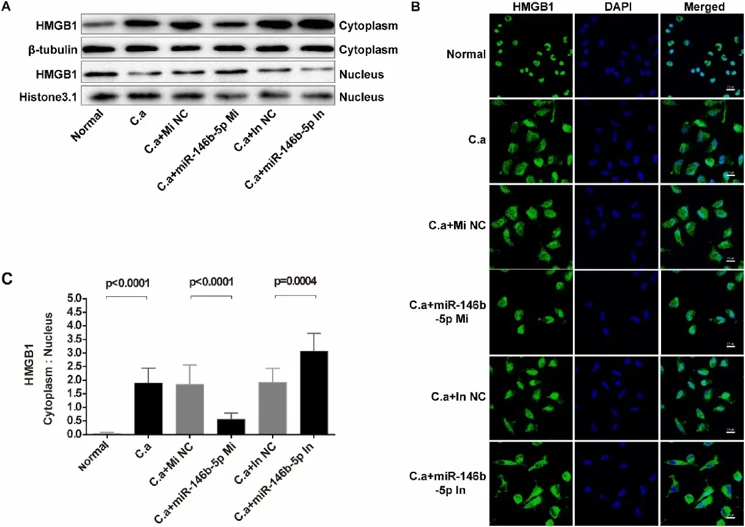
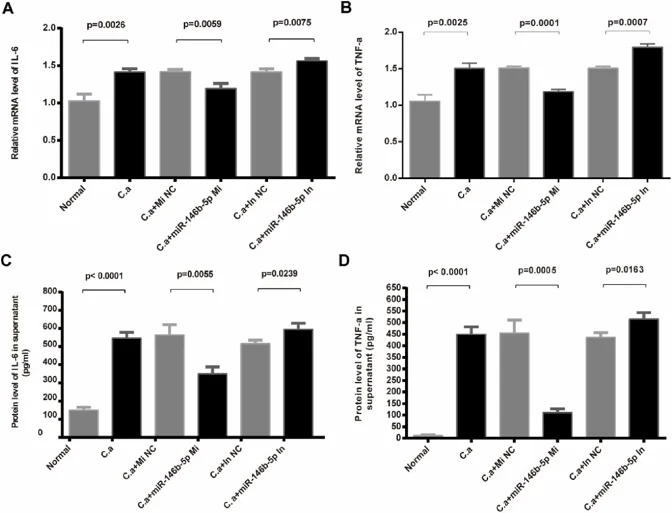
In this study, mouse primary peritoneal macrophages (MPMs) infected with C. albicans were used to elucidate the changes in the miRNA expression profile. Through screening and verification, mmu-miR-146b-5p was identified as a miRNA targeting HMGB1 for the first time. We further investigated the regulation of mmu-miR-146b-5p on HMGB1, inflammatory mediators, and the NF-κB signaling pathway during C. albicans infection to provide a potential target for the treatment of C. albicans infection. The results demonstrate that mmu-miR-146b-5p directly and negatively regulate the expression and translocation of HMGB1, inhibit the expression of inflammatory mediators, and might participate in the NF-κB signaling pathway in a HMGB1-dependent manner under C. albicans infection.
Ask a Question
Write your own review
Description: C57BL/6-GFP Mouse Skeletal Muscle Microvascular Endothelial Cells from Creative Bioarray are isolated from C57BL/6-Tg (CAG-EGFP) 1Osb/J mouse skeletal muscle tissue of pathogen-free laboratory mice. ...
Description: eNOS KO Mouse Stomach Epithelial Cells from Creative Bioarray are isolated from stomach tissue of pathogen-free laboratory mice. eNOS KO Mouse Stomach Epithelial Cells are grown in a T25 tissue ...
Description: eNOS KO Mouse Liver Fibroblasts from Creative Bioarray are isolated from liver tissue of pathogen-free laboratory mice. eNOS KO Mouse Liver Fibroblasts are grown in T75 tissue culture flasks ...
Description: C57BL/6-GFP Mouse Corneal Epithelial Cells from Creative Bioarray are isolated from C57BL/6-GFP-Tg(CAG-EGFP)1Osb/J mouse corneal tissue of pathogen-free laboratory mice. C57BL/6-GFP Mouse Corneal ...
Description: BALB/c Mouse Retinal Microvascular Endothelial Cells from Creative Bioarray are isolated from retinal tissue of pathogen-free laboratory mice. BALB/c Mouse Retinal Microvascular Endothelial Cells are ...