
Human Colon Cancer-Associated Fibroblasts
Cat.No.: CSC-C4710Z
Species: Human
Source: Colon; Intestine
Cell Type: Fibroblast
- Specification
- Background
- Scientific Data
- Q & A
- Customer Review
Never can cryopreserved cells be kept at -20 °C
Cancer-associated fibroblasts (CAFs) constitute the predominant mesenchymal cell population within the colorectal cancer (CRC) tumor microenvironment (TME), comprising a substantial proportion of the stromal compartment. The principal advantage of human colon CAFs lies in their remarkable functional heterogeneity and their central role in orchestrating tumor progression. Single-cell transcriptomic analyses have identified multiple CAF subtypes, including inflammatory CAFs (iCAFs), myofibroblastic CAFs (myCAFs), matrix CAFs (mCAFs), and antigen-presenting CAFs (apCAFs), each exhibiting distinct functional roles. These subpopulations coordinate diverse pro-tumorigenic activities: remodeling the extracellular matrix (ECM), secreting growth factors and cytokines such as TGF-β, IL-6, and VEGF, promoting angiogenesis, and modulating immune evasion.
Human colon CAFs are invaluable as an in vitro model system. They are extensively utilized in co-culture systems with CRC cell lines and patient-derived organoids (PDOs) to recapitulate tumor-stroma interactions, study CAF-mediated chemoresistance, and evaluate therapeutic interventions. Furthermore, CAF-related gene signatures have demonstrated prognostic value, with specific subtypes such as LOXL2⁺ CAFs and P4HA1⁺ CAFs associated with poor outcomes and therapeutic resistance. The intimate crosstalk between CAFs and cancer cells makes them compelling targets for novel CRC therapies. Collectively, human colon CAFs represent an indispensable tool for dissecting CRC pathogenesis and advancing precision oncology.
Fusobacterium Nucleatum Interacts with Cancer-Associated Fibroblasts to Promote Colorectal Cancer
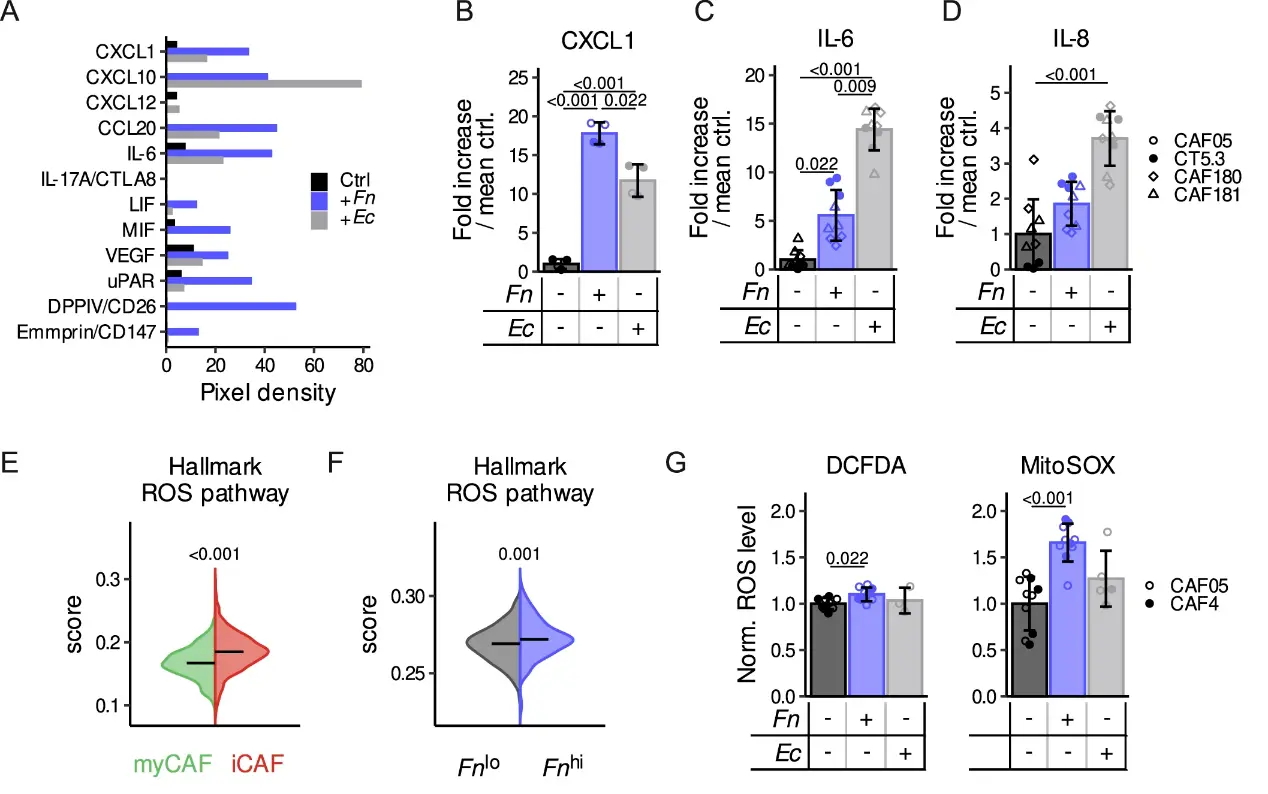
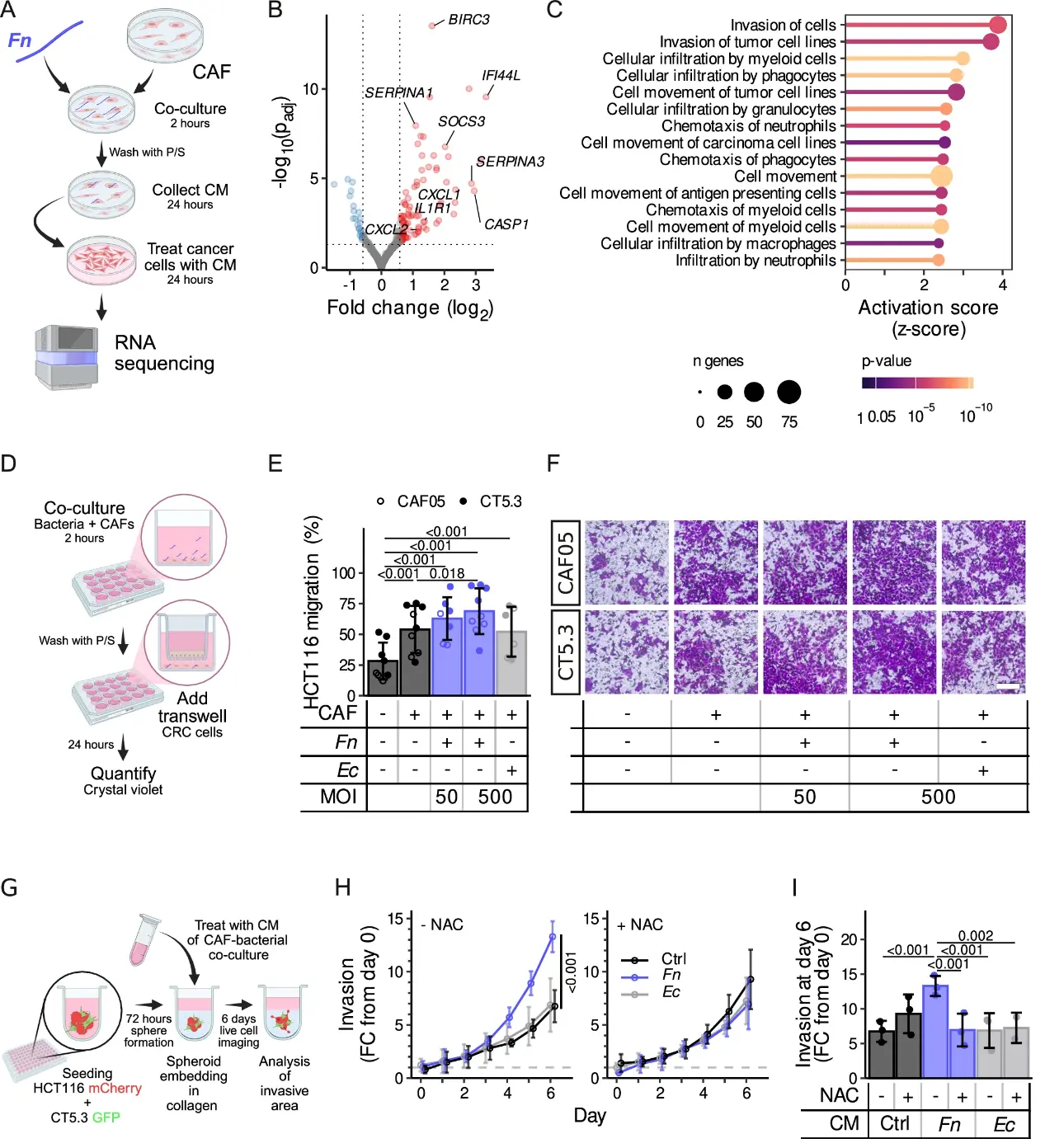
Gut microbial species contribute to colorectal cancer (CRC) by interacting with tumor or immune cells, however if CRC-associated bacteria engage with stromal components of the tumor microenvironment remains unclear. Here, Karta, Jessica, et al. report interaction between the CRC-associated bacterium Fusobacterium nucleatum and cancer-associated fibroblasts (CAFs), and show that F. nucleatum is present in the stromal compartment in murine CRC models in vivo and can attach to and invade CAFs. F. nucleatum-exposed CAFs exhibit a pronounced inflammatory-CAF (iCAF) phenotype, marked by elevated expression of established iCAF markers, secretion of pro-inflammatory cytokines such as CXCL1, IL-6 and IL-8, generation of reactive oxygen species (ROS), and an increased metabolic activity. In co-culture experiments, the interaction of cancer cells with F. nucleatum-stimulated CAFs enhances invasion, a finding further validated in vivo. Altogether, these results point to a role for the tumor microbiome in CRC progression by remodeling the tumor microenvironment through its influence on cancer-associated fibroblasts, suggesting novel therapeutic strategies for targeting CRC.
Ask a Question
Write your own review
Description: The colorectum is a major organ for both malignant and nonmalignant diseases. Cells that line the colonic mucosal surface form a major mechanical barrier that separates the host's internal milieu ...
Description: Human Primary Colonic Fibroblast are isolated from normal human colon tissue. Human Primary Colonic Fibroblasts are grown in T75 tissue culture flasks pre-coated with gelatin-based coating solution ...
Description: Human Colonic Tumor-Associated Endothelial Cells from Creative Bioarray are isolated from human colon tumor tissue. Human Colonic Tumor-Associated Endothelial Cells are grown in T25 tissue culture ...
Description: Primary Human Large Intestine Microvascular Endothelial Cells were initiated from normal human large intestine (colon) tissue.These cells were originated using Complete Serum-Free Medium Kit With ...
Description: Human Colonic Microvascular Endothelial Cells from Creative Bioarray are isolated from human colon tissue. Human Colonic Microvascular Endothelial Cells are grown in T25 tissue culture flasks ...
Description: Human Colon Carcinoma Epithelial Cells from Creative Bioarray are isolated from human colon tumor tissue. Human Colon Carcinoma Epithelial Cells are grown in T25 tissue culture flasks pre-coated with ...