

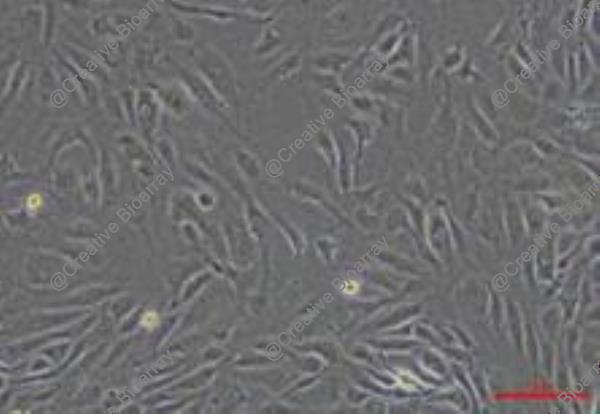
Immortalized Human Lymphatic Endothelial Cells-SV40
Cat.No.: CSC-I2089Z
Species: Homo sapiens
Morphology: Polygonal
Culture Properties: Adherent
- Specification
- Background
- Scientific Data
- Q & A
- Customer Review
- Documents
Note: Never can cells be kept at -20°C.
Immortalized Human Lymphatic Endothelial Cells-SV40 are established from primary human lymphatic endothelial cells via lentiviral transduction of the SV40 large T antigen, a well-characterized immortalization strategy that functionally inactivates p53 and Rb tumor suppressor pathways to bypass replicative senescence. As a renewable monolayer system maintained under standard endothelial culture conditions, these cells offer exceptional experimental scalability and batch-to-batch consistency while retaining the lineage-specific functional properties of their primary progenitors.
The extended proliferative lifespan and authenticated human origin of this line make it uniquely suited for longitudinal mechanistic studies, high-throughput compound screening, three-dimensional co-culture systems, and genetic manipulation experiments that are technically unfeasible with senescent primary cultures. Established applications span fundamental lymphangiogenesis research, tumor-lymphatic endothelial interaction modeling, inflammatory signaling pathway dissection, lymphatic tissue engineering, and drug transport across the lymphatic endothelium. By delivering the physiological relevance of primary human lymphatic endothelium together with the experimental consistency and unlimited expandability essential for robust preclinical investigation, Immortalized Human Lymphatic Endothelial Cells-SV40 represent a standardized, reproducible, and translationally relevant platform for advancing research in lymphatic vascular biology, cancer metastasis, and therapeutic development.
Further Characterization of Immortalized Human Lymphatic Endothelial Cells to Explore Their Transcriptomic Profile and VEGFC Response
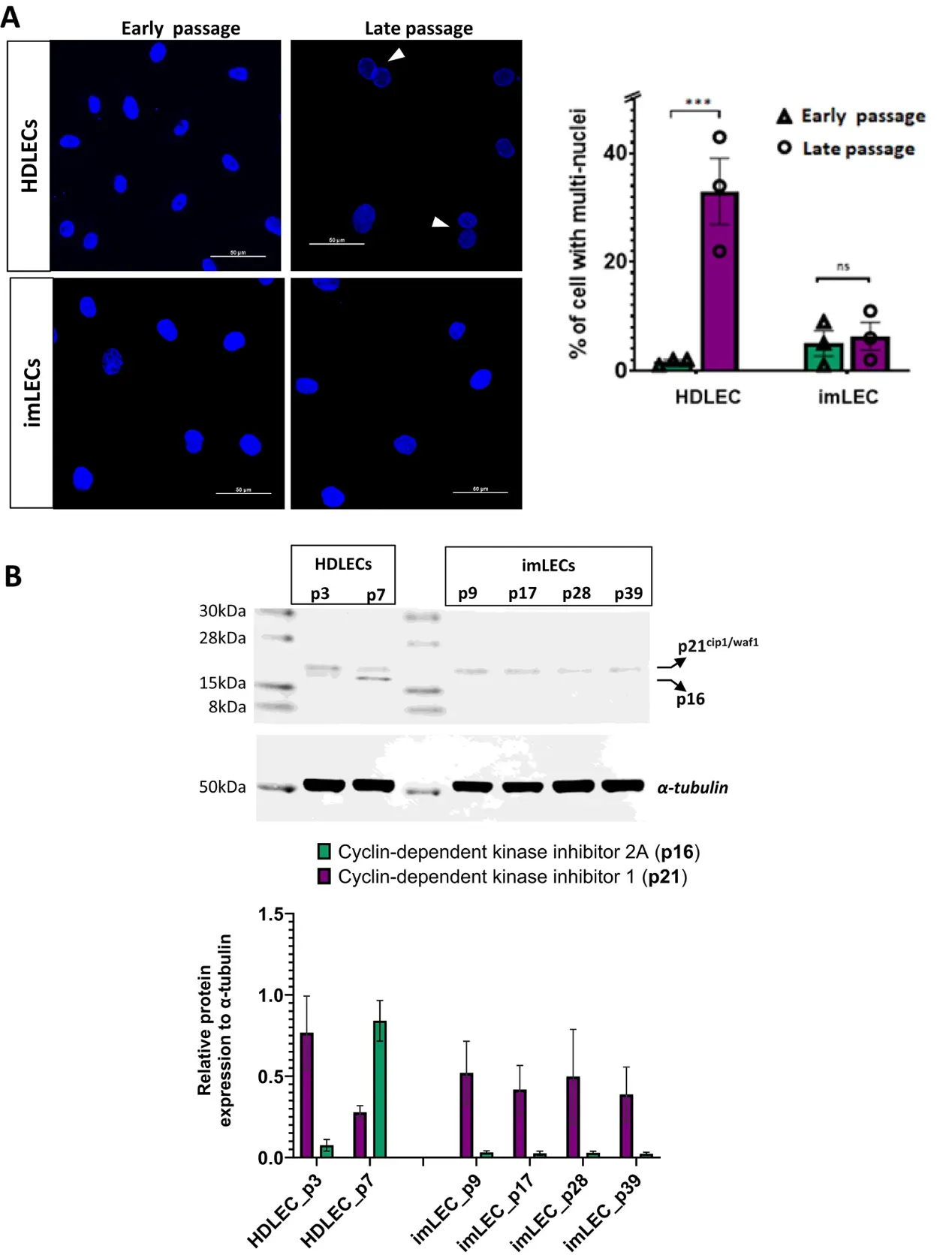
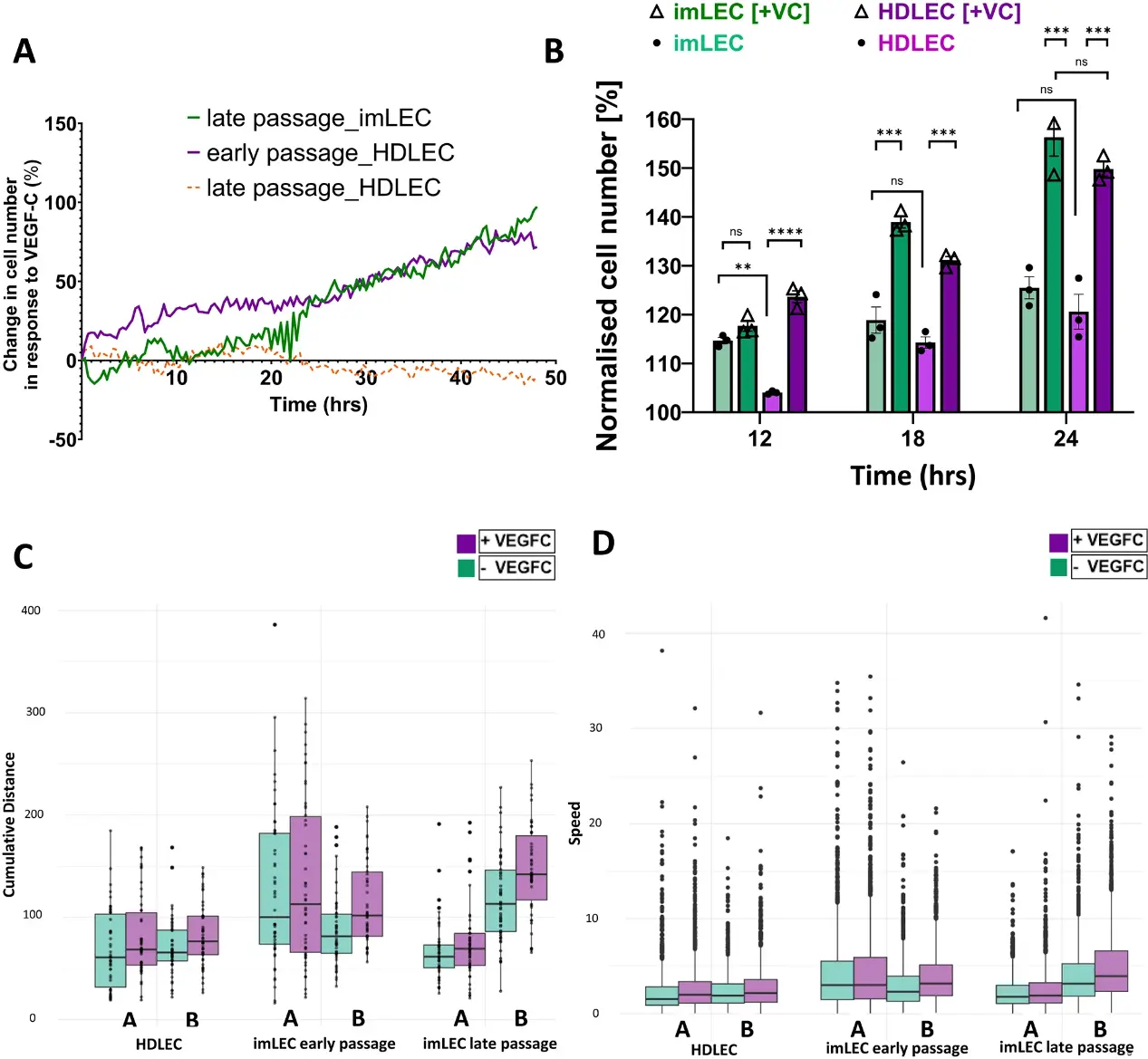
In lymphatic research, human dermal lymphatic endothelial cells (HDLECs) represent the “gold standard”, even though they lose their identity and proliferative capacity over time. A recently established immortalized lymphatic endothelial cell line (imLEC) could become a promising new tool for lymphatic disease modelling. Ogmen, Kazim and colleagues further characterized this cell line by comparing imLECs and HDLECs in terms of the expression of proteins essential for correct lymphatic function, and the proliferation, migration and sprouting responses to vascular endothelial growth factor C (VEGFC).
The results demonstrated that the long-term expression of lymphatic endothelial markers, including EPHB4, FOXC2 and ERG, proteins also associated with Primary Lymphatic Anomalies (PLA), can be sustained in imLECs. Furthermore, VEGFC induces proliferative and migratory responses in imLECs, albeit significant responses were also observed even at basal conditions (in the absence of VEGFC). Importantly, imLECs survive longer in vitro without reaching senescence compared to HDLECs, and with VEGFC responsiveness sustained even at late passages (over five months in culture). Finally, RNA-sequencing shows high levels of correlation but slightly different PLA-associated gene transcription signatures in imLECs and HDLECs. They conclude that the suitability of imLECs for in vitro experimentation investigating single genes or signaling pathways in the context of VEGFC stimulation is promising.
These cells are human lymphatic endothelial cells that have been genetically modified to proliferate using the SV40 large T antigen. They serve as a consistent and reliable model for studying the lymphatic system and related diseases.
Immortalized Human Lymphatic Endothelial Cells-SV40 (Cat No.: CSC-I2089Z) are ideal for a variety of research areas, including studies on lymphangiogenesis, cancer metastasis, inflammation, tissue engineering, and drug transport across the lymphatic endothelium.
Ask a Question
Write your own review
 Immortalized Human Lymphatic Endothelial Cells-SV40
Description: Nasal epithelial cells form the outermost protective layer against environmental factors. They clean, humidify, and warm inhaled air. They produces mucus, which binds particles that are subsequently ...
Description: Immortalized Human Splenic Endothelial Cells-SV40 have been obtained immortalizing Human Splenic Endothelial Cells with SV40LT expressing lentiviral particles. Immortalized cells were controlled ...

Description: Immortalized Human Corneal Epithelial Cells-SV40 have been obtained immortalizing Human Corneal Epithelial Cells with Lenti-SV40 Lentivirus. Immortalized cells were controlled passaging side by side ...
Description: Immortalized Human Retinal Pigment Epithelial Cells were isolated from neonatal human globes and spontaneously immortalized in culture bypassing crisis. They retained typical morphology of the ...

Description: Immortalized Human Mammary Epithelial Cells (MCF-12A), Spontanously Immortalized was derived from a 60 year old, Caucasian, female. GFP-MCF-12A are selected from the MCF-12A after transfected with ...
- Adipose Tissue-Derived Stem Cells
- Human Neurons
- Mouse Probe
- Whole Chromosome Painting Probes
- Hepatic Cells
- Renal Cells
- In Vitro ADME Kits
- Tissue Microarray
- Tissue Blocks
- Tissue Sections
- FFPE Cell Pellet
- Probe
- Centromere Probes
- Telomere Probes
- Satellite Enumeration Probes
- Subtelomere Specific Probes
- Bacterial Probes
- ISH/FISH Probes
- Exosome Isolation Kit
- Human Adult Stem Cells
- Mouse Stem Cells
- iPSCs
- Mouse Embryonic Stem Cells
- iPSC Differentiation Kits
- Mesenchymal Stem Cells
- Immortalized Human Cells
- Immortalized Murine Cells
- Cell Immortalization Kit
- Adipose Cells
- Cardiac Cells
- Dermal Cells
- Epidermal Cells
- Peripheral Blood Mononuclear Cells
- Umbilical Cord Cells
- Monkey Primary Cells
- Mouse Primary Cells
- Breast Tumor Cells
- Colorectal Tumor Cells
- Esophageal Tumor Cells
- Lung Tumor Cells
- Leukemia/Lymphoma/Myeloma Cells
- Ovarian Tumor Cells
- Pancreatic Tumor Cells
- Mouse Tumor Cells