
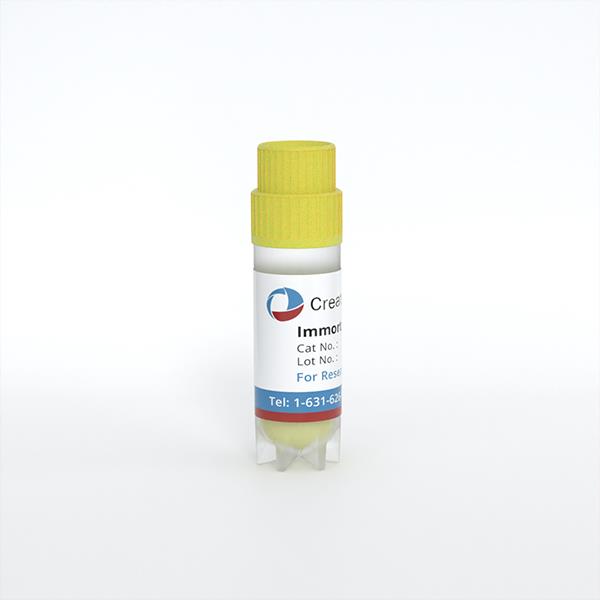
Immortalized Human Tracheal Epithelial Cells
Cat.No.: CSC-I9132L
Species: Homo sapiens
Source: Trachea
Morphology: Polygonal
Culture Properties: Adherent
- Specification
- Background
- Scientific Data
- Q & A
- Customer Review
Note: Never can cells be kept at -20 °C.
CIK-HT013 HT® Lenti-hTERT Immortalization Kit
CIK-HT003 HT® Lenti-SV40T Immortalization Kit
Immortalized Human Tracheal Epithelial Cells are engineered from primary human tracheal epithelium to overcome the finite lifespan of native cells while preserving authentic airway epithelial characteristics. Through controlled immortalization—most commonly via human telomerase reverse transcriptase (hTERT) or SV40 Large T antigen—these cells acquire an extended replicative capacity without the gross chromosomal instability and loss of differentiation potential that plague tumor-derived lines.
A principal advantage lies in their retention of key epithelial phenotypes. These cells maintain classic cobblestone morphology and express definitive markers such as E-cadherin and cytokeratins, confirming their lineage fidelity. Critically, they remain fully compatible with air–liquid interface (ALI) culture systems, enabling differentiation into a pseudostratified mucociliary epithelium that recapitulates the barrier function, tight-junction architecture, and secretory physiology of the native human trachea in vivo. This capacity for physiological differentiation renders them markedly superior to standard cancer cell lines for modeling mucociliary clearance, tight-junction integrity, and host–pathogen interactions at the airway surface.
Furthermore, the unlimited proliferative potential of immortalized tracheal epithelial cells ensures experimental consistency and reproducibility across passages, eliminating the donor-to-donor variability and finite supply constraints inherent to primary cultures. Their robust adherence properties and defined growth requirements facilitate scalable expansion for high-throughput toxicology screening, respiratory disease modeling, and drug discovery applications.
Alcohol-Induced Altered Glycans in Human Tracheal Epithelial Cells Promote Bacterial Adhesion
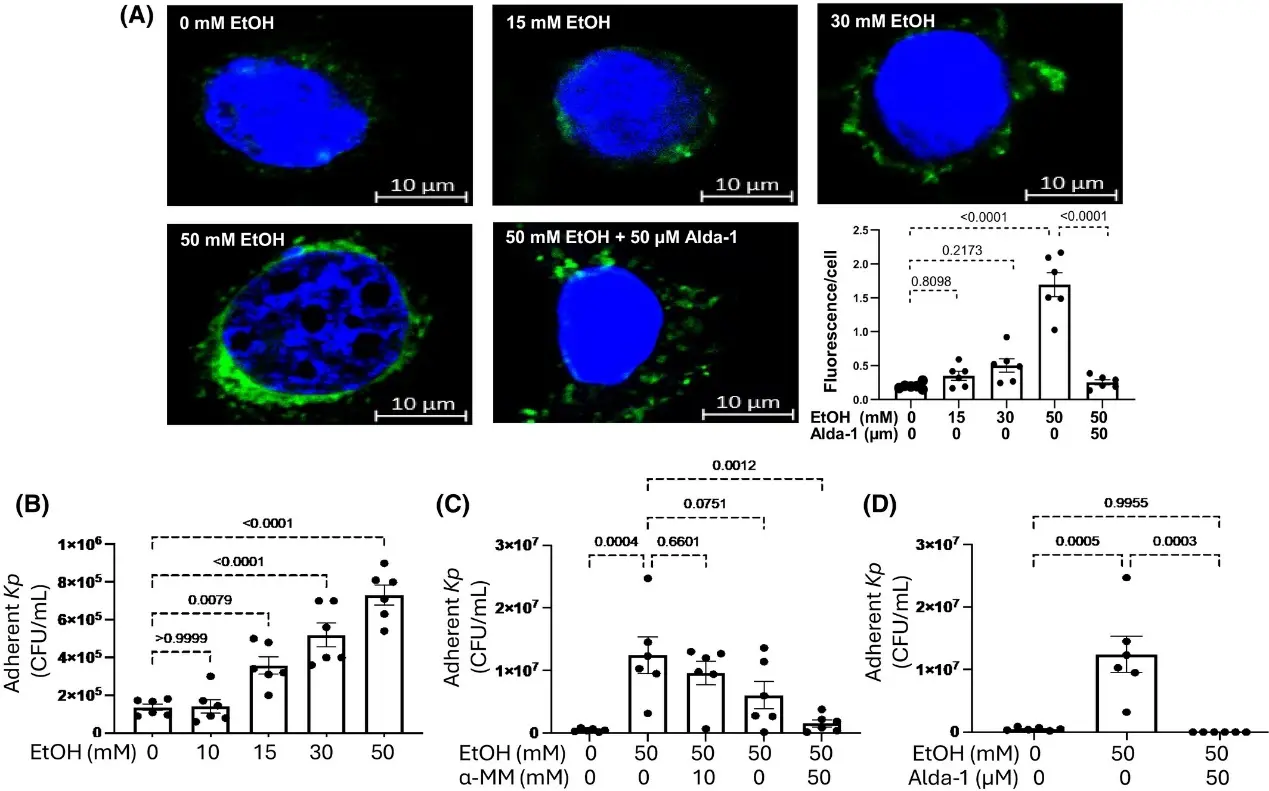
Heavy alcohol drinking is known to increase the risk of bacterial pneumonia, yet the link between alcohol levels and risk of infection remains underexplored. Cheng Pi‐Wan et al. recently found that alcohol induced α2-6sialo mucin O-glycans in human tracheobronchial epithelial cells, which mediated the killing of U937 macrophages. Based on these findings, this study further examines whether altered glycans induced by alcohol in human airway epithelial cells can promote adhesion of Klebsiella pneumoniae (Kp) and Streptococcus pneumoniae (Sp).
The results showed that exposure of human tracheal epithelial cells to alcohol also induces high mannose N-glycans terminated with α3mannose and increases adhesion of Kp, which is inhibited by α-methylmannoside or aldehyde dehydrogenase 2 activator 1. Further, the α2-6sialo mucin O-glycans induced by alcohol in human tracheal epithelial cells also enhance the adhesion of Sp, which is inhibited by ovine submaxillary mucin or aldehyde dehydrogenase 2 activator 1. We conclude that alcohol induces altered glycans in human airway epithelial cells, which increase the risk of bacterial pneumonia by compromising immune function and promoting the adhesion of Kp and Sp.
Ask a Question
Write your own review
Description: Nasal epithelial cells form the outermost protective layer against environmental factors. They clean, humidify, and warm inhaled air. They produces mucus, which binds particles that are subsequently ...
Description: Immortalized Human Splenic Endothelial Cells-SV40 have been obtained immortalizing Human Splenic Endothelial Cells with SV40LT expressing lentiviral particles. Immortalized cells were controlled ...
Description: Immortalized Human Corneal Epithelial Cells-SV40 have been obtained immortalizing Human Corneal Epithelial Cells with Lenti-SV40 Lentivirus. Immortalized cells were controlled passaging side by side ...
Description: Immortalized Human Lymphatic Endothelial Cells-SV40 were developed from human tissues transduced with a lentiviral expression vector containing the SV40T gene. The cell line was continuously cultured ...
Description: Immortalized Human Retinal Pigment Epithelial Cells were isolated from neonatal human globes and spontaneously immortalized in culture bypassing crisis. They retained typical morphology of the ...
- Adipose Tissue-Derived Stem Cells
- Human Neurons
- Mouse Probe
- Whole Chromosome Painting Probes
- Hepatic Cells
- Renal Cells
- In Vitro ADME Kits
- Tissue Microarray
- Tissue Blocks
- Tissue Sections
- FFPE Cell Pellet
- Probe
- Centromere Probes
- Telomere Probes
- Satellite Enumeration Probes
- Subtelomere Specific Probes
- Bacterial Probes
- ISH/FISH Probes
- Exosome Isolation Kit
- Human Adult Stem Cells
- Mouse Stem Cells
- iPSCs
- Mouse Embryonic Stem Cells
- iPSC Differentiation Kits
- Mesenchymal Stem Cells
- Immortalized Human Cells
- Immortalized Murine Cells
- Cell Immortalization Kit
- Adipose Cells
- Cardiac Cells
- Dermal Cells
- Epidermal Cells
- Peripheral Blood Mononuclear Cells
- Umbilical Cord Cells
- Monkey Primary Cells
- Mouse Primary Cells
- Breast Tumor Cells
- Colorectal Tumor Cells
- Esophageal Tumor Cells
- Lung Tumor Cells
- Leukemia/Lymphoma/Myeloma Cells
- Ovarian Tumor Cells
- Pancreatic Tumor Cells
- Mouse Tumor Cells