

BA/F3
Cat.No.: CSC-C2045
Species: Mus musculus (Mouse)
Source: Bone Marrow
Morphology: round (some polymorph) cells in suspension
Culture Properties: suspension
- Specification
- Background
- Scientific Data
- Q & A
- Customer Review
b. Cell-Based assay
c. In vivo efficacy study
Immunology: CD11b (+), F4/80 (+)
Viruses: PCR: SMRV -
Store in liquid nitrogen.
Biosafety classification is based on U.S. Public Health Service Guidelines, it is the responsibility of the customer to ensure that their facilities comply with biosafety regulations for their own country.
Ba/F3 is a hematopoietic cell line derived from mouse bone marrow that depends on interleukin-3 (IL-3). Due to their low-level expression of the B-cell specific B220 antigen and the germline configuration of their immunoglobulin loci, Ba/F3 cells are classified as early cells of the lymphoblastic lineage. In the presence of IL-3, BA/F3 cells can proliferate and divide rapidly; however, upon removal of IL-3, the cells quickly lose viability and die.
BA/F3 cells are easily transfected and infected via electroporation or common retroviral and lentiviral expression systems. More than 700 engineered BA/F3 cell lines have been developed, covering most kinase families. For example, by introducing specific kinase mutation genes (such as KRAS, BRAF, etc.), cell lines that rely on mutation-driven genes rather than IL-3 can be constructed, which are useful for screening kinase inhibitors and studying drug resistance. Moreover, BA/F3 cells can be used for resistance studies; for instance, by using N-ethyl-N-nitrosourea (ENU) mutagenesis, resistant mutant-carrying cell lines can be generated. Additionally, BA/F3 cells can form tumor-like structures in mice, which can be used to evaluate the in vivo antitumor efficacy of kinase inhibitors.
A novel modulator of IL-6R prevents inflammation-induced preterm birth and improves newborn outcome
Background
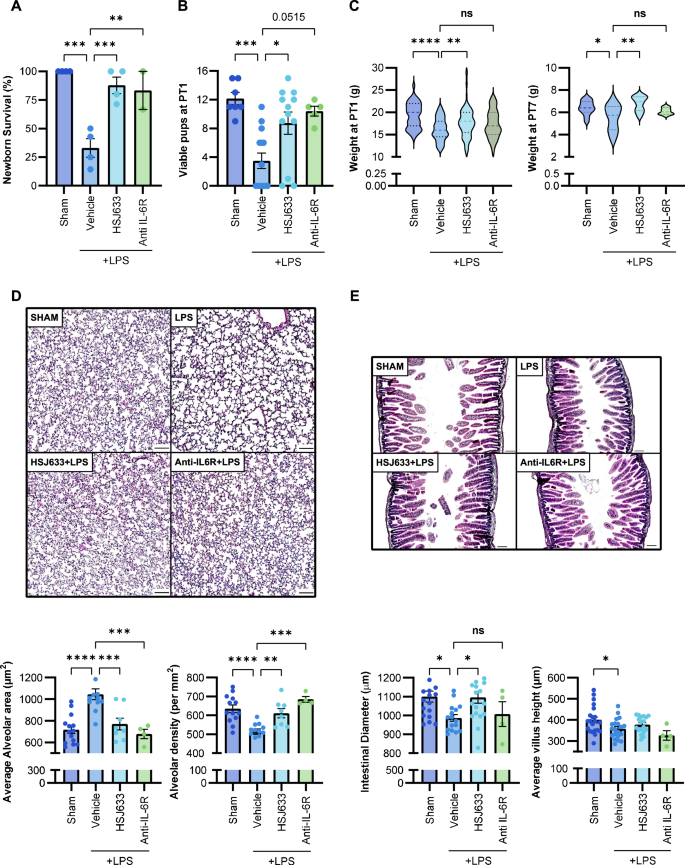
Preterm birth is a leading cause of neonatal mortality, often driven by inflammation. This study introduces HSJ633, a first-in-class small peptide modulator of IL-6R. HSJ633 binds IL-6R outside the IL-6 site, selectively inhibits STAT3 phosphorylation, and preserves cytoprotective AKT, p38, and ERK signaling. In murine LPS-induced preterm birth, HSJ633 reduced inflammation in maternal and fetal tissues, prolonged gestation, improved neonatal survival, and preserved lung and intestinal integrity whether given before or shortly after labor induction. It also reduced inflammation in human fetal membrane explants.
Key Findings
HSJ633 was identified as a potent non-competitive IL-6R antagonist. Binding assays on HEK-Blue IL-6 cells showed HSJ633 binds IL-6R at a site remote from IL-6 and is not displaced by IL-6. It inhibited IL-6-induced STAT3 phosphorylation with IC50 ~12 nM but preserved p38, ERK1/2, and AKT activation, unlike tocilizumab. In LPS-induced preterm birth in mice, prophylactic HSJ633 reduced prematurity from ~93% to 22%, lowered inflammatory cytokines in uterus, placenta, fetal membranes, amniotic fluid, and maternal plasma, and improved neonatal survival (87% vs 33%) and pup weight. Treatment 2 h after LPS also reduced preterm birth and improved neonatal survival and organ integrity. HSJ633 reduced inflammation in human fetal membrane explants stimulated with HMGB1. STAT3 inhibition alone prevented PTB, supporting selective STAT3 blockade as mechanism.
Contribution
Creative Bioarray provided the Ba/F3 murine pro-B cell line (CSC-C2045) used to generate transgenic Ba/F3-mgp130 and Ba/F3-mgp130-IL-6Rα cells. These cells enabled mechanistic studies showing HSJ633 suppresses IL-6-induced STAT3 activation in cells expressing murine IL-6R/gp130 while lacking effect in IL-6R-deficient Ba/F3 controls.
RAC1 Alterations Induce Acquired Dabrafenib Resistance in Association with Anaplastic Transformation in a Papillary Thyroid Cancer Patient
Background
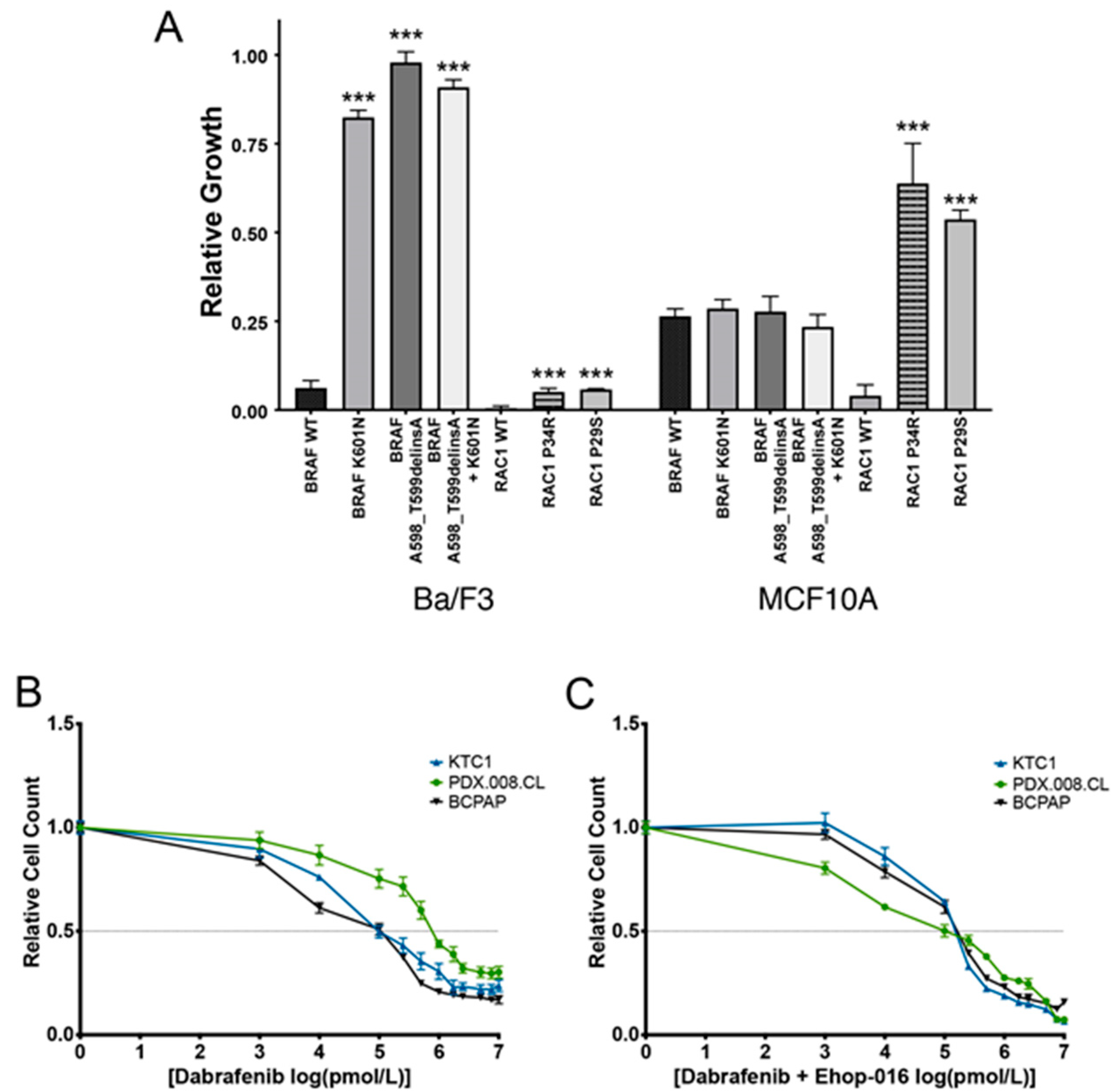
This study reports a novel acquired RAC1 (P34R) mutation in a metastatic papillary thyroid cancer lesion that progressed on dabrafenib. A patient-derived cell line, PDX.008.CL, showed anaplastic dedifferentiation, RAC1 amplification, and chromosome 7 polyploidy. RAC1 overexpression and mutation increased proliferation and produced 10-fold dabrafenib resistance, while RAC1 inhibition restored sensitivity. Additional chromosome 7 genes, including TWIST1, EGFR, and MET, were amplified and overexpressed. These findings link RAC1 alterations and aneuploidy to BRAF inhibitor resistance and aggressive thyroid tumor progression.
Key Findings
The study identified a novel RAC1 P34R mutation acquired during dabrafenib treatment in a BRAF-mutated papillary thyroid cancer patient. The metastatic lesion and derived PDX.008.CL cell line displayed anaplastic features, RAC1 amplification, and chromosome 7 polyploidy. RAC1 P34R and amplification were sufficient to drive cell proliferation and resistance to BRAF inhibition; PDX.008.CL cells were 10-fold more resistant to dabrafenib than control PTC cells. RAC1 activity was elevated, and the RAC1 inhibitor EHop-016 restored dabrafenib sensitivity. RAC1 amplification altered cell morphology, cortical actin organization, 2D motility, and 3D spheroid growth. Chromosome 7 polyploidy increased copy number and expression of RAC1, TWIST1, EGFR, and MET, suggesting additional resistance mechanisms. These findings highlight RAC1 alterations and chromosome 7 aneuploidy as contributors to acquired BRAF inhibitor resistance and thyroid cancer dedifferentiation.
Contribution
Creative Bioarray provided the mouse pro-B Ba/F3 cell line used for transient viability assays. These cells helped evaluate whether BRAF and RAC1 mutations drive proliferation without growth factors, supporting the study's functional characterization of RAC1(P34R) and its role in dabrafenib resistance.
Nanobody Targeting of Epidermal Growth Factor Receptor (EGFR) Ectodomain Variants Overcomes Resistance to Therapeutic EGFR Antibodies
Background
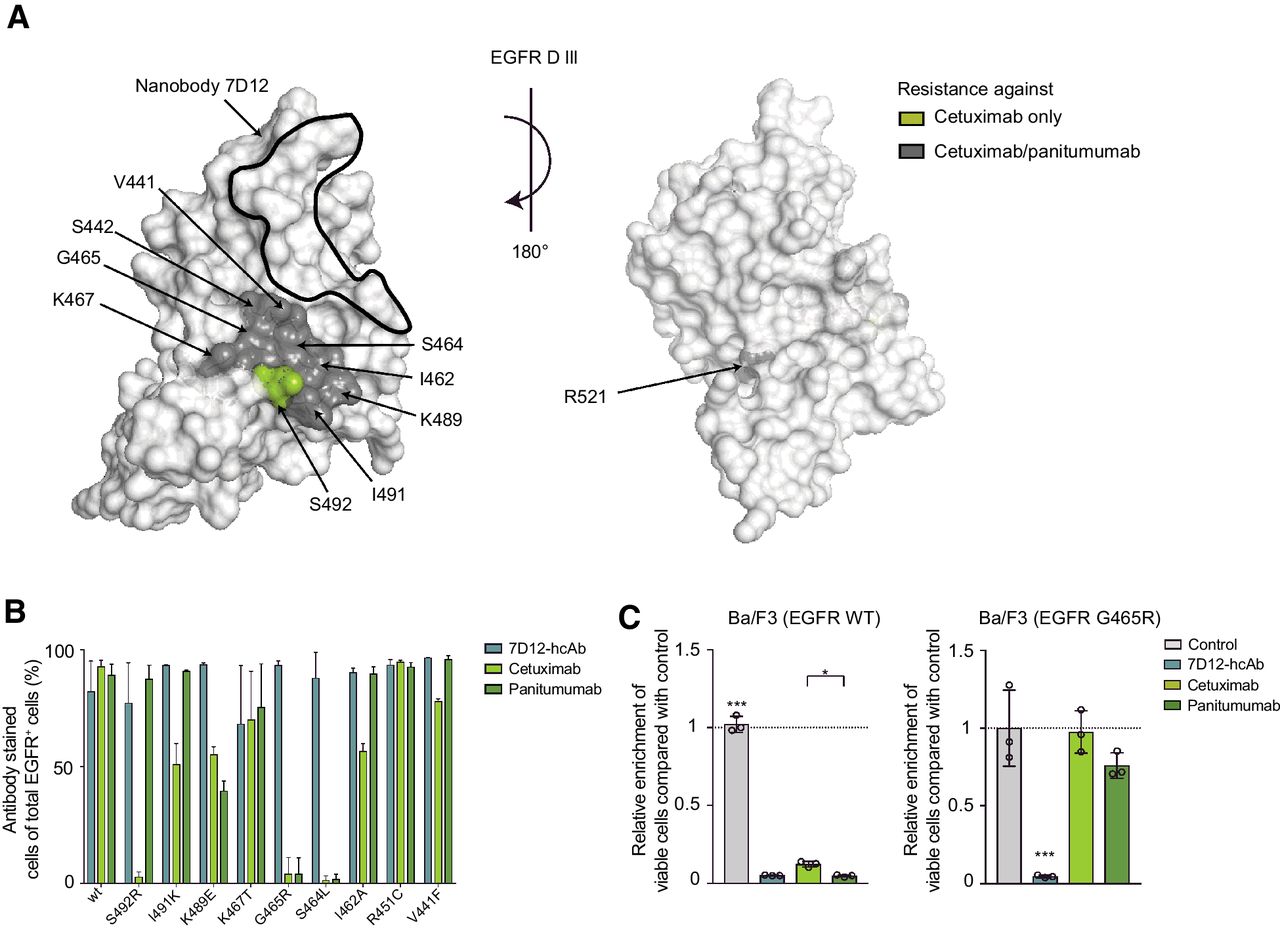
This study tested whether EGFR nanobody 7D12 fused to IgG1 Fc (7D12-hcAb) can overcome resistance to cetuximab/panitumumab caused by EGFR ectodomain variants. 7D12-hcAb bound and inhibited cells expressing common resistance-mediating EGFR mutants because it targets a tiny domain III epitope overlapping the EGF-binding site. Modeling secondary resistance showed only R377 could mutate without losing receptor function, and such variants remained sensitive to cetuximab/panitumumab. However, EGFR R521K-mediated resistance required Fc-engineered 7D12 variants enhancing CDC/ADCC. The data support 7D12-hcAb as a resistance-preventive/personalized anti-EGFR strategy.
Key Findings
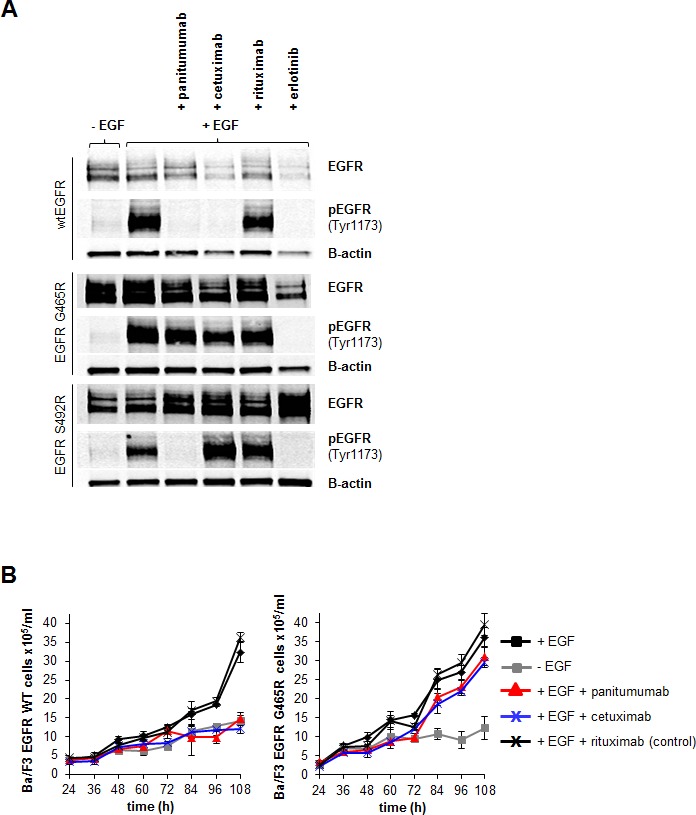
1) 7D12-hcAb bound all tested EGFR ectodomain variants (S492R, I491K, K489E, K467T, G465R, S464L, I462A, R451C, V441F) that mediate acquired cetuximab/panitumumab resistance and blocked EGF-dependent Ba/F3 proliferation, including G465R, whereas cetuximab/panitumumab failed. 2) Its epitope overlaps the EGF-binding site, so resistance mutations at most positions would abolish receptor function; only R377A retained functionality and lost 7D12-hcAb binding, while remaining sensitive to cetuximab/panitumumab, suggesting low secondary resistance risk and a salvage option. 3) 7D12-hcAb did not overcome EGFR R521K-mediated primary resistance in SAT spheroids. 4) Fc engineering rescued activity: E345R (7D12-E-hcAb) enhanced complement-dependent cytotoxicity and G236A/S239D/I332E (7D12-T-hcAb) enhanced ADCC against R521K and KRAS G12V cells. Thus 7D12-hcAb broadly targets resistance variants and can be Fc-optimized.
Contribution
Creative Bioarray provided the Ba/F3 cell line (CSC-C2045), which was used to generate EGFR wild-type and mutant Ba/F3 models. These models enabled binding, proliferation, and effector-function assays demonstrating that nanobody 7D12-hcAb targets resistance-mediating EGFR ectodomain variants and can be Fc-engineered.
Cetuximab Resistance in Head and Neck Cancer Is Mediated by EGFR-K521 Polymorphism
Background
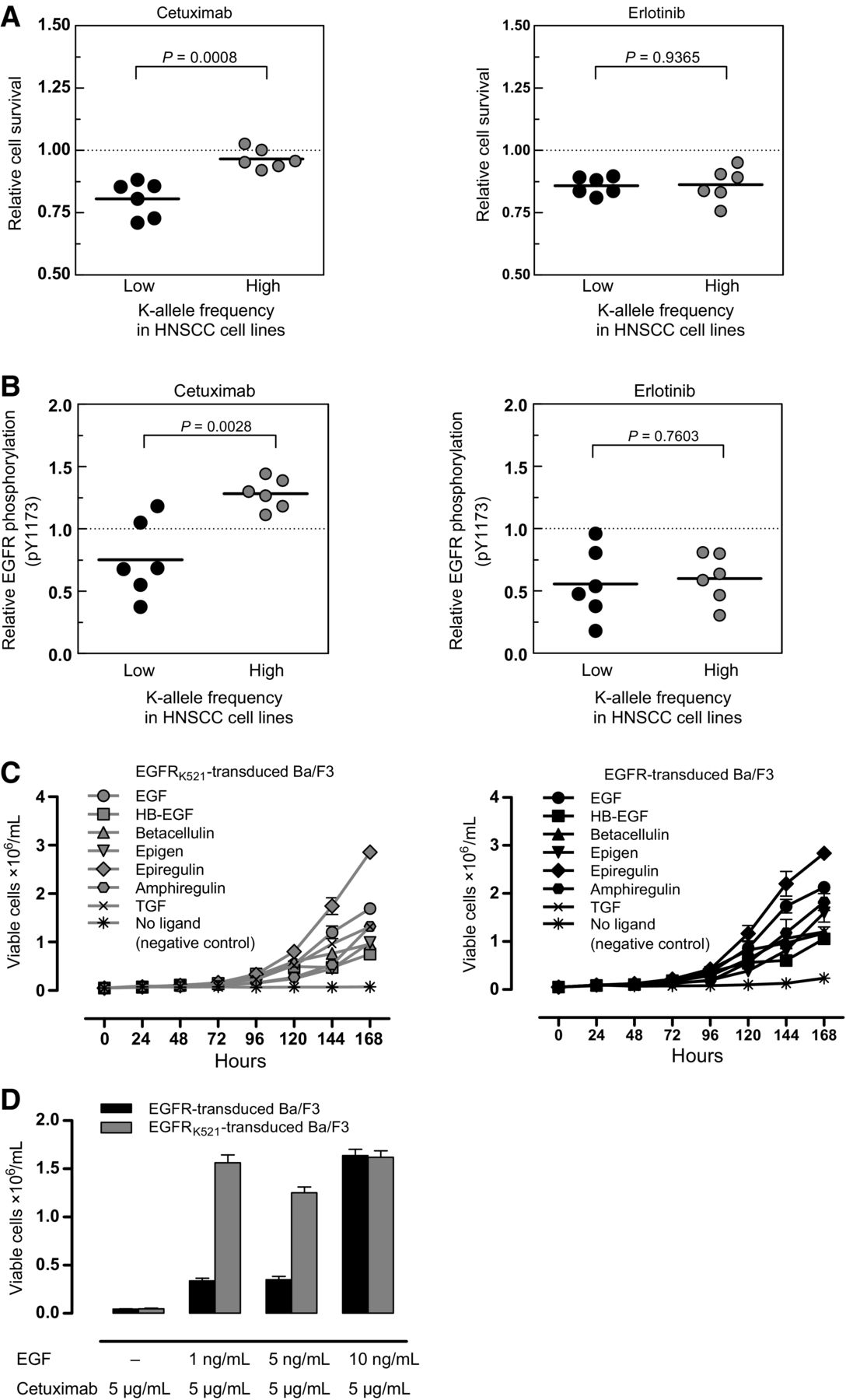
This study identifies the EGFR-K521 single-nucleotide polymorphism as a frequent mediator of primary cetuximab resistance in head and neck squamous cell carcinoma. In 59 patients, K-allele expression correlated with shorter progression-free survival on cetuximab-based therapy. Cell line, Ba/F3, and xenograft models showed that EGFR-K521 remains ligand-responsive but is not inhibited by cetuximab, linked to altered glycosylation and reduced receptor stability. CetuGEX, an ADCC-optimized anti-EGFR antibody, restored sensitivity, supporting EGFR-K521 as a predictive biomarker and ADCC targeting as a resistance-overcoming strategy.
Key Findings
The EGFR-K521 polymorphism was present in 55.9% (33/59) of HPV-negative HNSCC patients and was associated with significantly shorter median progression-free survival during palliative cetuximab plus chemotherapy/radiation (4.93 vs 8.25 months, P=0.049). HNSCC cell lines with high K-allele frequency and EGFR-K521-transduced Ba/F3 cells were insensitive to cetuximab, despite intact ligand-mediated EGFR activation; cetuximab failed to block EGFR phosphorylation and colony formation, while erlotinib remained active. In vivo, SAS xenografts with high K-allele frequency were virtually cetuximab-resistant, unlike UT-SCC 42A xenografts. Cetuximab binding was preserved but affinity slightly reduced. EGFR-K521 displayed unsialylated high-mannose N-glycans and reduced protein stability (Tm 60.63°C vs 72.14°C). CetuGEX, an Fc-glyco-optimized anti-EGFR antibody, induced ADCC and overcame EGFR-K521-mediated resistance.
Contribution
Creative Bioarray provided the Ba/F3 cell line (CSC-C2045) used as a neutral cellular background to express EGFR and EGFR-K521. This reagent enabled the study to show that EGFR-K521 itself mediates cetuximab resistance independently of HNSCC context and that ADCC-optimized CetuGEX can overcome this resistance.
Epidermal growth factor receptor mutation mediates cross-resistance to panitumumab and cetuximab in gastrointestinal cancer
Background
This study investigates acquired resistance to EGFR-targeting antibodies panitumumab and cetuximab in gastrointestinal cancer. Using targeted next-generation sequencing of tumor tissue and circulating tumor DNA, the authors identify a novel acquired EGFR exon 12 mutation, G465R, in patients treated with panitumumab. Functional assays show G465R introduces a positive charge in the overlapping antibody epitope, abrogates binding of both antibodies, and mediates cross-resistance in Ba/F3 and CHO cell models. The mutation can be detected in liquid biopsies, suggesting a strategy for monitoring resistance before clinical progression.
Key Findings
The study identifies a novel acquired EGFR G465R ectodomain mutation in gastrointestinal cancer patients treated with panitumumab. In a tumor tissue cohort, 1 of 3 panitumumab-treated patients with post-treatment samples had G465R; it was also detected in an independent liquid biopsy cohort (1/6 panitumumab-treated patients). G465R localizes to the central overlap of panitumumab and cetuximab epitopes. Functional analyses showed that recombinant EGFR G465R abrogates binding of both antibodies and causes cross-resistance: Ba/F3 cells expressing EGFR G465R continued proliferating in the presence of panitumumab or cetuximab, unlike wild-type EGFR cells. Acquired RAS mutations were found in about one third of cetuximab-treated patients, confirming a heterogeneous resistance landscape. The results demonstrate that epitope-changing EGFR mutations can arise during panitumumab therapy and can be detected in circulating tumor DNA, potentially enabling early monitoring of resistance and guiding EGFR-targeted treatment decisions.
Contribution
Creative Bioarray supplied the Ba/F3 cell line (CSC-C2045, New York, USA) used to establish EGFR wild-type and mutant models. These cells enabled functional validation in Ba/F3 assays showing EGFR G465R mediates cross-resistance to panitumumab and cetuximab, supporting the study’s key conclusion.
Exogenous Janus Kinase 617 Codon Influences Small Noncoding RNAs and Gene Expression in Ba/F3 Cells
MPNs arise in bone marrow, potentially progressing to leukemia, with the JAK2V617F mutation highly present in various MPNs and within the general population, albeit with varying penetrance. Chen's team investigated JAK2V617F's role using next-generation sequencing of small and total RNAs in JAK2 versus JAK2V617F-expressing Ba/F3 cells.
Small RNAs were extracted and sequenced from Ba/F3 cells transfected with mock, vehicle, wild type JAK2, or V617F mutant JAK2 to check if exogenous JAK2 expression alters miRNA profiles. The annotated sequencing data showed distinct RNA expressions for different genetic backgrounds (Fig. 1a). Common miRNAs between humans and mice, excluding the Ba/F3 background, appear in Supplementary Table 2, with a heatmap of their clustering shown in Figure 1b. Using DAVID, we found these miRNAs are involved in various cancers. Potential targets like DNMT1, 3A/3B, Bmi1, UBC9, Ezh2, and Sirt1, indicate JAK2V617F might disrupt the epigenome. Altered miRNA expressions from JAK2V617F MPN patients' microarray data were compared, highlighting let7 as the common miRNA family shared across humans and mice, as confirmed in prior studies. RNA sequencing was performed to investigate global changes in transcripts and gene expression in Ba/F3 cells transfected with vehicle, wild type, or V617F mutant JAK2. Genes and transcripts specific to JAK2 and JAK2V617F, excluding the Ba/F3 background, were identified (Fig. 2a and b). In JAK2 and JAK2V617F-expressing cells, 1266 genes showed significant differential expression compared to the vehicle control. A heatmap in Figure 2c illustrates these differences among control, JAK2, and JAK2V617F Ba/F3 cells. Additionally, the expressional variations were cross-examined, and the differentially expressed genes were summarized in a Venn diagram (Fig. 2d).
 Fig. 6. Janus kinase 617 codon (JAK2V617F) mutation influences noncoding RNA expression (Chen Y, Wan Y, et al., 2024).
 Fig. 7. Identification of the differentially expressed genes/transcripts (Chen Y, Wan Y, et al., 2024).
Deficiency of Core Fucosylation Activates Cellular Signaling Dependent on FLT3 Expression in a Ba/F3 Cell System
Fms-like tyrosine kinase 3 (FLT3) is a proto-oncogene involved in hematopoiesis, notably mutated in about one-third of acute myeloid leukemia (AML) cases. These mutations, particularly FLT3-ITD and FLT3-TKD, lead to poor prognosis due to abnormal cell signaling. Despite advances, the role of N-glycosylation in FLT3 function remains unclear.
To investigate FLT3's role in inducing core fucosylation, Duan's team created Fut8KO cell lines using murine Ba/F3 cells, typically dependent on IL-3 unless influenced by oncogenes like FLT3-ITD and -TKD. They used the pSpCas9 (BB)-2A-GFP vector for gene editing, establishing stable lines through GFP and PhosL lectin sorting as detailed in "Methods and Materials." Stable Fut8KO cell lines were confirmed via flow cytometry and lectin blotting (Fig. 3A and B), which specifically detects core fucosylated N-glycans. FLT3 is critical for hematopoiesis, influencing proliferation and survival. Testing Fut8KO's effects, we found it increased cell proliferation without IL-3 in FLT3-WT cells (Fig. 4B), unlike control cells. Fut8 restoration returned cells to IL-3 dependency (Fig. 4B). Fut8 ablation partially reduced ITD and TKD cell growth (Fig. 4C and D), suggesting core fucosylation absence strongly activates FLT3-WT.
 Fig. 8. Established Fut8 deficient Ba/F3 cells (Duan C, Fukuda T, et al., 2020).
 Fig. 9. Influences of core fucosylation on Ba/F3 cell proliferation (Duan C, Fukuda T, et al., 2020).
Ask a Question
Write your own review
- You May Also Need
Description: neuroglial and neuronal character coexpressing ependymoma cell line.
Description: Established by irradiation of the adherent cells in long-term bone marrow cultures derived from C3H/HeNSlc strain mice
Description: Cloned from the C1300 mouse neuroblastoma line. Adapted to culture by alternate in vivo and in vitro passage. Cells have characteristics of mature neurons and secrete the enzymes for the synthesis of ...

Description: FL83B is a spontaneously immortalized hepatocyte cell line derived from the liver of a 15 to 17-day-old fetal C57BL/6J mouse.
Description: EMT6 was established from a transplantable murine mammary carcinoma that arose in a BALB/cCRGL mouse after implantation of a hyperplastic mammary alveolar nodule.
- Adipose Tissue-Derived Stem Cells
- Human Neurons
- Mouse Probe
- Whole Chromosome Painting Probes
- Hepatic Cells
- Renal Cells
- In Vitro ADME Kits
- Tissue Microarray
- Tissue Blocks
- Tissue Sections
- FFPE Cell Pellet
- Probe
- Centromere Probes
- Telomere Probes
- Satellite Enumeration Probes
- Subtelomere Specific Probes
- Bacterial Probes
- ISH/FISH Probes
- Exosome Isolation Kit
- Human Adult Stem Cells
- Mouse Stem Cells
- iPSCs
- Mouse Embryonic Stem Cells
- iPSC Differentiation Kits
- Mesenchymal Stem Cells
- Immortalized Human Cells
- Immortalized Murine Cells
- Cell Immortalization Kit
- Adipose Cells
- Cardiac Cells
- Dermal Cells
- Epidermal Cells
- Peripheral Blood Mononuclear Cells
- Umbilical Cord Cells
- Monkey Primary Cells
- Mouse Primary Cells
- Breast Tumor Cells
- Colorectal Tumor Cells
- Esophageal Tumor Cells
- Lung Tumor Cells
- Leukemia/Lymphoma/Myeloma Cells
- Ovarian Tumor Cells
- Pancreatic Tumor Cells
- Mouse Tumor Cells