
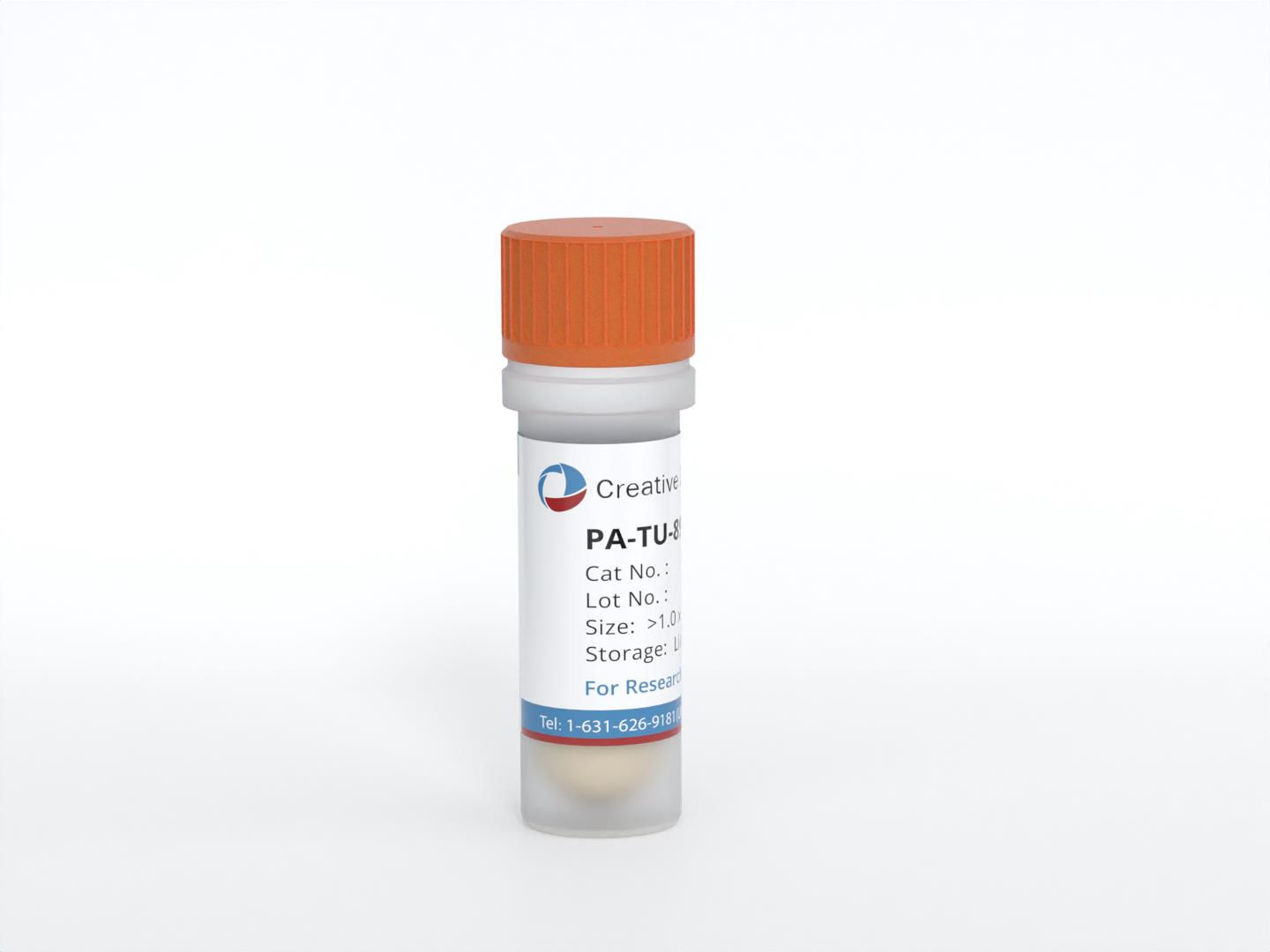
PA-TU-8902
Cat.No.: CSC-C0312
Species: Homo sapiens (Human)
Source: Pancreas
Morphology: epithelial adherent cells growing in monolayers
Culture Properties: monolayer
- Specification
- Background
- Scientific Data
- Q & A
- Customer Review
Immunology: cytokeratin +, cytokeratin-7 +, cytokeratin-8 +, cytokeratin-17 -, cytokeratin-18 +, cytokeratin-19 +, desmin -, endothel -, EpCAM +, GFAP -, neurofilament -,
PA-TU-8902 is a human pancreatic ductal adenocarcinoma (PDAC) cell line, established in 1985 from a primary grade II tumor of a 44-year-old female. Its paramount scientific advantage lies in its genuinely metastatic phenotype: unlike most PDAC lines that fail to colonize distant organs in vivo, PA-TU-8902 consistently forms lung, esophageal, and pleural metastases upon intravenous injection in nude mice, faithfully recapitulating late-stage human disease.
Genetically, the line harbors endogenous KRAS and TP53 mutations-the two cardinal drivers of human PDAC-while remaining negative for EBV, HBV, HCV, HIV, and HTLV, ensuring biosafety for in vivo experimentation. Its well-characterized pseudotetraploid karyotype, authenticated STR profile, and documented secretion of urokinase, cathepsins B/D, and cytokines (e.g., EpCAM+) position it as a mechanistically tractable platform for studying protease-driven invasion, cancer cachexia, and tumor-stroma crosstalk.
Furthermore, PA-TU-8902 exhibits exceptional amenability to genetic engineering. It has been successfully deployed for CRISPR/Cas9-mediated SMAD4 knockout to dissect TGF-β signaling and mitophagy-driven chemoresistance, and engineered to stably co-express GFP, luciferase, and chicken ovalbumin (OVAL) for in vivo imaging and immunotherapy modeling. With a manageable doubling time (25-40 h) and negative mycoplasma status, PA-TU-8902 remains a reference standard for translational PDAC research spanning metastasis biology, drug resistance, and preclinical therapeutic screening.
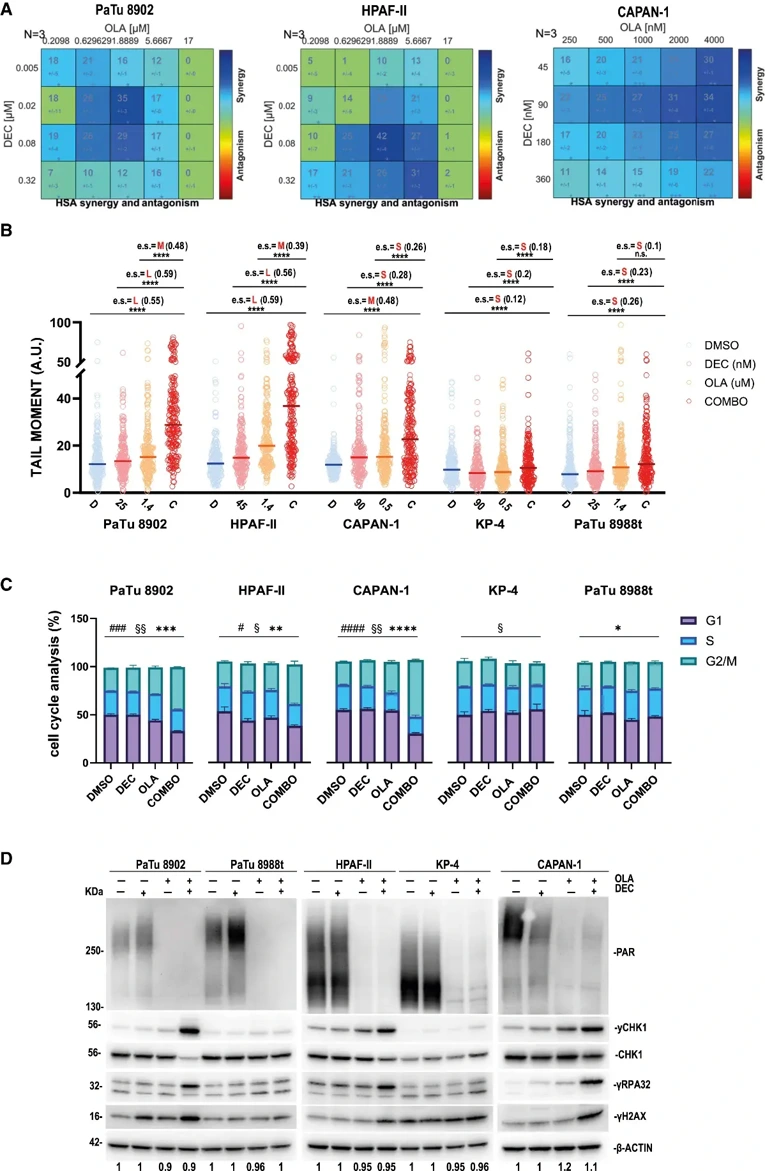
Decitabine-Olaparib Synergistically Targets dKRAS-PDAC
Pancreatic ductal adenocarcinoma (PDAC) shows limited response to chemotherapy, partly due to the absence of effective biomarkers for personalized treatment. Kirsten rat sarcoma viral oncogene homolog (KRAS) mutations are found in 90% of PDAC cases, and tumors dependent on KRAS (dKRAS) can be identified using gene expression signature scores. Previous research indicates that dKRAS-PDAC cells are sensitive to decitabine (DEC), an FDA-approved drug for hematological cancers, though its use in solid tumors is limited by side effects.
We discovered that low-dose DEC combined with the poly (ADP-ribose) polymerase (PARP) inhibitor olaparib (OLA) enhances antitumor activity in dKRAS-PDAC. The combination was especially effective in dKRAS-PDAC with a BRCA2 mutation, preventing metastasis growth.
Ask a Question
Write your own review
- You May Also Need

Description: Human moderately differentiated adenocarcinoma cell line established from liver metastasis.
Description: established from the pancreas of a 81-year-old male patient with pancreatic ductal adenocarcinoma

Description: The MIA PaCa-2 cell line was established from tumor tissue of the pancreas obtained from a 65-year-old Caucasian male in 1975 by A. Yunis, et al. These cells are described to express human colony ...

Description: Established in 2010 from the pancreatic tumor of a 46-year old man with poorly differentiated ductal adenocarcinoma (high grade G3, pT3pN1)
Description: Human tumor cell line secreting parathyroid hormone-related peptide (PTHrP) established from pancreatic tumor.
Description: Established from the malignant ascites of a 66-year-old Japanese man with pancreas carcinoma in 1984
- Adipose Tissue-Derived Stem Cells
- Human Neurons
- Mouse Probe
- Whole Chromosome Painting Probes
- Hepatic Cells
- Renal Cells
- In Vitro ADME Kits
- Tissue Microarray
- Tissue Blocks
- Tissue Sections
- FFPE Cell Pellet
- Probe
- Centromere Probes
- Telomere Probes
- Satellite Enumeration Probes
- Subtelomere Specific Probes
- Bacterial Probes
- ISH/FISH Probes
- Exosome Isolation Kit
- Human Adult Stem Cells
- Mouse Stem Cells
- iPSCs
- Mouse Embryonic Stem Cells
- iPSC Differentiation Kits
- Mesenchymal Stem Cells
- Immortalized Human Cells
- Immortalized Murine Cells
- Cell Immortalization Kit
- Adipose Cells
- Cardiac Cells
- Dermal Cells
- Epidermal Cells
- Peripheral Blood Mononuclear Cells
- Umbilical Cord Cells
- Monkey Primary Cells
- Mouse Primary Cells
- Breast Tumor Cells
- Colorectal Tumor Cells
- Esophageal Tumor Cells
- Lung Tumor Cells
- Leukemia/Lymphoma/Myeloma Cells
- Ovarian Tumor Cells
- Pancreatic Tumor Cells
- Mouse Tumor Cells