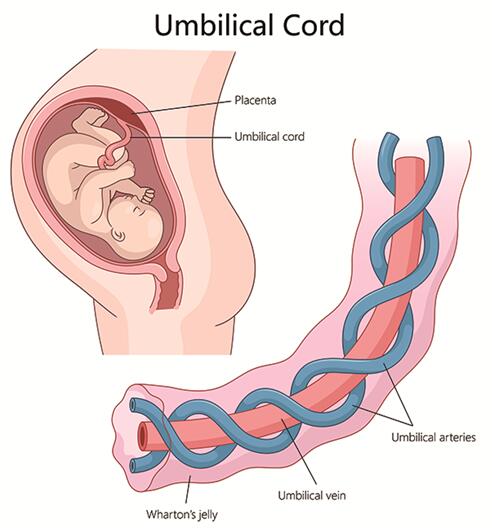
Umbilical Cord Cells

The umbilical cord is a unique perinatal tissue containing diverse vascular, stromal, hematopoietic, and progenitor cell populations. Because these cells are developmentally young, highly proliferative, and readily accessible, they have become indispensable tools for vascular biology, stem cell research, regenerative medicine, immunology, and cell therapy development.

Our umbilical cord cell portfolio includes endothelial cells, smooth muscle cells, Wharton's Jelly-derived cells, cord blood mononuclear cells, CD34+ and CD133+ progenitor cells, as well as specialized fluorescently labeled endothelial cell models. These products support a broad range of applications including angiogenesis studies, vascular disease modeling, immunotherapy research, stem cell biology, and advanced cell engineering programs.

Product List

Our Umbilical Cord Cell Portfolio Highlights

Comprehensive Perinatal Cell Resources

Our collection encompasses major vascular, stromal, and hematopoietic cell populations derived from umbilical cord and cord blood tissues.

  • Vascular Cell Models
    • Umbilical vein and artery endothelial cells
    • Umbilical artery and vein smooth muscle cells
    • Fluorescently labeled endothelial cell models
  • Cord Blood Cell Resources
    • Cord blood mononuclear cells
    • NK cells, monocytes, and neutrophils
    • Immune and hematopoietic cell populations
  • Progenitor & Stem Cell Populations
    • CD34+ progenitor cells
    • CD133+ stem/progenitor cells
    • Wharton's Jelly-derived umbilical cord cells

Applications Across Multiple Research Fields

These cell models support studies ranging from vascular development and regenerative medicine to immunotherapy and cell engineering.

  • Angiogenesis & Vascular Biology

    Investigate endothelial function, vascular remodeling, permeability, and blood vessel formation using primary umbilical vascular cells.

  • Stem Cell & Regenerative Medicine Research

    Explore progenitor cell biology, tissue regeneration, cell differentiation, and translational regenerative medicine applications.

  • Immunology & Cell Therapy Development

    Utilize cord blood-derived immune cells for immune profiling, cell therapy research, and immunomodulation studies.

  • Cell Engineering & Live Cell Imaging

    Leverage GFP-, RFP-, and biosensor-expressing endothelial cell models for mechanistic studies and advanced imaging applications.

4
Major Research
Cell Categories

100 %
Mycoplasma-Free
Tested

30 +
Specialized Cell
Models Available

Frequently
Asked
Questions

Find your question here or ask us

Ask Question

Why are HUVECs widely used in biomedical research?

Human Umbilical Vein Endothelial Cells (HUVECs) are one of the most extensively characterized endothelial models and are commonly used to study angiogenesis, vascular permeability, inflammation, endothelial signaling, and drug responses.

What advantages do cord blood-derived progenitor cells offer?

CD34+ and CD133+ cord blood cells possess strong proliferative potential and are frequently used in hematopoietic stem cell research, regenerative medicine, and cell therapy development.

What are Wharton's Jelly cells commonly used for?

Wharton's Jelly-derived cells are valuable for regenerative medicine studies, tissue engineering applications, extracellular vesicle research, and investigations of cell-mediated repair mechanisms.

Why are fluorescently labeled endothelial cells useful?

GFP-, RFP-, and biosensor-expressing endothelial cells enable real-time visualization of cell migration, angiogenesis, calcium signaling, intracellular trafficking, and other dynamic cellular processes.

Can cord blood immune cells support immunotherapy research?

Yes. Cord blood-derived NK cells, monocytes, and mononuclear cells are widely used for immune profiling, adoptive cell therapy development, cytokine studies, and immune engineering applications.

How can umbilical cord-derived cells be incorporated into advanced in vitro models?

Researchers frequently combine endothelial, smooth muscle, stromal, and progenitor cell populations to create vascularized tissue models, organ-on-chip systems, and multicellular microenvironment platforms.

Filters Clear all filters

Species

  • Bovine (22)
  • Cat (45)
  • Chicken (11)
  • Chinchilla (1)
  • Dog (118)
  • Fish (1)
  • Fruitfly (1)
  • Goat (46)
  • Guinea Pig (8)
  • Hamster (94)
  • Horse (1)
  • Human (800)
  • Minipig (2)
  • Monkey (129)
  • Mouse (875)
  • Pig (110)
  • Rabbit (249)
  • Rat (324)
  • Sheep (2)
  • Squirrel (1)
  • Turkey (1)

Source

  • Adipose (32)
  • Adrenal Gland (11)
  • Airway (8)
  • Anus (3)
  • Aorta (86)
  • Artery (180)
  • Bile Duct (9)
  • Bladder (49)
  • Blood (193)
  • Bone (13)
  • Bone Marrow (157)
  • Brain (163)
  • Breast (64)
  • Bronchus (43)
  • Cartilage (29)
  • Cervix (5)
  • Chorion (5)
  • Choroid (9)
  • Ciliary Body (1)
  • Colon (63)
  • Conjunctiva (9)
  • Cord Blood (24)
  • Cornea (27)
  • Dental Pulp (4)
  • Dermis (111)
  • Diaphragm (3)
  • Ear (12)
  • Embryo (24)
  • Endometrium (11)
  • Epidermis (26)
  • Epididymis (3)
  • Esophagus (35)
  • Eye (95)
  • Foreskin (2)
  • Gallbladder (4)
  • Gingiva (20)
  • Hair Follicle (15)
  • Heart (72)
  • Intestine (152)
  • Iris (1)
  • Kidney (151)
  • Lens (4)
  • Liver (117)
  • Lung (193)
  • Lymph Node (27)
  • Mesentery (18)
  • Nose (5)
  • Olfactory Bulb (1)
  • Oral Cavity (12)
  • Ovary (72)
  • Oviduct (7)
  • Pancreas (68)
  • Pancreatic Duct (3)
  • Pancreatic Islet (11)
  • Parathyroid Gland (4)
  • Penis (7)
  • Perineurium (1)
  • Periodontal Ligament (5)
  • Periodontium (25)
  • Peripheral Blood (153)
  • Peritoneal Cavity (14)
  • Placenta (29)
  • Prostate (62)
  • Pudenda (2)
  • Rectum (3)
  • Retina (38)
  • Salivary Gland (3)
  • Sclera (3)
  • Seminal Vesicle (1)
  • Skeletal Muscle (36)
  • Skin (155)
  • Small Intestine (56)
  • Spinal Cord (10)
  • Spleen (76)
  • Stomach (37)
  • Synovial Fluid (2)
  • Synovium (13)
  • Tendon (8)
  • Testis (15)
  • Thymus (51)
  • Thyroid (34)
  • Tongue (6)
  • Tonsil (3)
  • Tooth (4)
  • Trabecular Meshwork (3)
  • Trachea (46)
  • Umbilical Cord (29)
  • Ureter (10)
  • Urethra (3)
  • Uterus (61)
  • Vas Deferens (1)
  • Vein (104)

Cell Type

  • Adipocyte (4)
  • Astrocyte (34)
  • B Cell (30)
  • Basal Cell (3)
  • Basophil (1)
  • Beta Cell (3)
  • Cardiomyocyte (18)
  • CD133+ Cell (6)
  • CD34+ Cell (21)
  • Cholangiocyte (9)
  • Chondrocyte (19)
  • Dendritic Cell (15)
  • Endothelial Cell (688)
  • Endothelial Progenitor Cell (7)
  • Eosinophil (1)
  • Epithelial Cell (516)
  • Fibroblast (473)
  • Glial Cell (58)
  • Goblet Cell (1)
  • Granule Cell (2)
  • Granulocyte (12)
  • Granulosa Cell (1)
  • Hepatic Stellate Cell (9)
  • Hepatocyte (22)
  • Interstitial Cell (10)
  • Keratinocyte (24)
  • Keratocyte (3)
  • Kupffer Cell (8)
  • Leydig Cell (3)
  • Lymphocyte (84)
  • Macrophage (31)
  • Mast Cell (3)
  • Melanocyte (11)
  • Meningeal Cell (5)
  • Mesangial Cell (10)
  • Mesothelial Cell (5)
  • Microglia (7)
  • Microvascular Cell (308)
  • Monocyte (16)
  • Mononuclear Cell (110)
  • Myeloid Cell (2)
  • Myoblast (5)
  • Myofibroblast (3)
  • Myosatellite Cell (2)
  • Neuron (50)
  • Neutrophil (10)
  • NK Cell (11)
  • Oligodendrocyte (3)
  • Oligodendrocyte Progenitor Cell (4)
  • Osteoblast (8)
  • Osteoclast (2)
  • Osteocyte (3)
  • Pancreatic Stellate Cell (4)
  • Pericyte (20)
  • Podocyte (5)
  • Preadipocyte (21)
  • Progenitor Cell (15)
  • Red Blood Cell (12)
  • Retinal Ganglion Cell (3)
  • Satellite Cell (2)
  • Schwann Cell (4)
  • Sebocyte (1)
  • Sertoli Cell (5)
  • Skeletal Muscle Cell (11)
  • Smooth Muscle Cell (241)
  • Spermatogonium (3)
  • Stromal Cell (41)
  • Synoviocyte (11)
  • T Cell (39)
  • Tenocyte (8)
  • Trabecular Meshwork Cell (3)
  • Trophoblast (4)

Disease

  • Acute Lymphocytic Leukemia (ALL) (15)
  • Acute Myeloid Leukemia (AML) (13)
  • Amyotrophic Lateral Sclerosis (ALS) (4)
  • Aplastic Anemia (AA) (1)
  • Arteriovenous Malformation (AVM) (1)
  • Asthma (5)
  • Astrocytoma (2)
  • Autoimmune Hemolytic Anemia (AIHA) (1)
  • Autoimmune Lymphoproliferative Syndrome (ALPS) (1)
  • Breast Cancer (8)
  • Cancer (144)
  • Cervical Cancer (2)
  • Chronic Lymphocytic Leukemia (CLL) (19)
  • Chronic Myeloid Leukemia (CML) (14)
  • Chronic Obstructive Pulmonary Disease (COPD) (6)
  • Colon Cancer (9)
  • Crohn's Disease (3)
  • Cystic Fibrosis (CF) (7)
  • Diabetes (110)
  • Diabetes Type 1 (16)
  • Diabetes Type 2 (18)
  • Diffuse Large B-Cell Lymphoma (4)
  • Dilated Cardiomyopathy (DCM) (1)
  • Duchenne Muscular Dystrophy (DMD) (5)
  • Essential Thrombocythemia (ET) (1)
  • Glioblastoma (3)
  • Guillain-Barre Syndrome (GBS) (1)
  • Hypertension (27)
  • Idiopathic Thrombocytopenic Purpura (ITP) (1)
  • Inflammatory Bowel Disease (IBD) (5)
  • Iron-Deficiency Anemia (1)
  • Kidney Cancer (3)
  • Legg–Calvé–Perthes Disease (LCPD) (2)
  • Leukopenia (1)
  • Liver Cancer (3)
  • Lung Cancer (12)
  • Mantle Cell Lymphoma (MCL) (8)
  • Melanoma (2)
  • Mucopolysaccharidosis (2)
  • Multiple Myeloma (MM) (12)
  • Multiple Sclerosis (MS) (3)
  • Muscular Dystrophy (MD) (1)
  • Myelodysplastic Syndrome (MDS) (3)
  • Neurofibromatosis (NF) (3)
  • Non-Hodgkin Lymphoma (NHL) (10)
  • Normal (2466)
  • Osteoarthritis (OA) (5)
  • Ovarian Cancer (6)
  • Pancreatic Cancer (3)
  • Pancytopenia (1)
  • Parkinson's Disease (PD) (2)
  • Plasmacytoma (1)
  • Polycythemia (1)
  • Prostate Cancer (6)
  • Psoriasis (4)
  • Rheumatoid Arthritis (RA) (7)
  • Robertsonian Translocation (ROB) (1)
  • Sickle Cell Anemia (2)
  • Systemic Lupus Erythematosus (SLE) (4)
  • Thrombocytopenia (1)
  • Transverse Myelitis (TM) (1)
  • Ulcerative Colitis (UC) (2)
  • Waldenström Macroglobulinemia (WM) (2)

Description: Human umbilical cord veins are obtained from healthy donors. Each cord vein is individually ...

Cat#: CSC-C4521X INQUIRY

Description: Cord Blood CD56+ Natural Killer (NK) Cells are positively isolated from Mononuclear Cells using a ...

Cat#: CSC-C4523X INQUIRY

Description: Cord Blood CD14+ Monocytes are positively selected from mononuclear cells, using immunomagnetic ...

Cat#: CSC-C4535X INQUIRY

Description: Cord Blood-CD133+ Stem/Progenitor cells are positively isolated using a direct immunomagnetic CD133 ...

Cat#: CSC-C4536X INQUIRY

Description: Neutrophils are phagocytic granulocytes that spend most of their lives circulating in peripheral ...

Cat#: CSC-C4617J INQUIRY

Description: GFP Aequorin Expressing Human Umbilical Vein Endothelial Cells (GFP-AEQ-HUVECs) provided by ...

Cat#: CSC-C5422W INQUIRY

Description: GCaMP3 is a synthetic fusion of green fluorescent protein (GFP), calmodulin (CaM), and M13, a ...

Cat#: CSC-C5423W INQUIRY

Description: GCaMP6m is a synthetic fusion of green fluorescent protein (GFP), calmodulin (CaM), and M13, a ...

Cat#: CSC-C5424W INQUIRY

Description: VEGFR2 shRNA table Transfected GFP Human Umbilical Vein Endothelial Cells (VEGFR2-shRNA-GFP-HUVECs) ...

Cat#: CSC-C5425W INQUIRY

Description: Exosome-GFP Expressing Human Umbilical Vein Endothelial Cells (Exosome GFP-HUVECs) provided by ...

Cat#: CSC-C5426W INQUIRY

Description: Mitochondria GFP Tag Human Umbilical Vein Endothelial Cells (Mitochondria-GFP-HUVECs) provided by ...

Cat#: CSC-C5427W INQUIRY

Description: Plasma Membrane GFP Tag Human Umbilical Vein Endothelial Cells (Plasma-GFP-HUVECs) provided by ...

Cat#: CSC-C5428W INQUIRY

Description: RFP Expressing Human Umbilical Vein Endothelial Cells (RFP-HUVECs) provided by Creative Bioarray ...

Cat#: CSC-C5429W INQUIRY

Description: VE-CAD-GFP Expressing Human Umbilical Vein Endothelial Cells (VE-CAD-GFP HUVECs) provided by ...

Cat#: CSC-C5430W INQUIRY

Description: GFP Expressing Human Umbilical Artery Endothelial Cells (GFP-HUAECs) provided by Creative Bioarray ...

Cat#: CSC-C5462W INQUIRY

Description: RFP Expressing Human Umbilical Artery Endothelial Cells (RFP-HUAECs) provided by Creative Bioarray ...

Cat#: CSC-C5463W INQUIRY

Description: Human Cord Blood Mononuclear Cells are isolated from a healthy donor. The cells are isolated by ...

Cat#: CSC-C9407W INQUIRY

Description: The CD34+/CD38- immunophenotype defines a primitive subpopulation of progenitor cells. Human Cord ...

Cat#: CSC-C9408W INQUIRY

For research use only. Not for any other purpose.