
Human Exfoliated Deciduous Teeth Stem Cells (SHED)
Cat.No.: CSC-C10013
Species: Human
Source: Dental Pulp; Tooth
- Specification
- Scientific Data
- Q & A
- Customer Review
Never can cryopreserved cells be kept at -20 °C
Exosomes Derived from Dental Pulp Stem Cells Show Different Angiogenic and Osteogenic Properties in Relation to the Age of the Donor
Background
This study investigates whether donor age affects the regenerative properties of exosomes from dental pulp stem cells. Exosomes were isolated from young donors (stem cells from human exfoliated deciduous teeth) and old donors (dental pulp stem cells from permanent teeth), characterized, and applied to bone marrow mesenchymal stem cells in vitro. Young-donor exosomes contained higher levels of osteogenesis- and angiogenesis-related miRNAs and enhanced MSC proliferation, angiogenic factor secretion (VEGF, HGF), and osteogenic gene expression. The findings support cell-free exosome therapy for craniofacial bone regeneration, with young dental pulp sources showing superior bioactivity.
Key Findings
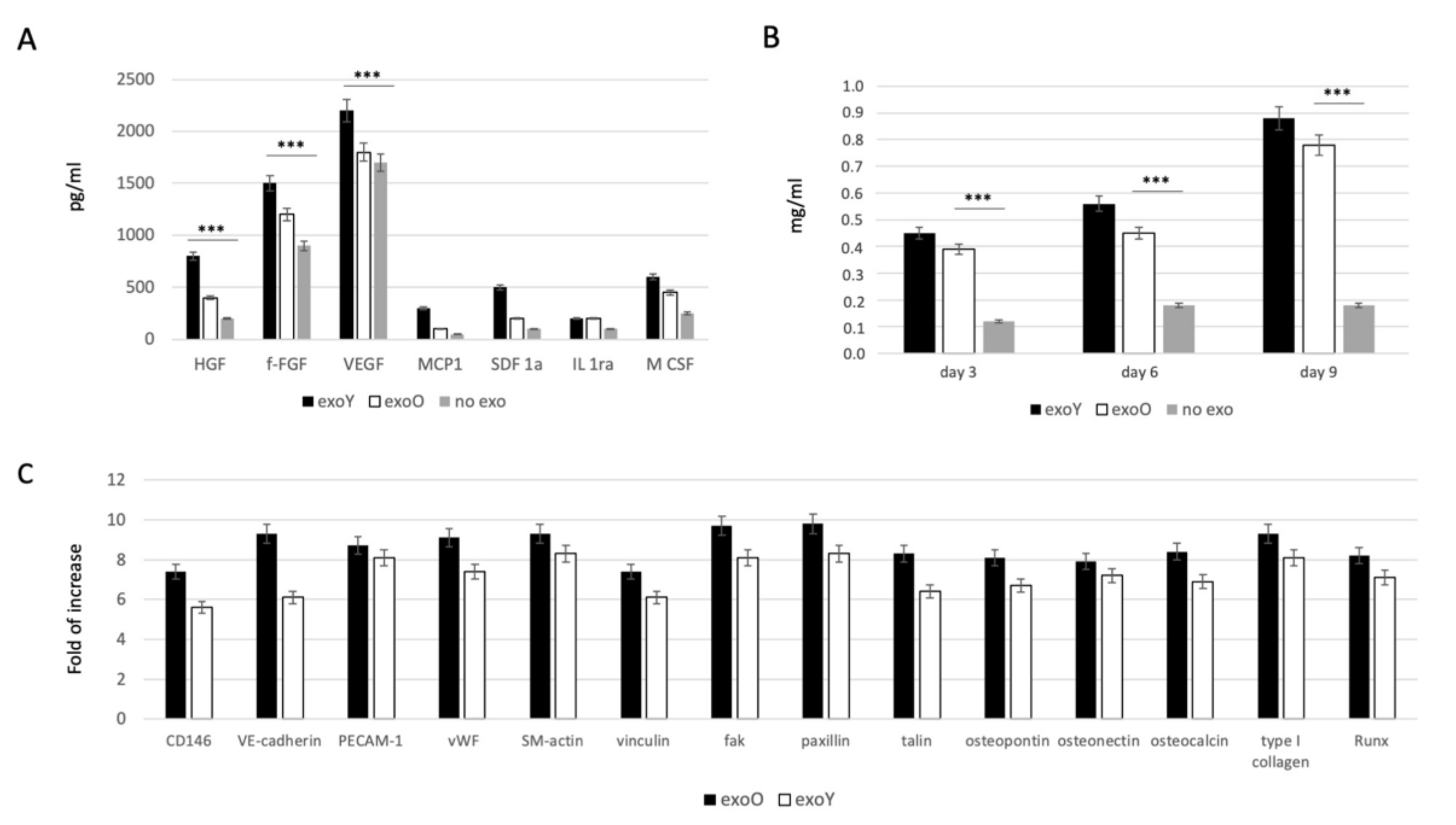
Exosomes from young and old dental pulp donors showed similar size (80–160 nm) and exosome markers CD63, CD81 and CD9. However, exosomes from young donors (exoY) carried higher levels of osteogenesis- and angiogenesis-related miRNAs. When applied to bone marrow MSCs, exoY significantly enhanced proliferation compared with old-donor exosomes at 3, 7 and 10 days. Both exosome types increased paracrine factor secretion, but exoY induced higher VEGF and HGF production, indicating stronger pro-angiogenic activity. ALP activity increased after exosome treatment, with no clear age-related difference. qPCR showed that exoY treatment more strongly promoted osteogenic gene expression. Overall, young dental pulp stem cell-derived exosomes exhibit superior proliferative and pro-angiogenic potential, supporting their use in cell-free bone regeneration strategies.
Contribution
Creative Bioarray provided human exfoliated deciduous teeth stem cells (SHEDs) used as the young donor cell source. These cells enabled isolation of young-donor exosomes and comparison with old-donor dental pulp stem cell exosomes, supporting the study's age-related angiogenic and osteogenic findings.
Ask a Question
Write your own review
Description: Human Fungiform Taste Cells are isolated form normal human oral. T25 flasks is required for cell adhension to the culture vessels. Grow cells in ECM-coated culture vessels with 5% CO2. Each vial ...
Description: Human oral fibroblasts from Creative Bioarray are isolated from human healthy oral tissue. Human oral fibroblasts are cryopreserved at passage one and delivered frozen. Each vial contains 5x10^5 ...
Description: Human oral epithelial cells from Creative Bioarray are isolated from the oral cavity epithelial tissue. Each vial contains at least 1x10^6 cells per ml and is delivered frozen.
Description: Human Oral Keratinocytes (HOK) from Creative Bioarray are isolated from human oral mucosa. HOK are cryopreserved on passage one culture and delivered frozen. Each vial contains >5 x 10^5 cells in 1 ...
Description: Human Gingival Fibroblasts (HGF) from Creative Bioarray are isolated from human gingiva. HGnF are cryopreserved at passage one and delivered frozen. Each vial contains >5 x 10^5 cells in 1 ml volume. ...

Description: Stem Cells From Human Exfoliated Deciduous Teeth (SHED ) are considered to be the most 'immature' of the Dental Stem Cells and show the highest proliferative capacity when grown in culture. Similar ...