
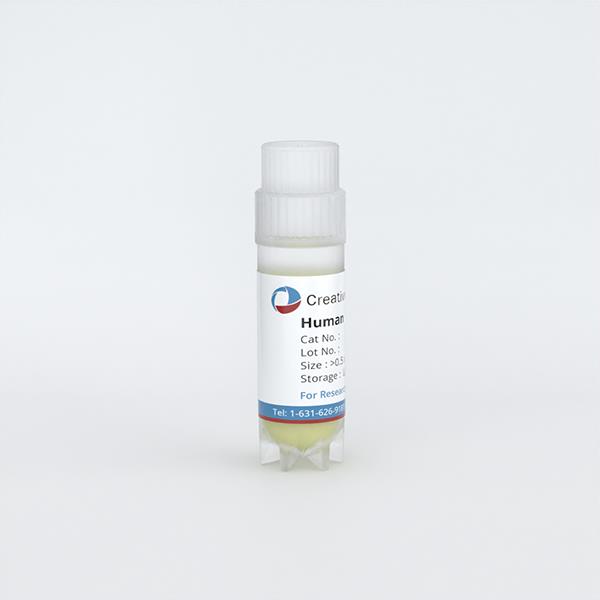
Human Glomerular Mesangial Cells
Cat.No.: CSC-C4380X
Species: Human
Source: Kidney
Cell Type: Mesangial Cell
- Specification
- Background
- Scientific Data
- Q & A
- Customer Review
These cells were originated using Complete Serum-Free Medium Kit With SuperFuel™, are available at <12 Cumulative Population Doublings (CPD) in vitro [Passage 3] and were cryopreserved in aliquots of ~1.5 X 10^6 cells. This vial will initiate a Passage 4 cell culture in a 75cm2 flask.
Human Glomerular Mesangial Cells (HGMCs) are perivascular cells that have been isolated from the mesangial compartment of the human renal glomerulus. The mesangium offers structural, mechanical, and immunoregulatory support to the glomerular filtration unit. In vitro these cells demonstrate both stellate and spindle-like morphology together with prominent actin stress fibers and strong proliferative abilities. Biologically, they are the main effector cells involved in the synthesis and remodeling of the ECM as they secrete ECM proteins like collagen IV, laminin, fibronectin and various ECM-degrading enzymes which control the composition of the mesangial matrix. Their contractile activity also directly influences glomerular capillary resistance and is involved in the regulation of the GFR. HGMCs are highly responsive to inflammatory cytokines, immune complexes, angiotensin II and TGF-β and respond with a pronounced proliferative and matrix-accumulating activity and cytokine secretion, features that are pathognomonic for glomerular inflammatory and fibrotic diseases.
Due to their implication in such renal diseases as IgA nephropathy, diabetic nephropathy, lupus nephritis and glomerulosclerosis, HGMCs are an essential tool for studying renal inflammation, fibrosis and immune-mediated injury in health and disease and are widely used in drug discovery, nephrotoxicity assessment, molecular signaling studies as well as in the development of next generation in vitro kidney models such as glomerular-on-chip systems and multicellular co-cultures with podocytes and endothelial cells.
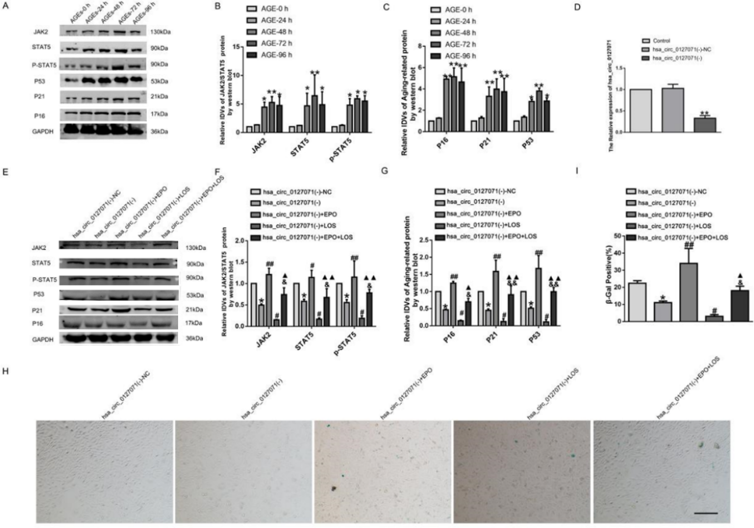
Knockdown of Has_Circ_0127071 Regulated HGMCs Aging by Regulating the JAK2/STAT5 Signaling Pathway
circRNAs play roles in cellular aging. Here, Chen's team used high-throughput sequencing to compare circRNA expression in young and old kidney tissues, finding higher hsa_circ_0127071 levels in the old group. Then, to study hsa_circ_0127071's role in renal aging, they silenced it in HGMCs and confirmed by qPCR (Fig. 1D). EPO activates the JAK2/STAT5 pathway. They used EPO and LOS to study hsa_circ_0127071's effects on HGMC aging via this pathway (Fig. 1E-G). Knockdown of hsa_circ_0127071 decreased JAK2/STAT5 and aging-related proteins, delaying aging. EPO increased these proteins even with hsa_circ_0127071 silenced, promoting aging. LOS decreased them, slowing aging even with hsa_circ_0127071 silenced and EPO present.
Ask a Question
Write your own review
Description: Renal glomerular endothelial cells (GEC) are a specialized microvascular cell type involved in the regulation of glomerular ultrafiltration. They form the inner part of the filtration barrier and are ...
Description: Human Kidney Endothelial Cells from Creative Bioarray are isolated from human kidney tissue. Human Kidney Endothelial Cells are grown in T25 tissue culture flasks pre-coated with gelatin-based ...
Description: Human Proximal Tubular Epithelial Cells from Creative Bioarray are isolated from normal human proximal tubular tissue. Human Proximal Tubular Epithelial Cells are grown in T25 tissue culture flasks ...
Description: Primary Human Glomerular Microvascular Endothelial Cells were initiated by decapsulated glomeruli isolated from normal human kidney cortical tissue.These cells were originated using Complete ...
Description: Human Kidney Carcinoma Epithelial Cells from Creative Bioarray are isolated from human kidney tumor tissue. Human Kidney Carcinoma Epithelial Cells are grown in T25 tissue culture flasks pre-coated ...
Description: VE-Cad-GFP Expressing Human Glomerular Microvascular Endothelial Cells (VE-Cad-GFP HGMvECs) provided by Creative Bioarray are puromycin-selected from Human Glomerular Microvascular Endothelial Cells ...