
SuperCult® Smooth Muscle Cell Medium
- Specification
- Scientific Data
- Q & A
- Customer Review
RNF34 ablation promotes cerebrovascular remodeling and hypertension by increasing NADPH-derived ROS generation
Background
Cerebrovascular remodeling is a major cause of hypertension and stroke. This study investigated the ubiquitin E3 ligase RNF34 in angiotensin II-induced cerebrovascular injury. Using global and cell-specific knockout mice, the authors show that smooth muscle cell RNF34 deficiency exacerbates middle cerebral artery remodeling, hypertension, and memory deficits. RNF34 loss increases NADPH oxidase-derived reactive oxygen species by stabilizing p22phox, while mitochondrial ROS are unaffected. NADPH oxidase inhibition or p22phox knockdown reverses these effects, identifying RNF34 as a potential therapeutic target.
Key Findings
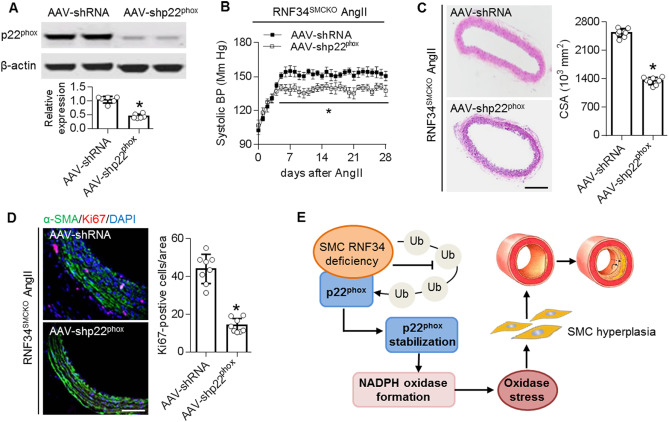
Global RNF34 knockout worsened angiotensin II-induced hypertension, middle cerebral artery remodeling, and memory impairment. Endothelial RNF34 deletion had no effect, whereas smooth muscle cell-specific RNF34 knockout reproduced hypertension and remodeling, with increased vascular smooth muscle cell proliferation, migration, invasion, and inflammatory cytokines. SMC RNF34 deficiency increased superoxide and total ROS and NADPH oxidase activity, without affecting mitochondrial ROS. Mechanistically, RNF34 interacts with p22phox and acts as an E3 ubiquitin ligase, promoting p22phox ubiquitination and degradation. RNF34 loss stabilized p22phox, enhancing p22phox/p47phox and p22phox/NOX2 binding and NADPH oxidase complex formation. Apocynin or p22phox knockdown reversed RNF34-deficiency-potentiated middle cerebral artery remodeling, smooth muscle cell proliferation, and hypertension. Thus, smooth muscle cell RNF34 suppresses cerebrovascular remodeling by limiting p22phox-dependent NADPH oxidase-derived ROS.
Contribution
Creative Bioarray provided SuperCult® Smooth Muscle Cell Medium used to isolate and culture mouse brain vascular smooth muscle cells (MBVSMCs). This specialized medium supported critical in vitro assays of proliferation, migration, invasion, oxidative stress, and RNF34/p22phox signaling, enabling mechanistic studies linking RNF34 deficiency to NADPH oxidase-driven cerebrovascular remodeling.
Ask a Question
Write your own review