
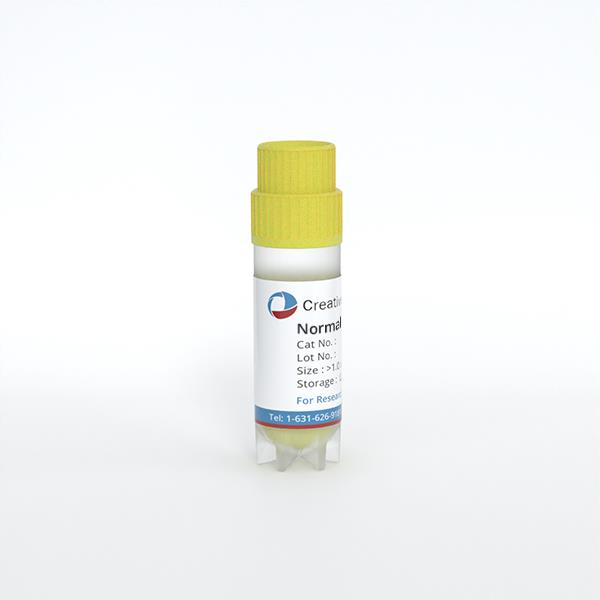
Normal Human Peripheral Blood Natural Killer Cells(CD56+)
Cat.No.: CSC-7642W
Species: Human
Source: Peripheral Blood; Blood
Cell Type: NK Cell; Lymphocyte
- Specification
- Background
- Scientific Data
- Q & A
- Customer Review
Samples from each donor are tested via PCR to confirm non-reactivity.
Normal Human Peripheral Blood Natural Killer Cells (CD56+) are primary innate lymphocytes obtained from the peripheral blood of healthy donors. They participate in immune surveillance by recognizing and eliminating susceptible tumor cells and virus-infected cells without prior antigen-specific sensitization. NK-cell activity reflects the integration of activating and inhibitory receptor signals, enabling investigation of how immune recognition translates into target-cell killing.
CD56+ peripheral blood NK populations comprise functionally diverse subsets. CD56dim cells predominate and commonly express CD16, whereas CD56bright cells generally express lower or undetectable CD16. Both subsets can produce interferon-γ following appropriate stimulation, and their responses depend on the activating signals received. This diversity supports complementary studies of cytotoxicity, cytokine production, receptor signaling, and cellular activation rather than a single effector endpoint.
A principal advantage is their combination of direct cytotoxicity and antibody-dependent effector function. CD16-expressing NK cells can recognize the Fc region of target-bound IgG and mediate antibody-dependent cellular cytotoxicity (ADCC). This makes peripheral blood NK cells particularly valuable for evaluating therapeutic antibodies, Fc-dependent mechanisms, and strategies that enhance antitumor responses.
These cells offer versatile readouts, including target-cell killing, CD107a degranulation, cytokine secretion, and immunophenotypic changes. Healthy-donor preparations provide a reference for comparisons with disease-associated NK-cell populations and for assessing candidate immunomodulators.
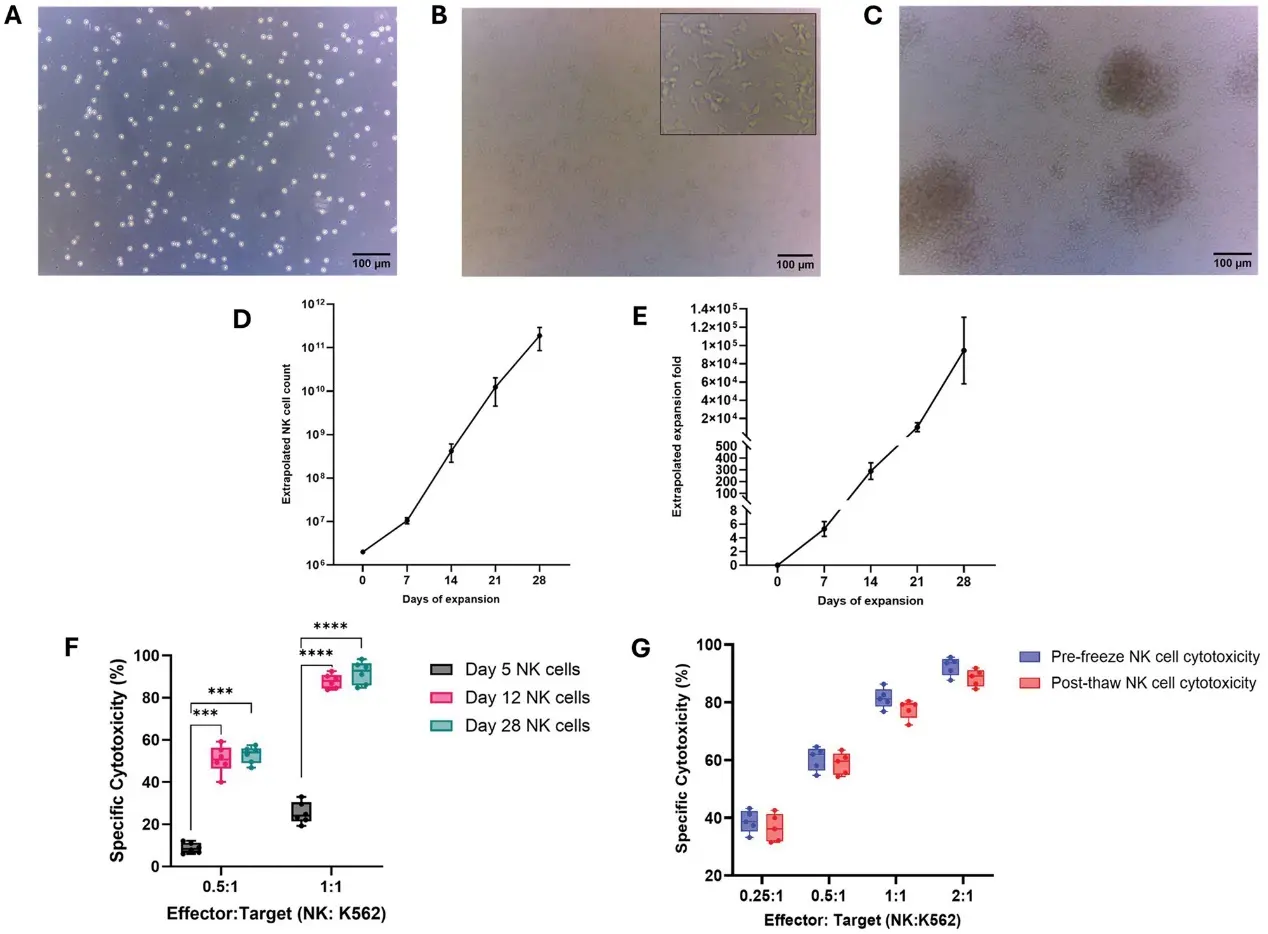
Protocol for Isolation and Expansion of Natural Killer Cells from Human Peripheral Blood
This study presents an optimized, thoroughly tested and reproducible protocol that can be used to isolate and expand NK cells from peripheral blood to achieve pure, viable, and highly functional NK cells. This method provides an ideal foundation for producing NK cells for a broad range of research applications.
Ask a Question
Write your own review
Description: NPB CD4+ Helper T cells are negatively isolated from mononuclear cells using an indirect immunomagnetic CD4+ T cell labeling system.
Description: Cord Blood-Pan T cells are negatively isolated from mononuclear cells, using an indirect immunomagnetic Pan T labeling system.
Description: First, NPB-CD4+ T Cells are negatively isolated using immunomagnetic CD4+ isolation kit from mononuclear cells. Next, CD45RO MicroBeads are used to deplete the CD45RO+ cell population, leaving an ...
Description: Chronic Lymphoid Leukemia-PB-CD19+/CD5+ B cells are isolated from Chronic Lymphoid Leukemia bone marrow mononuclear cells using a direct immunomagnetic CD19+ Micro- Bead labeling system. Available in ...

Description: Untouched NPB-CD56+ Natural Killer (NK) cells are negatively isolated from mononuclear cells using an indirect immunomagnetic NK cell labeling system to deplete the non-CD56+ NK cells.
Description: Untouched NPB-CD19+ B Cells are negatively isolated from mononuclear cells using an indirect immunomagnetic labeling system.