
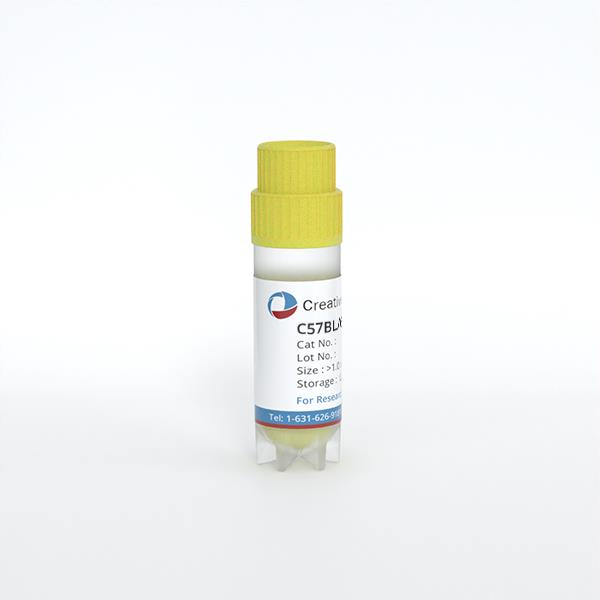
C57BL/6 Mouse Pulmonary Artery Endothelial Cells
Cat.No.: CSC-C4244X
Species: Mouse
Source: Lung; Artery
Cell Type: Endothelial Cell
- Specification
- Background
- Scientific Data
- Q & A
- Customer Review
C57BL/6 Mouse Pulmonary Artery Endothelial Cells (MPAEC) are primary endothelial cells harvested from the pulmonary arteries of C57BL/6 mice. They provide an excellent in vitro model system for studying pulmonary vascular biology. Pulmonary artery endothelial cells line the interior surface of pulmonary arteries. They help regulate vascular tone, permeability, inflammation and hemodynamic responses in the pulmonary circulation.
Characteristically, MPAEC in culture demonstrate classic endothelial cobblestone morphology and growth as contact inhibited monolayers. They express classic endothelial markers including CD31 (PECAM-1), VE-cadherin, von Willebrand factor (vWF) and endothelial nitric oxide synthase (eNOS). They are sensitive to physiological and pathophysiological cues such as shear stress, hypoxia, cytokines and oxidative stress, making them ideal cells for studying pulmonary vascular remodeling.
Because they are derived from the common inbred mouse strain C57BL/6, these primary cells also have excellent genetic uniformity and can be paired with almost any mouse disease model. C57BL/6 MPAEC are commonly used to study pulmonary hypertension, acute lung injury, vascular inflammation and vascular toxicity in response to drugs. Overall, C57BL/6 MPAEC are a versatile and physiologically relevant tool for pulmonary and cardiovascular research and drug development.
Hypoxia Induces Dysfunction and Promotes the Expression of lncRNA H19 and Angiogenesis-Related Genes in MPAECs
Persistent pulmonary hypertension of the newborn (PPHN) presents high pulmonary artery pressure and pulmonary vascular remodeling. Endothelial dysfunction has been associated with the expression of Long non-coding RNA H19, however its involvement in PPHN is still unknown. Dou et al. sought to determine the mechanisms by which H19 modulates hypoxia-induced changes in mouse pulmonary artery endothelial cells (MPAECs).
Endothelial cell migration is fundamental to angiogenesis. To investigate this, MPAECs were cultured under hypoxic (3% O₂) or normoxic (21% O₂) conditions for 48 h. Hypoxia significantly promoted MPAEC migration (Fig. 1A), inhibited apoptosis (Fig. 1B, C), and enhanced proliferation (Fig. 1D), successfully establishing a hypoxia-induced dysfunction model mimicking pulmonary hypertension. Hypoxia-inducible factor-1α (HIF-1α) and Vascular endothelial growth factor (VEGF) are two important factors in angiogenesis, thus we sought to determine how lncRNA H19 may regulate these molecules. Quantitative PCR (qPCR) analyses demonstrated that hypoxic induction significantly increased expression of H19 (Fig. 1E) as well as HIF-1α mRNA levels (Fig. 1F). As expected, protein expression of HIF-1α and VEGF were increased as well.

Ask a Question
Write your own review
Description: C57BL/6-GFP Mouse Skeletal Muscle Microvascular Endothelial Cells from Creative Bioarray are isolated from C57BL/6-Tg (CAG-EGFP) 1Osb/J mouse skeletal muscle tissue of pathogen-free laboratory mice. ...
Description: eNOS KO Mouse Stomach Epithelial Cells from Creative Bioarray are isolated from stomach tissue of pathogen-free laboratory mice. eNOS KO Mouse Stomach Epithelial Cells are grown in a T25 tissue ...
Description: eNOS KO Mouse Liver Fibroblasts from Creative Bioarray are isolated from liver tissue of pathogen-free laboratory mice. eNOS KO Mouse Liver Fibroblasts are grown in T75 tissue culture flasks ...
Description: C57BL/6-GFP Mouse Corneal Epithelial Cells from Creative Bioarray are isolated from C57BL/6-GFP-Tg(CAG-EGFP)1Osb/J mouse corneal tissue of pathogen-free laboratory mice. C57BL/6-GFP Mouse Corneal ...
Description: BALB/c Mouse Retinal Microvascular Endothelial Cells from Creative Bioarray are isolated from retinal tissue of pathogen-free laboratory mice. BALB/c Mouse Retinal Microvascular Endothelial Cells are ...