
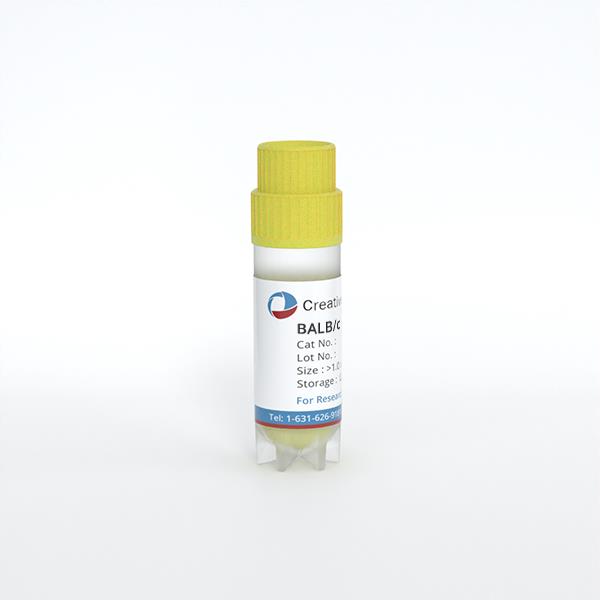
BALB/c Mouse Colonic Epithelial Cells
Cat.No.: CSC-C9066J
Species: Mouse
Source: Colon; Intestine
Cell Type: Epithelial Cell
- Specification
- Background
- Scientific Data
- Q & A
- Customer Review
BALB/c Mouse Colonic Epithelial Cells are primary cells obtained from the colonic mucosa of BALB/c mice, a widely used inbred strain for immunology and gastrointestinal research. These cells compose the colon's epithelial lining and play important roles in barrier function, nutrition transport, and interactions with the gut microbiota. In culture, they usually have epithelial shape and exhibit markers associated with cell-cell junctions, including as E-cadherin and tight junction proteins, which are necessary for epithelial integrity.
Colonic epithelial cells are also involved in mucosal immune responses. They can respond to microbial components or inflammatory stimuli by releasing cytokines, chemokines, and antimicrobial proteins. Because BALB/c mice are frequently employed in models of intestinal inflammation and infection, epithelial cells generated from this strain are valuable for investigating systems including barrier control, immunological signaling, and host-pathogen interactions.
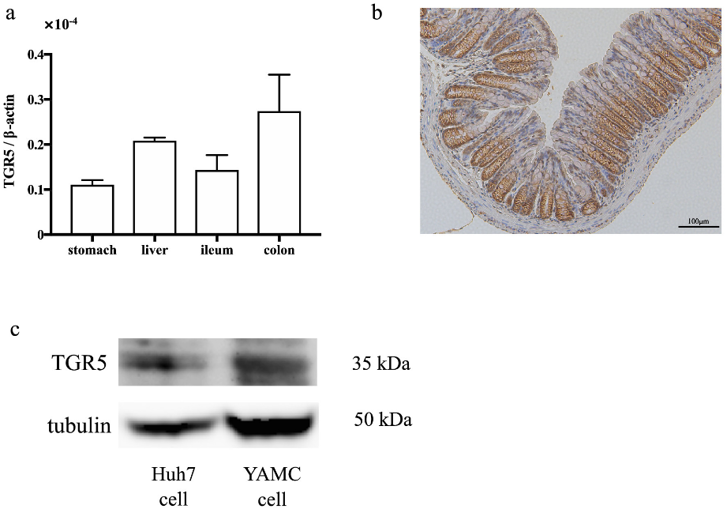
TGR5 is Expressed in the Colonic Mucosa of Mice and in Mouse Colonic Epithelial Cells
The prognosis of ulcerative colitis (UC) depends on the efficiency of the repair process in the intestines. The exact processes by which bile acids and TGR5 influence wound healing in intestinal epithelial cells are not known. The function of TGR5 in the repair of wounds in colonic epithelial cells was studied by Azuma et al.
The levels of TGR5 mRNA in the colonic mucosa of mice were similar to those in the liver, which served as a positive control (Fig. 1a). Figure 1b shows that immunohistochemistry verified the presence of TGR5 protein in the colonic epithelium, namely in the lower crypt areas. The levels of TGR5 protein in YAMC, or young adult mouse colonic epithelial cells, were comparable to those in Huh7 cells, a strain of hepatocellular carcinoma cells that express TGR5 (Fig. 1c). Thus, YAMC cells and colonic mucosa both express TGR5.
Ask a Question
Write your own review
Description: C57BL/6-GFP Mouse Skeletal Muscle Microvascular Endothelial Cells from Creative Bioarray are isolated from C57BL/6-Tg (CAG-EGFP) 1Osb/J mouse skeletal muscle tissue of pathogen-free laboratory mice. ...
Description: eNOS KO Mouse Stomach Epithelial Cells from Creative Bioarray are isolated from stomach tissue of pathogen-free laboratory mice. eNOS KO Mouse Stomach Epithelial Cells are grown in a T25 tissue ...

Description: eNOS KO Mouse Liver Fibroblasts from Creative Bioarray are isolated from liver tissue of pathogen-free laboratory mice. eNOS KO Mouse Liver Fibroblasts are grown in T75 tissue culture flasks ...
Description: C57BL/6-GFP Mouse Corneal Epithelial Cells from Creative Bioarray are isolated from C57BL/6-GFP-Tg(CAG-EGFP)1Osb/J mouse corneal tissue of pathogen-free laboratory mice. C57BL/6-GFP Mouse Corneal ...
Description: BALB/c Mouse Retinal Microvascular Endothelial Cells from Creative Bioarray are isolated from retinal tissue of pathogen-free laboratory mice. BALB/c Mouse Retinal Microvascular Endothelial Cells are ...