

Immortalized Human Hair Follicle Dermal Papilla Cells-hTERT
Cat.No.: CSC-I9091L
Species: Homo sapiens
Source: Hair Follicle
Morphology: Multipolar
Culture Properties: Adherent
- Specification
- Background
- Scientific Data
- Q & A
- Customer Review
Note: Never can cells be kept at -20 °C.
CIK-HT013 HT® Lenti-hTERT Immortalization Kit
Immortalized Human Hair Follicle Dermal Papilla Cells (HFDPCs), established via the stable overexpression of Human Telomerase Reverse Transcriptase (hTERT), represent a premier in vitro model for trichology and regenerative medicine. Dermal papilla (DP) cells are the signaling center of the hair follicle, orchestrating hair growth, cycling, and regeneration. However, primary DP cells notoriously lose their inductive potential and enter senescence within a few passages. Our hTERT-immortalized line effectively solves this "phenotypic drift", providing a stable, long-term solution for hair-related research.
- Preserved Inductive Signaling: Unlike SV40T-mediated immortalization, which can significantly alter cell cycle checkpoints, hTERT immortalization maintains the cells in a more physiologically "youthful" state. These cells retain critical signaling signatures, including the Wnt/β-catenin pathway and the expression of specialized markers like Versican and Alkaline Phosphatase (ALP).
- Indefinite Expansion with Genetic Stability: By maintaining telomere length, the hTERT-HFDPCs offer an inexhaustible cell supply. This ensures high-level genetic stability and experimental reproducibility across extended passages, which is unattainable with primary cultures.
- High-Fidelity Screening Platform: The line is optimized for high-throughput screening (HTS) of hair growth promoters, anti-alopecia compounds, and cosmetic ingredients. Its consistent growth kinetics and standardized response make it a superior tool for evaluating androgenetic alopecia (AGA) mechanisms and TGF-β mediated inhibitory signaling.
- Versatility in Co-culture & Organoids: These cells are ideal for 3D "hair-on-a-chip" models or co-culture with follicular keratinocytes, allowing for the accurate reconstruction of the hair follicle's mesenchymal-epithelial interactions.
Designed to bridge the gap between unstable primary DP cells and in vivo clinical outcomes, the Immortalized Human HFDPC-hTERT line is a high-performance asset for pharmaceutical and cosmeceutical R&D. By providing a reliable, standardized human cell system, this product significantly accelerates the validation of novel hair regrowth therapeutics and diagnostic tools.
The Role of SFRP1 in Human Dermal Papilla Cell Growth
Secreted frizzled-related protein 1 (SFRP1) inhibits Wnt signaling and is differentially expressed in human hair dermal papilla cells (DPCs). However, the specific effect of SFRP1 on cell function remains unclear.
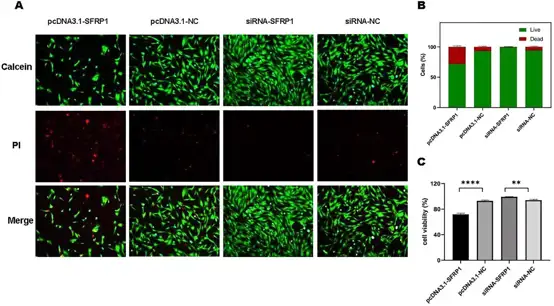
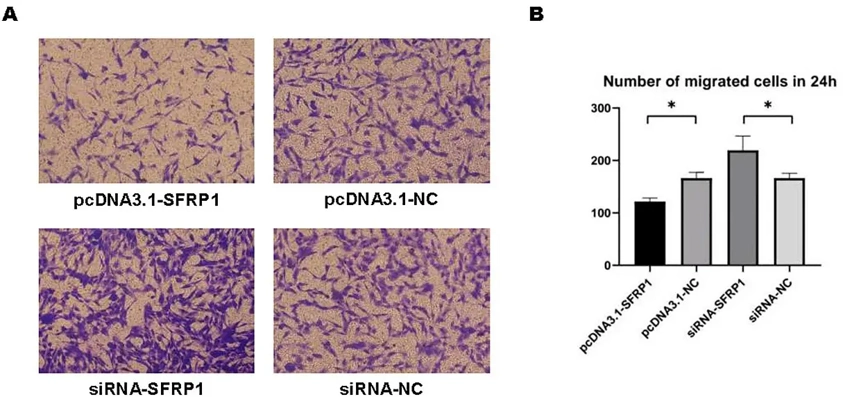
In this study, DNA plasmids and siRNAs were constructed against the SFRP1 gene and transfected into immortalized DPCs (IDPCs) cultured in vitro. We detected the viability, proliferation, and migration of IDPCs by Calcein/PI fluorescence, CCK-8, trans-well, or cell scratch experiments, and the expression of potential target genes was also determined through quantitative detection of RNA and protein.
The results demonstrate that SFRP1 regulates the cell proliferation capacity of IDPCs and reduces their migration functions. The IDPCs' living activity, proliferation, and migration function exhibited a negative correlation with the level of SFRP1. SFPR1 also inhibits the protein or RNA expression of β-catenin in IDPCs.
Ask a Question
Write your own review

Description: Nasal epithelial cells form the outermost protective layer against environmental factors. They clean, humidify, and warm inhaled air. They produces mucus, which binds particles that are subsequently ...
Description: Immortalized Human Corneal Epithelial Cells-SV40 have been obtained immortalizing Human Corneal Epithelial Cells with Lenti-SV40 Lentivirus. Immortalized cells were controlled passaging side by side ...
Description: Immortalized Human Lymphatic Endothelial Cells-SV40 were developed from human tissues transduced with a lentiviral expression vector containing the SV40T gene. The cell line was continuously cultured ...
Description: Immortalized Human Retinal Pigment Epithelial Cells were isolated from neonatal human globes and spontaneously immortalized in culture bypassing crisis. They retained typical morphology of the ...
- Adipose Tissue-Derived Stem Cells
- Human Neurons
- Mouse Probe
- Whole Chromosome Painting Probes
- Hepatic Cells
- Renal Cells
- In Vitro ADME Kits
- Tissue Microarray
- Tissue Blocks
- Tissue Sections
- FFPE Cell Pellet
- Probe
- Centromere Probes
- Telomere Probes
- Satellite Enumeration Probes
- Subtelomere Specific Probes
- Bacterial Probes
- ISH/FISH Probes
- Exosome Isolation Kit
- Human Adult Stem Cells
- Mouse Stem Cells
- iPSCs
- Mouse Embryonic Stem Cells
- iPSC Differentiation Kits
- Mesenchymal Stem Cells
- Immortalized Human Cells
- Immortalized Murine Cells
- Cell Immortalization Kit
- Adipose Cells
- Cardiac Cells
- Dermal Cells
- Epidermal Cells
- Peripheral Blood Mononuclear Cells
- Umbilical Cord Cells
- Monkey Primary Cells
- Mouse Primary Cells
- Breast Tumor Cells
- Colorectal Tumor Cells
- Esophageal Tumor Cells
- Lung Tumor Cells
- Leukemia/Lymphoma/Myeloma Cells
- Ovarian Tumor Cells
- Pancreatic Tumor Cells
- Mouse Tumor Cells