
IST-MES1
Cat.No.: CSC-6273W
Species: Homo sapiens (Human)
Source: Pleural Effusion
Morphology: grown as monolayer, epithelial-like
Culture Properties: Adherent
- Specification
- Scientific Data
- Q & A
- Customer Review
Viruses: PCR: HBV -, HCV -, HHV-8 -, HIV-1 -, HIV-2 -, HTLV-I/II -, MLV -, SMRV -
Identification of non-covalent inhibitors for the atypical peroxiredoxin PRDX5 as a therapeutic strategy in malignant pleural mesothelioma
Background
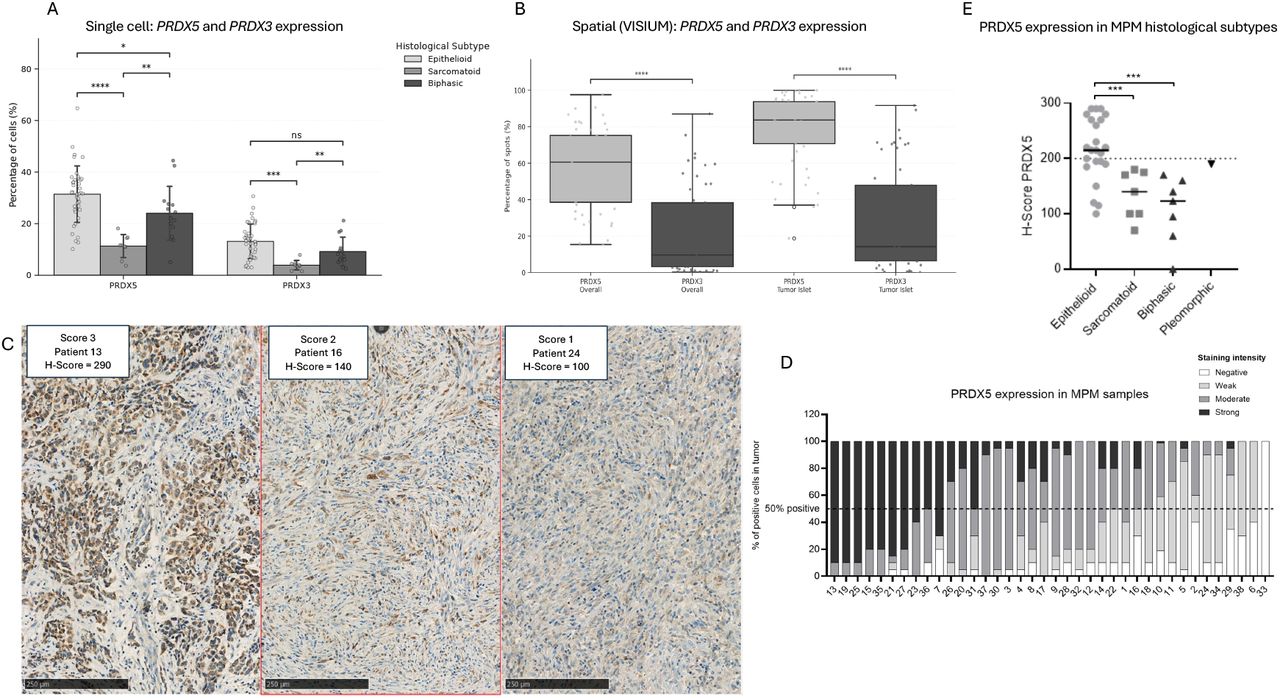
This bioRxiv preprint identifies peroxiredoxin 5 (PRDX5) as a subtype-specific vulnerability in malignant pleural mesothelioma (MPM). Using MOSAIC single-cell and spatial transcriptomics, PRDX5 is upregulated in epithelioid MPM and correlates with resistance to oxidative/nitrosative stress. Machine-learning-guided pocket detection and virtual screening of 3.6 million compounds followed by biochemical validation yielded 36 non-covalent PRDX5 inhibitors, including sub-micromolar hits. The study nominates PRDX5 as a therapeutic target and provides chemical starting points for redox-modulating precision oncology in MPM.
Key Findings
PRDX5 is significantly upregulated in epithelioid malignant pleural mesothelioma (MPM) compared with sarcomatoid and biphasic subtypes, validated in an independent cohort where 97% of tumors expressed PRDX5 in >50% of cells and 73% showed moderate-to-strong staining. MPM cell lines resist peroxynitrite and H2O2 more than healthy mesothelial cells, correlating with basal PRDX5 expression. PRDX5-positive malignant cells are enriched for hypoxia, ROS detoxification, and RNS metabolism signatures, particularly in tumor cores. Using AlloDeep/AlloTango, the authors identified three putative allosteric pockets (G85, alpha3, alpha5) and virtually screened 3.6 million compounds. Biochemical testing of 452 candidates yielded 36 non-covalent inhibitors (8% hit rate), including 13 potent and 23 weakly active hits. G85 and alpha3 leads showed IC50 values of 4.46 µM and 9.81 µM, respectively, with an azetidine-containing scaffold. This establishes PRDX5 as a subtype-specific MPM target and provides new chemical tools for redox-modulating cancer therapy.
Contribution
Creative Bioarray provided the human malignant pleural mesothelioma cell lines IST-MES-1 and IST-MES-2, which were used for PRDX5 target validation, oxidative/nitrosative stress sensitivity assays, and protein expression analysis. These cell models were essential for confirming PRDX5-mediated stress resistance and supporting the therapeutic rationale.
Ask a Question
Write your own review
Description: Species: human male 67 years old; Tissue: pleural effusion; Tumor: mesothelioma
Description: Established from a pleural biopsy of a 62-year-old man with malignant mesothelioma
Description: Human malignant mesothelioma. CA19-9, CA125, and hyaluronic acid producing. Cell growth is slow.
Description: Established in 2003 from the untreated malignant mesothelioma of the pleura of a 78-year-old man with asbestos cancer
Description: established from the pleural effusion of a 71- year- old Caucasian man with pleural epithelioid mesothelioma
Description: Established from the untreated malignant epithelioid mesothelioma of the pleura of a 54-year-old man with asbestos cancer in 2003
- Adipose Tissue-Derived Stem Cells
- Human Neurons
- Mouse Probe
- Whole Chromosome Painting Probes
- Hepatic Cells
- Renal Cells
- In Vitro ADME Kits
- Tissue Microarray
- Tissue Blocks
- Tissue Sections
- FFPE Cell Pellet
- Probe
- Centromere Probes
- Telomere Probes
- Satellite Enumeration Probes
- Subtelomere Specific Probes
- Bacterial Probes
- ISH/FISH Probes
- Exosome Isolation Kit
- Human Adult Stem Cells
- Mouse Stem Cells
- iPSCs
- Mouse Embryonic Stem Cells
- iPSC Differentiation Kits
- Mesenchymal Stem Cells
- Immortalized Human Cells
- Immortalized Murine Cells
- Cell Immortalization Kit
- Adipose Cells
- Cardiac Cells
- Dermal Cells
- Epidermal Cells
- Peripheral Blood Mononuclear Cells
- Umbilical Cord Cells
- Monkey Primary Cells
- Mouse Primary Cells
- Breast Tumor Cells
- Colorectal Tumor Cells
- Esophageal Tumor Cells
- Lung Tumor Cells
- Leukemia/Lymphoma/Myeloma Cells
- Ovarian Tumor Cells
- Pancreatic Tumor Cells
- Mouse Tumor Cells