

Immortalized Human Neonatal Fibroblasts (IMR-90)
Cat.No.: CSC-I2296Z
Species: homo sapiens
Morphology: Polygonal
Culture Properties: Adherent
- Specification
- Background
- Scientific Data
- Q & A
- Customer Review
The IMR-90 cell line is a well-characterized human diploid fibroblast strain derived from the lung tissue of a 16-week female Caucasian fetus. Originally developed as a standardized replacement for the depleting WI-38 cell stocks, IMR-90 was extensively characterized and banked at multiple passages to support aging research and general cell biology.
The key feature of IMR-90 cells is that they are non-immortalized--strictly speaking, the term "immortalized" does not apply here, as IMR-90 is a finite, non-transformed human diploid fibroblast strain that undergoes replicative senescence after a predetermined number of population doublings (reported to range from 58 to 73). Instead of indefinite proliferation, these cells possess the following critical advantages:
- Normal diploid karyotype: IMR-90 cells maintain a standard 46,XX karyotype without chromosomal aberrations, unlike continuously dividing immortalized lines or tumor-derived cell lines that frequently carry genomic abnormalities. This normal genetic background makes them an essential reference model for studies requiring authentic human cellular physiology.
- Finite replicative lifespan: The capacity to undergo a limited number of divisions followed by senescence recapitulates the in vivo aging process at the cellular level. This property has established IMR-90 as a gold-standard model for investigating replicative senescence, telomere biology, oxidative stress-induced aging, and age-related cellular dysfunction, widely utilized in both human and comparative primate studies.
- Conserved functional and phenotypic stability: Despite their finite nature, IMR-90 cells retain normal fibroblastic morphology, virus susceptibility profiles comparable to WI-38 and MRC-5, and responsiveness to physiological stimuli. These cells have been widely adopted across multiple research domains, including studies on DNA repair, oxidative stress, fibrosis, drug toxicity screening, viral pathogenesis, and as feeder layers for stem cell culture.
Promoting ER Stress in A Plasmacytoid Dendritic Cell Line Drives Fibroblast Activation
Fibrosis remains a major complication in several chronic diseases, including systemic sclerosis (SSc). Plasmacytoid dendritic cells (pDCs) are innate immune cells that play a key role in the development of fibrosis in SSc patients, through still poorly defined mechanisms. Interestingly, endoplasmic reticulum (ER) stress signaling pathways are dysregulated in pDCs from patients with SSc, but their contribution to fibrosis remains unclear.
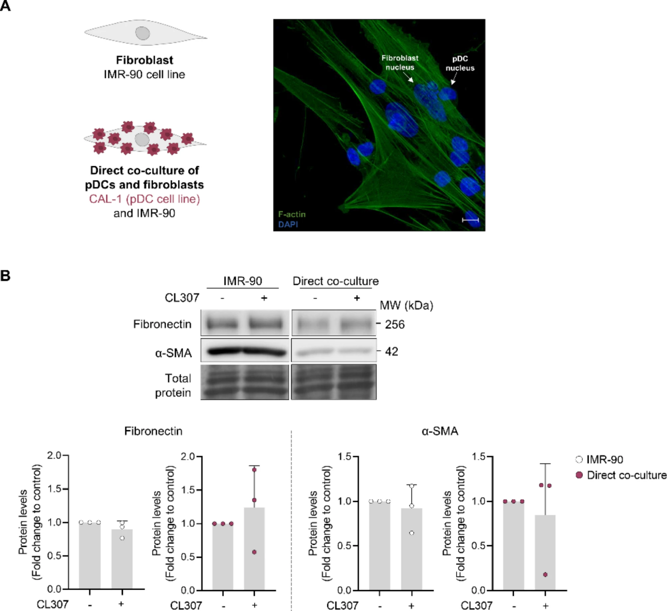
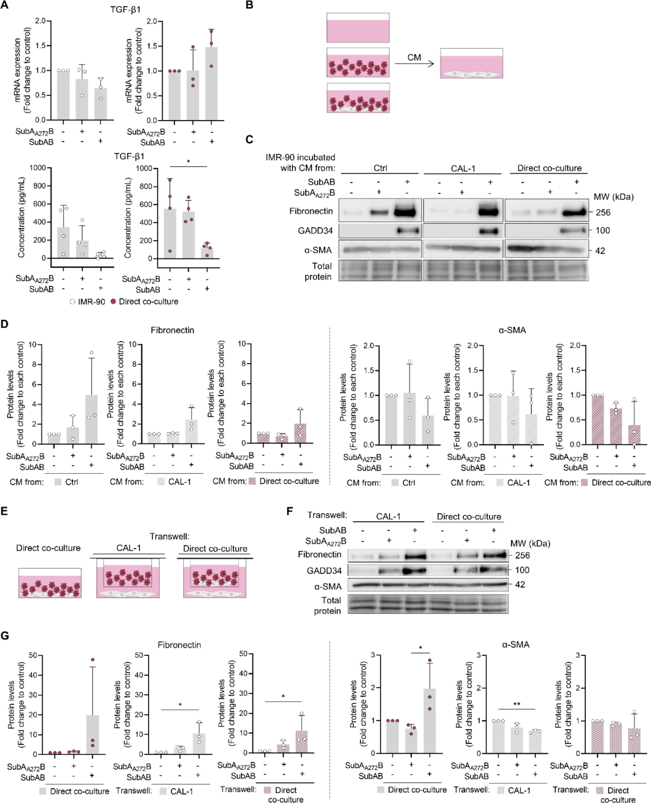
To address this question, we established an in vitro model designed to study the interactions between pDCs and fibroblasts. More specifically, IMR-90 fibroblasts were co-cultured with CAL-1, a pDC cell line. ER stress was then induced by the bacterial toxin SubAB. Extracellular matrix (ECM) production was assessed using immunoblotting, qPCR and confocal microscopy. The importance of cell-to-cell contact was investigated using conditioned media (CM) and transwell assays.
Direct contact of CAL-1 and IMR-90 cells under ER stress conditions led to increased expression of fibronectin and alpha-smooth muscle actin (α-SMA). This effect required expression of the ER stress signaling sensor protein kinase R-like ER kinase (PERK) in pDCs and was observed only upon direct contact between both cell types.
Ask a Question
Write your own review

Description: Nasal epithelial cells form the outermost protective layer against environmental factors. They clean, humidify, and warm inhaled air. They produces mucus, which binds particles that are subsequently ...
Description: Immortalized Human Splenic Endothelial Cells-SV40 have been obtained immortalizing Human Splenic Endothelial Cells with SV40LT expressing lentiviral particles. Immortalized cells were controlled ...
Description: Immortalized Human Corneal Epithelial Cells-SV40 have been obtained immortalizing Human Corneal Epithelial Cells with Lenti-SV40 Lentivirus. Immortalized cells were controlled passaging side by side ...
Description: Immortalized Human Lymphatic Endothelial Cells-SV40 were developed from human tissues transduced with a lentiviral expression vector containing the SV40T gene. The cell line was continuously cultured ...
- Adipose Tissue-Derived Stem Cells
- Human Neurons
- Mouse Probe
- Whole Chromosome Painting Probes
- Hepatic Cells
- Renal Cells
- In Vitro ADME Kits
- Tissue Microarray
- Tissue Blocks
- Tissue Sections
- FFPE Cell Pellet
- Probe
- Centromere Probes
- Telomere Probes
- Satellite Enumeration Probes
- Subtelomere Specific Probes
- Bacterial Probes
- ISH/FISH Probes
- Exosome Isolation Kit
- Human Adult Stem Cells
- Mouse Stem Cells
- iPSCs
- Mouse Embryonic Stem Cells
- iPSC Differentiation Kits
- Mesenchymal Stem Cells
- Immortalized Human Cells
- Immortalized Murine Cells
- Cell Immortalization Kit
- Adipose Cells
- Cardiac Cells
- Dermal Cells
- Epidermal Cells
- Peripheral Blood Mononuclear Cells
- Umbilical Cord Cells
- Monkey Primary Cells
- Mouse Primary Cells
- Breast Tumor Cells
- Colorectal Tumor Cells
- Esophageal Tumor Cells
- Lung Tumor Cells
- Leukemia/Lymphoma/Myeloma Cells
- Ovarian Tumor Cells
- Pancreatic Tumor Cells
- Mouse Tumor Cells